IoT Product Design: From Idea to Real Product
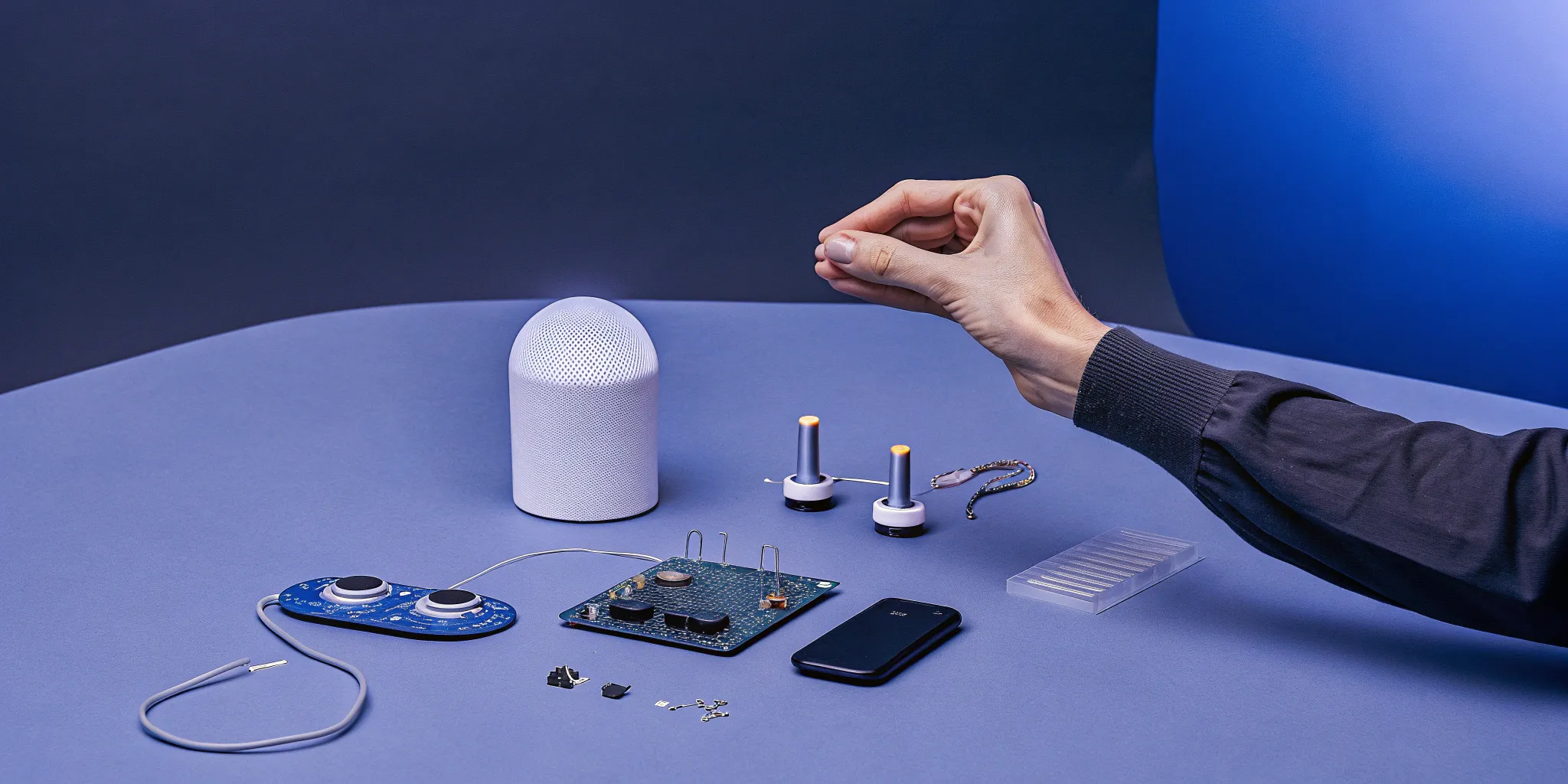
A digital ad is fleeting, but a physical product creates a lasting impression. When a customer can hold a piece of a brand in their hands, it builds a connection that a screen simply can’t replicate. Now, what if that product was smart? That’s the power of great IoT product design: turning a brand story into an interactive, physical experience. It’s about creating something genuinely useful or delightful that keeps your client’s brand top-of-mind long after a campaign ends. From smart packaging that wows influencers to branded devices that solve a real user problem, this guide will show you how to leverage connected products to create more memorable and effective campaigns.
Key Takeaways
Design the Entire Ecosystem, Not Just the Device: A successful IoT product is a complete system. To create a seamless brand experience, you must thoughtfully integrate the physical hardware, user-facing software, and the cloud infrastructure so they all work in perfect harmony.
A Flawless User Experience is Non-Negotiable: Every interaction with your product, from unboxing to the app interface, is a reflection of your client's brand. Prioritize intuitive design and simple setup to ensure the product is a positive touchpoint, not a frustrating one.
Plan for Manufacturing from the First Sketch: To avoid costly delays and ensure a successful launch, you must design for manufacturability from day one. Making smart choices about materials, components, and assembly early in the process is the key to turning a great prototype into a reliable, scalable product.
What is IoT Product Design?
At its core, IoT product design is the process of creating smart, connected devices that can gather, send, and act on data from their environment. Think of it as giving a physical object a digital brain. Instead of just existing, an IoT product becomes an active participant in a larger system, communicating with users, other devices, and the internet. This process is a true blend of disciplines, combining industrial design and mechanical engineering with software development and cloud integration to bring a fully realized, interactive product to market.
For creative agencies, this opens up a whole new world for brand experiences. Imagine a piece of merchandise that unlocks exclusive digital content, or smart packaging that tells a story as it’s unboxed. You’re not just creating a thing; you’re building an experience that bridges the physical and digital worlds. It’s about taking a static object and embedding it with intelligence, turning it into a powerful new touchpoint for a brand campaign. This requires a team that understands both the art of physical product design and the science of engineering a connected system.
How it differs from traditional design
Designing an IoT product is fundamentally different from creating a traditional one. With a standard product, your focus is on its physical form, function, and manufacturability. But with IoT, as the experts at IoT For All put it, "You're not just building a physical item; you're creating a whole 'computing system' that connects and shares data." The physical enclosure is just the beginning.
The real complexity comes from integrating hardware, software (often called firmware), and cloud connectivity. Unlike a simple chair or a non-smart coffee maker, an IoT device is in constant communication with other systems. This ongoing digital conversation introduces new challenges and incredible opportunities. It means the product can be updated, monitored, and personalized long after it leaves the factory, creating a dynamic and evolving user experience that traditional products simply can't match.
Why it's about the entire ecosystem
You can't design an IoT product in a vacuum. Success depends on designing the entire ecosystem that the device lives in. An IoT product is much more than just the hardware; it’s a complex system that includes the physical device, the user-facing app or dashboard, the data infrastructure, and the network that ties it all together. Each piece has to work in perfect harmony to deliver a seamless experience.
This means thinking about the complete user journey. How will someone set up the device? What does the app interface look like? How is data collected, and what value does it provide? For agencies, this is a familiar way of thinking—it’s about crafting a cohesive narrative across multiple touchpoints. The only difference is that one of those touchpoints is a physical, intelligent object. A great IoT product feels effortless because every component of its ecosystem has been thoughtfully designed to work as one.
What Makes Up an IoT Product?
Think of an IoT product less like a single object and more like a small, interconnected ecosystem. It’s not just the physical device your client’s customers will hold; it’s a network of hardware, software, and data working together to create a seamless experience. When your agency is brainstorming a smart product for a campaign, understanding these core components is the first step to bringing that vision to life. Each piece relies on the others, so they have to be designed and engineered in harmony from the very beginning.
Getting this balance right is where an industrial design and engineering partner comes in. We help you think through how the physical form will house the electronics, how the software will speak to the hardware, and how the whole system will connect to the cloud to deliver valuable insights. It’s a holistic process that blends creative vision with technical precision. Let’s break down the four main pillars that make up any successful IoT product.
Hardware and sensors
The hardware is the tangible part of your product—the physical enclosure that customers see and touch, plus all the electronics inside. This includes the main processor, memory, and power source. But the real magic comes from the sensors. Sensors are what allow the device to perceive the world around it by collecting data like temperature, motion, light, or location.
When we design the hardware, we’re not just making it look good; we’re strategically planning the internal layout to accommodate every component, from the circuit boards to the antennas. Security is also a physical consideration, as specialized chips are often built directly into the hardware to protect the device from the ground up.
Software and firmware
If hardware is the body, software and firmware are the brains and the nervous system. Firmware is the essential, low-level code that lives directly on the hardware, telling it how to function. It’s what boots the device up and manages its core operations. You can think of it as the permanent instructions that make the physical parts work.
Software, on the other hand, includes the applications that users interact with, like a mobile app or a web dashboard. This is where you can add more complex features, process data, and allow for future updates. For a branded product, the user-facing software is a critical touchpoint, and it needs to be just as thoughtfully designed as the physical device itself.
Connectivity and protocols
Connectivity is how your IoT device communicates with the internet and other devices. This is the invisible bridge that sends data from the sensors to the cloud and delivers commands back to the product. The right connectivity solution depends entirely on the product’s purpose. Will it be used at home, where Wi-Fi is readily available? Or is it a wearable that needs a low-power option like Bluetooth to connect to a smartphone?
Choosing the right communication protocols like Wi-Fi, Bluetooth, Cellular, or LoRaWAN is a foundational decision made early in the development process. This choice directly impacts hardware design, battery life, and the overall cost, so it’s a key strategic checkpoint.
Cloud and data infrastructure
This is the powerful, behind-the-scenes engine of your IoT ecosystem. When your device collects data, it sends it to a cloud platform for storage and processing. This is where the raw information—like motion detection or temperature readings—is transformed into valuable insights. For example, the cloud infrastructure can analyze usage patterns, predict when a product needs maintenance, or trigger personalized notifications.
This data and analytics component is often the most valuable part of an IoT product for brands. It provides a direct line to understanding customer behavior, which can inform future campaigns, improve product design, and create new opportunities for engagement long after the initial launch.
The IoT Product Development Process, Step by Step
Bringing a connected product to life might seem complex, but it follows a structured path. Think of it as a roadmap that takes your client’s big idea from a concept to a tangible, market-ready device. While the journey involves a lot of back-and-forth between design, engineering, and testing, breaking it down into clear stages makes the entire process manageable. Each step builds on the last, ensuring that you’re creating a product that is not only functional and desirable but also manufacturable.
For creative agencies, this process is where your campaign vision meets engineering reality. You don’t have to become hardware experts overnight. The key is to understand the major milestones and partner with a team that can handle the technical execution. From validating the initial idea to preparing for mass production, a clear process prevents costly mistakes and keeps the project aligned with your client’s goals. It’s about moving methodically, making smart decisions, and turning a creative brief into a physical product that works flawlessly in the real world.
Validate your concept
Before a single line of code is written or a 3D model is designed, you need to confirm your idea is solid. Validation is all about asking the tough questions early to save time and money later. Does this product solve a real problem for your target audience? Does it fit naturally into your client’s brand story? Start by looking at what’s already on the market. It’s often far more effective to adapt an existing solution than to build something from scratch that doesn’t offer a clear advantage. This stage involves market research, competitive analysis, and talking to potential users to ensure you’re building something people will actually want to use.
Build a working prototype
Once your concept is validated, it’s time to make it real. The first step is creating a Proof of Concept (PoC), which is a basic version of your device built to test the core technical ideas. This isn’t about polished aesthetics; it’s about function. Does the sensor work? Can it connect to the network? From there, we move to more refined prototypes that look and feel like the final product. This is where industrial design and engineering come together to create a physical object that you can hold, test, and show to your client. Prototyping allows you to work out the kinks and get tangible feedback before committing to expensive manufacturing tooling.
Test and iterate
No product is perfect on the first try. The testing phase is a crucial feedback loop where you identify and fix issues before they become major problems. It’s essential to test your prototype in both controlled lab settings and unpredictable, real-world environments to see how it truly performs. Will the battery last through a full day of use? Does the connectivity drop in certain locations? The insights you gather from this thorough testing process directly inform the next round of design and engineering refinements. This iterative cycle of testing and improving continues until the product is reliable, intuitive, and ready for users.
Scale for production
Moving from a single prototype to thousands of units is a huge leap. This stage, known as scaling, is all about preparing for mass manufacturing. You’ll need to select a factory, finalize your material choices, and hand over a complete set of design files, including the Bill of Materials (BOM) and CAD models optimized for manufacturing. This is also where you establish a rigorous quality control plan to ensure every device that comes off the assembly line meets your standards. Planning for production early in the design process is critical for a smooth transition and helps avoid last-minute changes that can cause delays and drive up costs.
Balancing Hardware and Software in Your Design
Creating a successful IoT product is a delicate dance between the physical and the digital. The hardware is the tangible object your audience holds, while the software is the intelligence that makes it a smart, connected experience. Getting this balance right is everything. It’s where industrial design meets code, and where a simple object transforms into a powerful brand interaction.
Too often, projects focus heavily on one side, resulting in a beautiful device with clunky software, or a technically brilliant product that’s physically unappealing. True innovation happens when both are developed in tandem, informing and shaping each other. The circuit board's size influences the product's form, while the user experience goals dictate what sensors and processors are needed. This integrated approach ensures the final product isn't just a collection of parts, but a single, cohesive experience that feels intuitive and works flawlessly. For agencies, this is how you deliver a campaign asset that feels premium, thoughtful, and truly connected to your client's brand.
Choose the right sensors and manage power
Think of sensors as your product’s senses—they’re how it gathers information from the physical world. The first step is to choose the right sensor for the job you need it to do. If you’re creating a smart water bottle for a wellness brand, a sensor that tracks volume might be key. For an interactive package, an accelerometer could trigger a light or sound effect when it’s opened. The options are vast, from GPS for location to sensors for temperature, motion, or even air quality.
Just as important is managing power. A brilliant product with a dead battery is just a paperweight. Power efficiency must be designed in from the start, not tacked on as an afterthought. This involves selecting low-power components, writing efficient code, and making smart decisions about when the device needs to be fully awake versus in a low-power sleep mode.
Define your firmware needs
If sensors are the senses, firmware is the brain. It’s the software that lives directly on the hardware, telling it how to function. This code interprets data from the sensors, manages connectivity, and executes the core tasks of the device. When defining your firmware needs, it’s critical to plan for the future. You’ll want the ability to update the software wirelessly (known as an over-the-air or OTA update).
This capability is a game-changer, allowing you to fix bugs, add new features, or improve performance long after the product is in a customer's hands. It extends the life of your campaign and ensures a better user experience. Security is also a major consideration. The firmware must be designed to prevent unauthorized access or tampering, protecting both the user and the brand’s reputation.
Design the user interface (UI/UX)
The user experience for an IoT product goes far beyond a screen. It’s the entire interaction: the setup process, the physical buttons, the way it communicates through lights or sounds, and, if there is one, the companion mobile app. Your goal is to create an intuitive interface that feels effortless. Start by understanding what your user actually needs and what problem your product solves for them. A confusing or frustrating experience can completely undermine a creative campaign.
Ask critical questions during the design phase. How does the user know the device is on and working correctly? Is the setup process simple enough to complete in a minute or two? If there’s an app, is it clean, responsive, and easy to use? Every touchpoint is part of the brand story you’re telling.
Consider the form factor and enclosure
The form factor—the product’s physical size, shape, and feel—is where your brand’s creative vision becomes reality. The enclosure does more than just protect the sensitive electronics inside; it defines the user's physical relationship with the product. The size, shape, and weight are all dictated by the product’s use case. A wearable device for a fitness campaign needs to be lightweight and durable, while a smart display for a retail environment has different priorities.
This is where industrial design is crucial. The materials, textures, colors, and overall aesthetic should align perfectly with the brand you’re working with. The enclosure must be designed for manufacturability, ensuring it can be produced consistently and cost-effectively, without compromising on the design intent. It’s the perfect blend of art and engineering.
Common Challenges in IoT Product Design
Creating a connected product is an exciting process, but it comes with a unique set of hurdles. Unlike a purely digital campaign, an IoT project involves hardware, software, and physical manufacturing, each with its own complexities. Getting ahead of these challenges is the key to a smooth development process and a successful launch. When you know what to look for, you can build a strategy that addresses potential issues before they become major roadblocks, ensuring your final product is secure, reliable, and something people will actually want to use.
Security and privacy
When you’re creating a product that collects data or connects to a user’s network, security can't be an afterthought. For your clients, a data breach linked to a branded device could be a PR nightmare. Users need to feel that their smart devices are secure and can’t be hacked. This means building in security from the very first design sketch. We focus on everything from encrypting data transmissions to securing the physical hardware against tampering. Planning for secure firmware updates is also critical, as it allows you to patch vulnerabilities long after the product has shipped. A strong security framework protects the user, your client, and the brand’s reputation.
Connectivity and interoperability
An IoT device is only as good as its connection. One of the first decisions you’ll make is how your product will talk to the outside world. Will it use Wi-Fi, Bluetooth, Cellular, or another protocol? The right choice depends entirely on the user experience you want to create. It’s also important to consider the existing tech ecosystem. Does your product need to work with other smart devices or platforms, like Amazon Alexa or Google Assistant? We help you define these requirements early on to ensure the final product integrates seamlessly into the user’s life, rather than creating another layer of complexity.
Manufacturing and scalability
Designing a single, beautiful prototype is one thing. Designing a product that can be manufactured consistently by the thousands is a completely different challenge. This is where a deep understanding of Design for Manufacturing (DFM) becomes essential. Every decision, from the materials you choose to the way the enclosure snaps together, impacts the final cost, timeline, and quality. We think about scalability from day one, creating engineering plans that are optimized for production. This includes selecting reliable components, planning the supply chain, and creating a master assembly process that ensures every unit that comes off the line works exactly as intended.
User adoption
The coolest tech in the world doesn't matter if no one uses it. For a branded product or campaign asset, user adoption is everything. If the device is confusing, unreliable, or doesn't offer real value, it will end up in a drawer. True adoption comes from a deep understanding of customer needs and a relentless focus on the user experience. Is the setup process simple? Is the interface intuitive? Does the product solve a genuine problem or create a moment of delight? By putting the end-user at the center of the design process, we create products that are not only functional but also engaging and easy to love.
How to Design an IoT Product for Manufacturing
Taking an IoT product from a working prototype to a mass-produced reality is a huge leap. It requires a completely different mindset. While prototyping is about proving a concept can work once, manufacturing is about ensuring it can work thousands of times, consistently and cost-effectively. This is where the big-picture strategy comes in, moving beyond just the device itself to consider the entire production ecosystem.
For agencies, this phase can feel overwhelming. You’ve nailed the creative concept, but now you’re dealing with factory logistics, component sourcing, and quality control. Getting this right is non-negotiable for a successful campaign launch. A product that’s too expensive to make, is constantly delayed, or fails in the user’s hands can derail the entire project. The key is to plan for manufacturing from the very beginning. By focusing on a few core principles—design for manufacturability (DFM), supply chain planning, and rigorous testing—you can set your physical product up for a smooth and successful production run.
Apply DFM principles
Design for Manufacturability (DFM) is the practice of designing products in a way that makes them easy and efficient to produce. Think of it as a bridge between your creative design and the realities of the factory floor. Applying DFM principles early in the process helps you avoid costly redesigns and production headaches later on. This means making smart choices about materials, selecting components that are readily available, and designing parts that can be assembled without complex or expensive tooling.
For an IoT device, this also involves critical decisions about internal architecture. For example, choosing the right wireless protocols and laying out the printed circuit board (PCB) to optimize performance and minimize interference are core DFM considerations. The goal is to eliminate any potential friction in the assembly line, ensuring every unit can be built to the same high standard.
Plan your supply chain
Your IoT product is only as strong as its weakest link—and that often comes down to your supply chain. A solid supply chain strategy involves identifying, vetting, and securing suppliers for every single component in your device, from the processor and sensors to the plastic enclosure and screws. You can’t wait until the design is finished to start thinking about this. Some electronic components have long lead times, and failing to plan for them can cause major delays.
A robust plan ensures your component sourcing is stable and reliable. This often means having backup suppliers for critical parts to protect against shortages or unexpected issues. For agencies working on time-sensitive campaigns, a delay of a few weeks can be a dealbreaker. A partner who understands global supply chain logistics can manage these moving parts, making sure everything arrives at the factory on time so production stays on schedule.
Establish testing protocols
How do you ensure the 10,000th device off the line works just as well as the first? The answer is rigorous and repeatable testing. Before you start production, you need to establish a clear set of testing protocols that your manufacturing partner will follow for every unit. This goes far beyond just powering the device on. It involves a series of checks to validate every aspect of its performance.
These protocols should cover everything from functional tests (Does the sensor work? Does it connect to the network?) to quality assurance checks (Are there any cosmetic defects? Is the enclosure sealed properly?). It’s also crucial to test devices in real-world conditions, not just a controlled lab setting, to catch any potential issues. This systematic approach to quality control is what guarantees a reliable and polished final product that’s ready for your client’s brand and their customers.
Why User Experience (UX) is Critical for IoT
An IoT product is more than just a piece of hardware with a Wi-Fi chip. It’s an experience. And if that experience is confusing, frustrating, or unreliable, the product will fail—no matter how brilliant the technology is. For agencies, the stakes are even higher. When you create a physical product for a client’s campaign, that product becomes a tangible representation of their brand. A seamless, intuitive user experience creates a powerful, positive brand connection. A clunky one does the opposite.
User experience in the IoT world isn’t just about a slick app interface. It’s the entire journey: the unboxing, the setup process, the way the physical device feels in your hand, and how it integrates into a person’s daily routine. Getting this right requires a deep understanding of human behavior and a relentless focus on making complex technology feel simple and natural. A great UX is what turns a novel gadget into an indispensable part of someone’s life, ensuring your client's campaign leaves a lasting, positive impression.
Understand your user's needs
Before a single line of code is written or any plastic is molded, you have to know who you’re designing for and what they actually need. The most successful products solve a real problem or fulfill a genuine desire. The only way to uncover that is through research. By exploring your target audience's demographics, behaviors, and daily frustrations, you can gather the insights needed to design a product that truly resonates. For a campaign, this means thinking beyond the gimmick and asking: What connected experience would provide real value and feel memorable to this specific audience?
Create an intuitive interface
The best technology feels invisible. An IoT product should be so easy to use that the user doesn't have to think about it. This means designing an intuitive interface for every touchpoint, from the physical buttons on the device to the layout of the companion app. The setup process, in particular, should be effortless. But intuition also builds trust. Users need to feel their data is secure and their privacy is respected. Clear communication about data security practices isn't just a legal requirement; it's a core part of a positive user experience.
Design for your target audience
A one-size-fits-all approach to design rarely works, especially in IoT. The aesthetic, materials, and functionality of your product should be tailored specifically to the people you want to reach. A smart device for a luxury fashion brand will have a completely different look and feel than one designed for a family-friendly CPG brand. Identifying your target audience and weaving their preferences into every design decision is essential. This ensures the final product feels authentic to the brand it represents and connects with the end-user on an emotional level.
Improve based on user feedback
You can’t design a great user experience in a vacuum. The most critical part of the process is putting a working prototype into the hands of real people and observing how they interact with it. User testing is where you discover what’s working and, more importantly, what isn’t. It reveals friction points you never anticipated and highlights features users love. For a campaign-specific product, even a small round of feedback can help you refine the experience, ensuring the final product delivers the intended impact without any frustrating usability issues getting in the way.
How Your Agency Can Use IoT for Client Campaigns
The Internet of Things offers a powerful way to move your client campaigns beyond the screen and into the real world. For creative agencies, IoT isn't just about building complex tech gadgets; it's about creating tangible, memorable brand interactions that digital ads alone can't replicate. Think of it as the ultimate piece of experiential marketing—a physical product that tells a story, engages the senses, and builds a genuine connection with your client's audience.
Instead of just telling consumers about a brand, you can give them a physical piece of it to hold and use. This could be a smart device that solves a real problem, packaging that creates a moment of surprise and delight, or an interactive display that stops people in their tracks. By integrating connectivity into physical products, you can create campaigns that are not only more engaging but also generate valuable data and insights. It’s a chance to show your clients a new level of creative execution, one that blends brilliant ideas with functional, beautiful design and engineering. The best part? You don’t have to become hardware experts to do it.
Create branded product experiences
Imagine creating a custom, branded product for your client that becomes a part of their customer's daily routine. This is where IoT shines. You could design a smart water bottle for a wellness brand that glows to remind users to hydrate, or a connected pet toy for a pet food company that lets owners play with their furry friends remotely. These aren't just promotional items; they are useful products that deepen the brand relationship.
The key is to start with the user. Thorough market research will help you understand the target audience's needs and preferences. This insight is essential for designing a product experience that feels genuinely helpful and resonates on an emotional level, turning a simple campaign into a lasting brand asset.
Develop smart packaging and displays
Packaging is often a customer's first physical interaction with a brand, so why not make it unforgettable? With IoT, you can transform a standard box into an interactive experience. Think of an influencer kit where the packaging lights up and plays a message upon opening, or a liquor bottle with an NFC tag that unlocks exclusive cocktail recipes when tapped with a phone.
This same technology can be applied to in-store retail displays. You could build a display that reacts to a shopper’s presence, offering personalized discounts or product information. Smart packaging and displays enhance user engagement by adding a layer of discovery and delight, turning a simple unboxing or shopping trip into a shareable moment that amplifies your campaign's reach.
Partner for white-labeled development
You have the big idea; we have the engineering and design expertise to bring it to life. Bringing a physical product to market involves industrial design, mechanical engineering, prototyping, and manufacturing logistics. For an agency, managing this process can be a major distraction from focusing on creative and client strategy. That’s where a white-labeled development partner comes in.
We work behind the scenes as your dedicated product development team. You can confidently pitch ambitious physical product concepts to your clients, knowing you have a partner ready to handle the technical execution. From the initial sketch to a production-ready prototype, we ensure the final product is beautifully designed, fully functional, and ready for manufacturing. This kind of successful partnership lets you expand your creative offerings without expanding your overhead.
The Future of IoT: Key Tech Trends
The world of connected devices is always moving, and staying ahead of the curve is key to creating campaigns that feel fresh and innovative. When you’re developing a physical product experience for a client, understanding where the technology is headed allows you to build something that not only works today but also feels relevant tomorrow. These aren’t just abstract tech concepts; they are the tools that will enable more creative, responsive, and meaningful interactions between brands and their audiences.
From devices that learn and adapt to their users to products that run faster and more securely right out of the box, the next wave of IoT is all about creating smarter, more seamless experiences. As an agency, knowing what’s possible helps you pitch bigger, more ambitious ideas. It’s the difference between a static piece of merchandise and a dynamic brand asset that continues to deliver value long after the campaign ends. Whether it’s leveraging AI for a truly personalized product or using 5G to power a large-scale interactive installation, these trends are opening up a whole new playbook for physical brand storytelling. Let’s look at the four key shifts shaping the future of IoT product design.
AI and machine learning
Artificial intelligence is making IoT devices less like simple gadgets and more like intuitive partners. Instead of just following pre-programmed commands, products with AI and machine learning can analyze data, recognize patterns, and make decisions on their own. For a client campaign, this could mean a branded smart device that learns a user’s preferences over time and offers a truly personalized experience. Imagine a smart coffee mug that learns your ideal temperature or a piece of connected fitness gear that adapts workouts based on your performance. This level of intelligence makes a product feel genuinely useful, turning a one-off marketing moment into a lasting brand relationship.
Edge computing
Not all data needs to travel to the cloud and back. Edge computing is the practice of processing information directly on the IoT device itself, or "at the edge" of the network. This has two huge benefits for branded products: speed and privacy. An interactive retail display or an experiential event installation can react instantly to user input without any frustrating lag. Plus, since sensitive information is handled locally instead of being sent over the internet, users get greater peace of mind. This approach makes for a more reliable, secure, and seamless user experience—all things that reflect positively on the brand behind the product.
5G and next-gen connectivity
Faster, more reliable wireless networks are the fuel for the entire IoT ecosystem. The rollout of 5G and other advanced connectivity standards means that devices can send and receive massive amounts of data almost instantly. The IoT product development process is evolving to take advantage of this, enabling more complex and powerful applications. For your campaigns, this unlocks bigger creative possibilities. Think high-definition video streaming to smart packaging, real-time data collection from thousands of devices at a live event, or augmented reality experiences triggered by a physical product. As connectivity barriers fall, the scope of what you can create expands dramatically.
Sustainable design
As consumers become more environmentally conscious, brands are looking for ways to reflect those values. Sustainable design is becoming a critical part of the IoT landscape. This means creating devices that use less energy, are built with eco-friendly materials, and have a longer lifespan. Some new technologies even allow devices to power themselves by harvesting energy from light or motion. Pitching a low-power, long-lasting smart product isn't just good for the planet—it's a powerful brand message. A comprehensive guide to IoT development often highlights how sustainability can be a core feature, showing that a brand is both innovative and responsible.
Set Your IoT Project Up for Success
A brilliant idea is the perfect starting point for an IoT product, but turning that concept into a successful, real-world device requires a strategic framework. For agencies, this is where you can bridge the gap between a creative campaign vision and a tangible product that delivers for your client. It’s not just about what the product does, but how it’s developed, secured, and supported long after launch. By focusing on a few key principles from the very beginning, you can ensure the final product is not only innovative but also reliable, secure, and ready to make a real impact. These steps help de-risk the development process and lay the groundwork for a product that functions flawlessly and strengthens your client’s brand.
Foster cross-functional collaboration
IoT products are complex, and bringing one to life requires a true team effort. You can’t have designers working in one silo and engineers in another. Developing an IoT product requires an interdisciplinary approach where industrial designers, mechanical engineers, electrical engineers, and firmware developers collaborate from the initial sketch. When everyone is at the table from day one, you can solve challenges faster. For example, the engineering team can inform the design team about the physical constraints of a sensor, while the design team can ensure the final form is something users will actually want to interact with. This constant communication prevents costly revisions down the line and results in a more cohesive, well-executed product.
Build in security from the start
In a connected world, security can’t be an afterthought—it has to be a core component of your product’s design. For any branded device your agency is creating, a security breach could do serious damage to your client’s reputation. That’s why it’s critical to build security into the hardware from the very beginning. This means selecting secure microchips, designing tamper-proof enclosures, and ensuring all data transmission is encrypted. By addressing security at the foundational level, you protect user data, build trust, and create a product that is resilient against potential threats. It’s a non-negotiable step for any professional-grade IoT device.
Plan for the product's evolution
Launching an IoT product isn’t the finish line; it’s the starting line. Unlike a static print ad or a digital campaign with a clear end date, a physical product needs a plan for its entire lifecycle. The development process should be iterative, with cycles of building, testing, and gathering feedback to refine the user experience. Think about how you’ll deliver firmware updates to fix bugs or add new features after the product is in users’ hands. Planning for these updates from the start ensures your product remains functional, secure, and relevant long after it has launched, providing continuous value to both the user and the brand.
Define how you'll measure success
Before you even begin prototyping, you need to define what a successful outcome looks like. Is the goal to increase brand engagement, gather valuable user data, or create a new channel for customer interaction? Your objectives will determine what you need to measure. Set up the right systems to collect feedback and analytics from the start. This could include in-app analytics that track how people are using the device, support channels for user questions, or surveys to gauge satisfaction. Tracking these metrics allows you to understand what’s working, what isn’t, and how you can improve the product over time.
Related Articles
Frequently Asked Questions
My agency has a great idea for a smart product, but we have zero hardware experience. Where do we even begin? That’s the perfect place to start. You don’t need to be an engineer to have a brilliant product idea. The first step is to validate your concept by asking if it solves a real problem or creates a genuinely delightful experience for your client's audience. From there, the best move is to partner with a product development firm. We can help you translate your creative vision into a technical plan, handling the industrial design, engineering, and prototyping so you can stay focused on the brand strategy.
How long does it typically take to go from an idea to a finished IoT product? The timeline can vary quite a bit depending on the product's complexity. A simple device that uses existing technology might move from concept to prototype in a few months, while a completely new invention with custom electronics will take longer. The key is a structured process. A good development partner will map out clear stages for validation, prototyping, testing, and manufacturing prep, giving you a realistic roadmap so you can align the product launch with your client’s campaign schedule.
What's the biggest mistake agencies make when trying to create a physical product? The most common pitfall is treating the physical product like a digital ad—something you can design in a vacuum and fix later. With hardware, you have to plan for manufacturing from day one. Decisions about materials, components, and how the product is assembled have a huge impact on the final cost and timeline. Waiting until the design is "finished" to think about production almost always leads to expensive redesigns and delays.
How do we ensure the final product actually feels like our client's brand and not just a generic gadget? This comes down to a tight collaboration between your creative team and the industrial design team. The product's physical form—its shape, materials, color, and finish—is a powerful brand messenger. A great process involves defining the brand's physical identity early on and using that as a guide for every design decision. It’s about making sure the engineering serves the design intent, so the final product looks and feels exactly like it belongs to your client.
Is creating a custom IoT product always expensive? Are there more budget-friendly options? Building a completely new device from the ground up can be a significant investment, but it's not the only option. A more cost-effective approach is to adapt an existing, proven technology platform for your specific needs. This gives you a reliable technical foundation to build on, which can dramatically reduce development time and cost. You can still create a fully custom enclosure and user experience that is unique to your client's brand, but you aren't reinventing the wheel on the inside.