Medical Device Design Consulting: When to Outsource
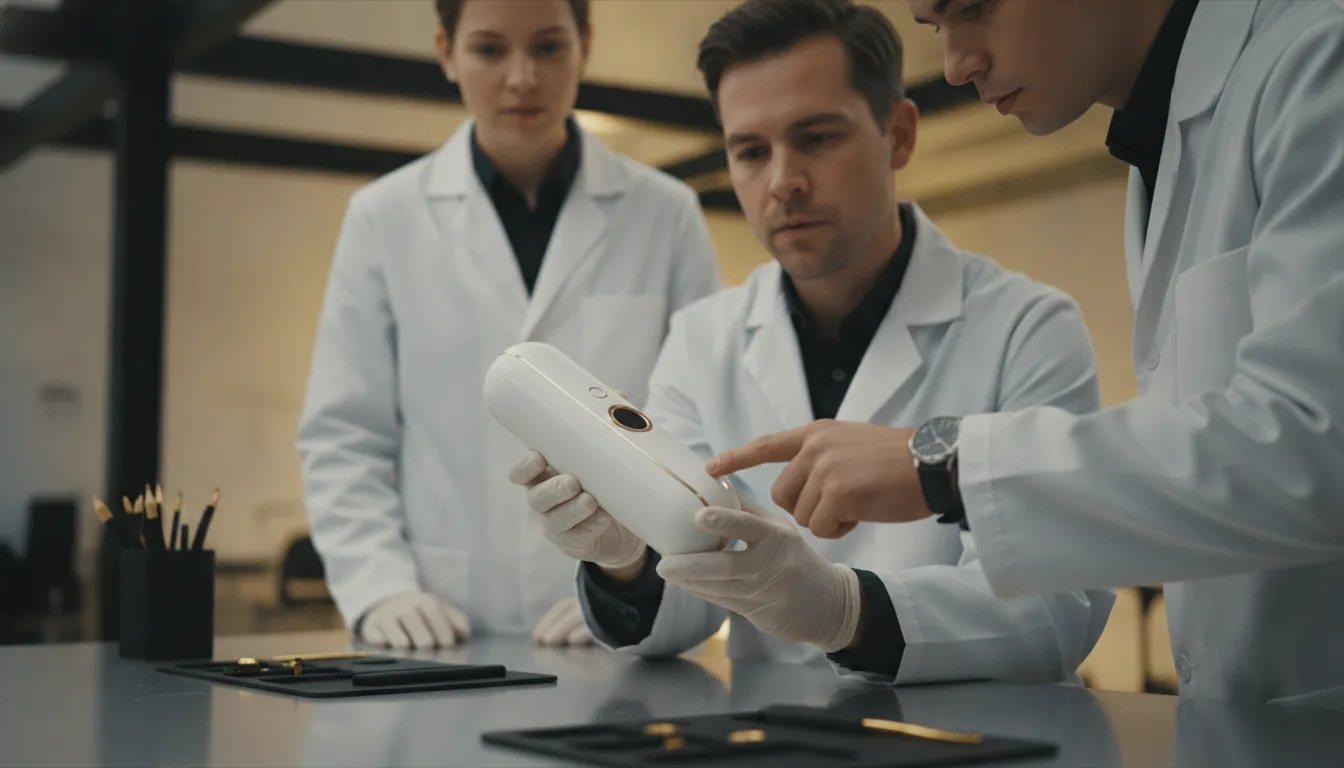
Medical device teams rarely need outside help because they lack ideas. More often, a promising concept reaches a point where user needs, physical form, electronics, prototypes, and manufacturing decisions begin affecting one another, and the internal team cannot resolve them efficiently with the resources available.
Talk with Jackson Hedden about your product development needs.
Medical device design consulting is most useful when your team needs focused support turning an uncertain concept into a testable, manufacturable product direction. The right engagement can connect industrial design, electronics, prototyping, and manufacturing decisions while keeping your team responsible for clinical, regulatory, and quality-system guidance.
The decision is less about reaching a particular calendar milestone and more about recognizing when an unresolved design question could shape everything that follows. Start by looking at the project conditions that make outside support timely, from unclear user needs to difficult electronics integration or an approaching manufacturing handoff.
When Should a Medical Device Team Bring in Outside Support?
Bring in outside support when a product decision crosses disciplines, the team lacks a needed capability, or unresolved questions could become expensive to change later. The right time is not necessarily the day a concept is approved. It is when the team needs a clear path from user needs to a feasible, testable, manufacturable product.
At the concept stage, outside support can turn a promising idea into a defined product direction. Industrial design work may include research, ideation, ergonomics, visualization, and CAD documentation. A focused engagement can help the team compare form factors, clarify the intended use, and identify physical constraints before detailed development begins. See product design services for an overview of this type of support.
When user needs remain unclear, bring in a partner before locking the form or interface. A medical device depends on how intended users perceive information, interpret it, make decisions, and manipulate controls. The FDA's human-factors guidance addresses these interactions in relation to intended users, uses, and environments: FDA human-factors guidance. Product design support can help translate those observations into physical and interface decisions, without replacing clinical or regulatory specialists.
During electronics integration, outside help is useful when sensors, batteries, microcontrollers, embedded technology, PCB layout, LEDs, or power management must fit within the product's physical and usability requirements. Coordinating these choices early can expose conflicts between enclosure size, access, feedback, serviceability, and intended use.
Before prototype learning or manufacturing handoff, bring in support if the team needs objective answers about form, fit, function, assembly, or production readiness. FDA design-planning guidance emphasizes establishing, maintaining, and documenting plans for design and development activities. A partner can help organize the next prototype or prepare manufacturing information while the team's regulatory, clinical, and quality advisors retain their specialist responsibilities.
What Medical Device Design Consulting Should Solve for Your Product Team
A useful outside engagement should reduce coordination gaps, clarify product decisions, and leave your team with tangible work it can review and use. The scope should connect industrial design, electronics, prototyping, and manufacturing rather than treating each discipline as a separate handoff.
Translate user needs into a workable product direction
The engagement can begin with research, ideation, ergonomics, and concept development. These activities help the team explore how the device should be held, accessed, understood, and used in its intended setting. Industrial design then turns the strongest direction into clear form studies, visualizations, and CAD documentation. The goal is not simply an appealing shape. It is a product direction that reflects user needs while giving the broader team something specific to evaluate.
Connect the physical design to electronics
Electronics should influence the product architecture early, especially when the concept includes batteries, sensors, LEDs, microcontrollers, embedded technology, a PCB, or power-management requirements. A coordinated scope can examine how components fit within the enclosure, where interfaces belong, and how the physical design supports access and assembly. Jackson Hedden's electronics and electrical design capability can sit alongside industrial design so the product team is not forced to resolve physical and electronic decisions in isolation.
Use prototypes to answer specific questions
Prototyping is most valuable when each model has a decision attached to it. A high-resolution 3D print may help the team assess size, grip, or control placement. CNC-machined parts or a form-fit-function model may help examine how components occupy the available space. Looks-like and works-like prototypes can give stakeholders a concrete basis for reviewing form, fit, and function before the team makes larger tooling or production commitments.
Prepare a clear path toward manufacturing
The final scope should address how the design will be produced, not stop at a compelling concept. Manufacturing support may include design-for-manufacturing review, supplier identification, sourcing, production planning, tooling strategy, sample inspection, and pre-production troubleshooting. Depending on the engagement, useful handoff materials can include production-ready CAD, 2D control drawings, assembly layouts, and a bill of materials. Define these outputs at the start so your product team knows what decisions, files, and reviews the outside partner owns.
Five Signals Your Team Needs Outside Product Development Support
Outside support is worth investigating when a product decision is becoming difficult to make with the people and evidence already available. The strongest signal is not simply a busy team. It is a recurring gap between what users need, what the product must do, and what the team can confidently define, test, or hand off.
| Signal | Why waiting creates friction | Practical scope to investigate |
|---|---|---|
| Users struggle to perceive, interpret, or act on device feedback. | Unclear controls, displays, or feedback can make it harder to understand how people interact with the product and where the interface needs improvement. | Review the user-device interaction, map key actions and feedback, and explore industrial design changes that make the interface easier to understand. See medical device industrial design. |
| Requirements describe the idea but not measurable physical or performance characteristics. | Design decisions become subjective, and the team has no clear basis for comparing concepts or evaluating whether an output meets the intended input. | Translate user needs and intended uses into clearer design inputs, then define practical outputs and acceptance criteria with the appropriate specialists. |
| Form, controls, electronics, and enclosure decisions are moving on separate tracks. | Late interface changes can force avoidable redesign across the housing, component placement, controls, and user workflow. | Run a cross-disciplinary concept review covering ergonomics, physical layout, electronics integration, and the product context in which people will use it. |
| The team is debating concepts without a physical model to examine. | Important questions about size, shape, reach, grip, visibility, and feedback remain assumptions rather than observations. | Scope a focused looks-like, works-like, or form-fit-function prototype that answers the next decision instead of attempting to prove everything at once. |
| A promising concept is approaching manufacturing, but handoff information is incomplete. | Ambiguity in parts, assemblies, drawings, or production intent can create repeated clarification cycles between the product team and suppliers. | Assess the needed CAD, control drawings, assembly information, bill of materials, and design-for-manufacture review before production planning advances. |
These signals do not establish a clinical, regulatory, or safety conclusion on their own. They indicate that the product team may benefit from a defined design and development workstream, with formal regulatory, quality, and clinical responsibilities remaining with the appropriate qualified specialists.
How Prototypes Help a Team Make Better Decisions
A prototype gives a product team something concrete to examine, handle, and discuss before committing to expensive tooling or a final manufacturing path. The right prototype is not simply an early version of the product. It is a focused learning tool that helps the team answer a specific question about form, fit, function, or use.
Looks-like prototypes clarify form and context
A looks-like model helps the team assess size, shape, proportions, surface treatment, grip, and placement. It can reveal whether the device feels appropriate in the intended setting, fits within a user's workspace, or competes for attention with other equipment. Packaging concepts can be reviewed alongside the product, helping the team consider storage, transport, unpacking, and the first interaction.
These reviews are especially useful when sketches or CAD views leave too much room for interpretation. A physical model makes it easier for users and stakeholders to react to the same object. Jackson Hedden's prototyping and prototype validation capabilities include high-resolution 3D printing and CNC-machined parts, as well as looks-like models.
Works-like prototypes test interaction
A works-like prototype focuses on what happens when a person uses the product. The team can examine controls, displays, feedback, sequence, and the effort required to complete a task. The FDA describes device-user interaction as involving how people perceive information, interpret it, decide what to do, and manipulate controls. That makes physical interaction worth exploring early, rather than treating the interface as a final layer.
Testing can expose unclear button placement, poor visibility, awkward reach, or feedback that arrives too late to guide the next action. It can also show where electronics, sensors, lights, or power needs affect the industrial design. These observations help the team refine requirements and identify questions for appropriate usability, clinical, or regulatory specialists.
Form-fit-function models connect decisions
A form-fit-function model combines the dimensions and interfaces of the intended product with enough working behavior to evaluate integration. Teams can investigate enclosure clearances, component access, cable routing, assembly approach, and handoff assumptions before locking the design. Jackson Hedden also offers medical device prototyping services for this kind of focused evaluation.
How Do You Keep Design, Electronics, and Manufacturing Aligned?
Alignment comes from making decisions visible across disciplines, not from passing a project over a wall. A shared set of requirements should connect user needs, product form, electronics, physical interfaces, assembly methods, and manufacturing assumptions. When one of those changes, the team can see which other decisions need review.
Start by defining the interfaces between the product's major parts. Document where a circuit board, battery, sensor, display, control, enclosure, fastener, or cable sits and what it must do. This gives industrial design, electronics, and manufacturing teams a common reference. Jackson Hedden's electronics and electrical design capability includes work with components such as sensors, microcontrollers, embedded technology, PCB design, and power management. Those details need to fit the intended user interaction and the physical product, rather than being solved independently.
Use reviews to resolve decisions early
Design reviews should examine more than appearance. Bring the team together to review requirements, interfaces, clearances, access for assembly, service considerations, part count, and manufacturing assumptions. A useful review records the decision, the owner, the evidence behind it, and any open question. Prototypes can support form, fit, function, and ergonomic evaluation before costly tooling decisions, giving the team something concrete to inspect rather than relying on disconnected files or opinions.
Reviews also create a controlled point for changes. If a control moves, the enclosure may change. If a component changes size, the assembly layout, thermal assumptions, and production process may need another look. Treating those relationships as part of the project record reduces surprises during handoff.
Make the handoff production-ready
A manufacturing handoff should give a supplier enough coordinated information to understand what is being built and how the pieces relate. Depending on the project, that package may include production-ready CAD, 2D control drawings, assembly layouts, and a bill of materials. The documents should agree on part names, revisions, materials, interfaces, and quantities. Jackson Hedden describes this type of manufacturing support alongside sourcing, production planning, design-for-manufacturing review, tooling strategy, and pre-production troubleshooting.
The goal is not simply to deliver files. It is to leave a clear trail from requirements to design decisions, prototypes, and build documentation, while identifying which questions still belong with manufacturing, quality, clinical, or regulatory specialists.
What Should You Ask Before Starting a Consulting Engagement?
A productive engagement starts with shared decisions, not a vague request to improve the product. Use these questions to establish what the team needs, what evidence will guide the work, and how the result will move to the next contributor. For additional context, review this product design firm hiring guide.
- What problem, user need, and intended use are in scope? Ask the consulting team to separate known requirements from assumptions. Clarify the intended users, use environment, core interactions, and unresolved questions about size, shape, controls, displays, or packaging. FDA guidance emphasizes that design inputs should address user needs and intended uses in measurable terms: FDA design-control guidance.
- What inputs can we provide on day one? Gather existing sketches, research, requirements, electronics constraints, reference products, user feedback, and manufacturing considerations. Identify gaps rather than expecting the outside team to infer them. Agree on how missing information will be documented and resolved.
- Who has decision rights? Name the project owner, technical reviewers, clinical or regulatory specialists, manufacturing contacts, and final approver. Define which decisions require cross-functional review, how disagreements are resolved, and who accepts changes to scope.
- What will each prototype prove? Connect every model to a question. A looks-like model may examine form and perception; a works-like model may explore an interaction; a form-fit-function model may test interfaces, handling, and assembly assumptions. Ask what will be observed, what counts as useful evidence, and how findings will change the next iteration.
- Which handoff files are required? Confirm whether the engagement should produce CAD, control drawings, assembly layouts, a bill of materials, test records, decision logs, or other documentation. Set file formats, revision rules, ownership, and review dates before work begins.
- How will specialist advisors participate? Establish when clinical, regulatory, quality, usability, or manufacturing specialists review the work. The design partner can coordinate product-development outputs while each specialist retains responsibility for advice within their discipline.
Where Outside Design Support Fits Alongside Regulatory and Clinical Specialists
Medical device development works best when each specialist owns a clear part of the decision process. A product design partner can help translate user needs into a thoughtful form, interface, prototype, electronics approach, and manufacturing handoff. That support is valuable, but it does not replace regulatory counsel, clinical expertise, quality-system ownership, or the manufacturer's accountability for its device.
The FDA describes design controls as practices and procedures that control the design process so a device can meet user needs, intended uses, and specified requirements. Its guidance also distinguishes design inputs, design outputs, verification, and validation as related but separate activities. Teams should confirm the applicable expectations for their device with qualified regulatory and quality specialists, using the FDA design-control guidance and the current 21 CFR Part 820 requirements as authoritative references.
What a design partner can own
An outside design team can structure product-development work around questions such as: Can intended users understand the device's physical form and controls? Can the concept accommodate electronics, service access, cleaning needs, packaging, and manufacturing realities? Which prototype will produce the most useful evidence for the next decision? The resulting work may include industrial design, ergonomics, CAD documentation, prototype models, electronics development, and production handoff materials.
Where specialist advice remains essential
Regulatory and quality specialists can interpret the applicable pathway, define required records, and advise on design-control and quality-system responsibilities. Clinical specialists can help establish appropriate use context, clinical needs, and evidence expectations. Human-factors specialists may also be needed when use-related risk, usability evaluation, or intended-user behavior requires formal assessment. These roles should collaborate early, with decision rights and deliverables documented rather than assumed.
For a broader view of how concept, development, prototyping, and manufacturing activities connect, review these medical device development stages. The goal is not to blur responsibilities. It is to give each specialist the product information, design outputs, and open questions needed to do their work well.
Contact Jackson Hedden to discuss the right scope for your medical device project.
Frequently Asked Questions
What does a medical device consultant do?
A medical device consultant helps a product team turn an unclear opportunity or difficult design problem into a defined plan for investigation, design, prototyping, and manufacturing handoff. The work may include clarifying user needs, shaping the product, coordinating electronics, testing assumptions with prototypes, and documenting decisions. The right scope depends on the team's gaps and the product's current stage.
What does a medical device designer do?
A medical device designer focuses on how a product looks, feels, functions, and fits its use environment. That can include form, controls, displays, physical interaction, materials, enclosure details, and the relationship between the device and its users. A strong designer also considers technical feasibility and manufacturability, so design decisions can be discussed clearly with the broader product-development team.
When should a product team bring in outside support?
Bring in outside support when an important decision is blocked by missing expertise, unresolved user needs, difficult electronics integration, weak prototype learning, or uncertainty about manufacturing handoff. Earlier involvement can help the team compare directions before decisions become expensive to change. Outside support can also be useful for a focused deliverable, such as a prototype, design review, production-ready CAD package, or assembly documentation.
How should a team define a medical device consulting engagement?
Start by defining the decision the engagement must support, the inputs already available, the people who own final decisions, and the evidence needed to move forward. Then specify the expected outputs, such as industrial design concepts, electronics and electrical design, prototype builds, CAD, drawings, or manufacturing documentation. Confirm how the outside team will coordinate with clinical, regulatory, quality, and manufacturing specialists when those roles are required.