Medical Device Development: A Product Team Guide
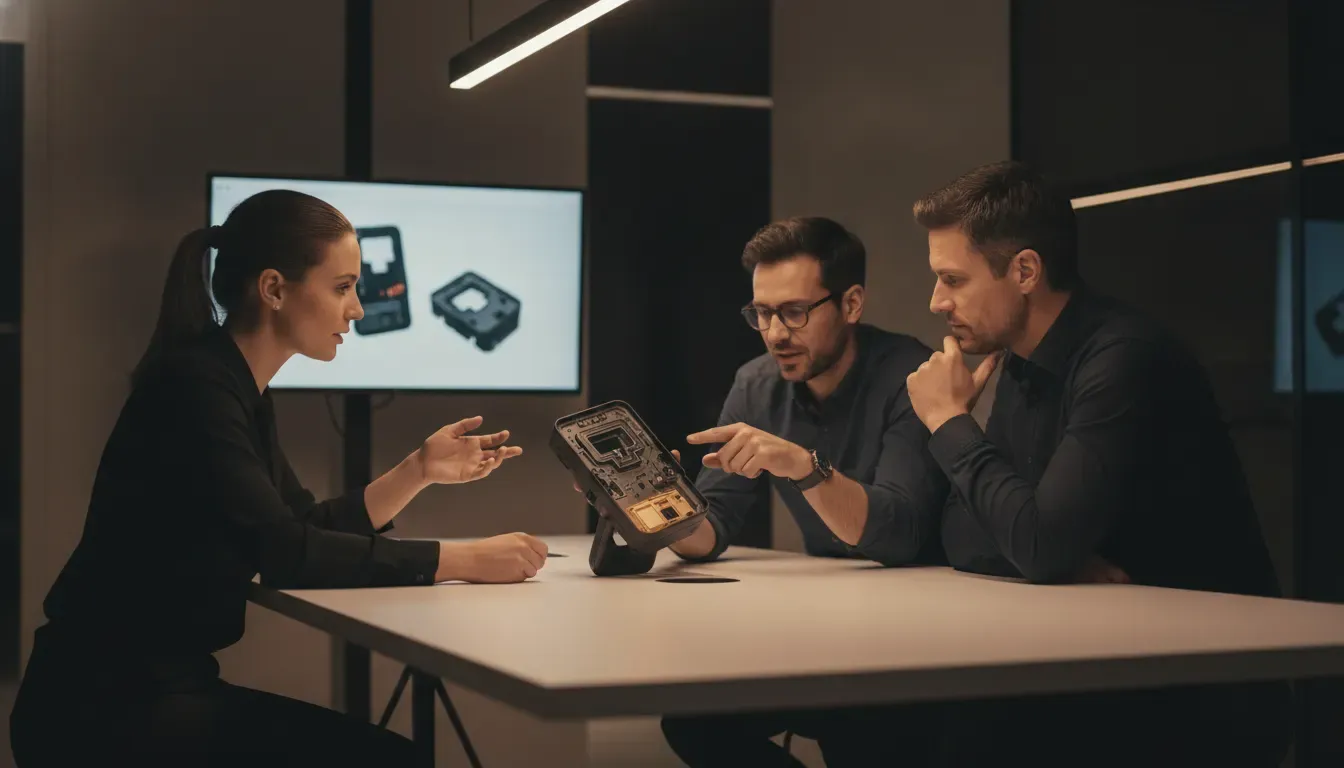
Medical device development turns a clinical or market need into a product that can be understood, tested, manufactured, and supported. For a product team, the right partner does more than create a promising prototype. The partner translates user needs into requirements, coordinates systems, mechanical, and electrical decisions, and builds evidence into the design before production pressure exposes gaps.
Discuss your medical device project with Jackson Hedden
This guide explains what to expect from medical device development support, which deliverables matter at each collaboration point, and how to compare potential partners. It focuses on the technical work between concept and production readiness. It is not regulatory or clinical advice, and the applicable pathway depends on the device, intended use, market, and quality system.
What is medical device development?
Medical device development is the coordinated process of converting user needs and product requirements into a safe, testable, manufacturable device. It connects systems definition, mechanical and electrical design, risk-informed decisions, prototype learning, verification planning, and production handoff so the finished design can be evaluated against objective requirements.
The phrase covers a team, not a single discipline. A device may need mechanical architecture, electronics, embedded software, enclosure design, human factors input, packaging, test fixtures, supplier coordination, and manufacturing support. The scope changes with the product, but the operating principle remains consistent: important decisions should be traceable to a requirement, a risk, a test, or a production constraint.
For a product team, this distinction matters. A visually convincing prototype can still have unclear requirements, untested interfaces, difficult assembly, or components that cannot be sourced consistently. Technical support closes those gaps by making the product legible to the next person in the process, whether that person is a test lead, quality professional, contract manufacturer, or production operator.
Medical device development also sits inside a broader product-development effort. Jackson Hedden's product design services can help connect industrial design intent with physical product decisions, while the technical scope should be defined around the device's requirements, interfaces, risks, and production path.
What should medical device development deliver?
Medical device development should produce a connected set of decisions and work products, not just CAD files. The deliverables should explain what the device must do, how the design meets those requirements, how critical risks will be evaluated, and how a manufacturer can build the approved design consistently.
- Requirements and system definition: user needs, intended-use assumptions, measurable performance requirements, interfaces, constraints, and traceability.
- Mechanical definition: architecture, materials, tolerances, enclosure strategy, interfaces, seals or fasteners where applicable, and drawings or models suitable for review.
- Electrical definition: system power needs, component choices, schematics, PCB considerations, sensing or communication interfaces, and test points where applicable.
- Verification planning: test methods, fixtures, sample rationale, acceptance criteria, and a clear relationship between each test and the requirement it addresses.
- Manufacturing readiness: DFM and DFA decisions, supplier inputs, critical-to-quality characteristics, assembly instructions, inspection criteria, and production-representative builds.
- Handoff package: controlled design outputs and open decisions that allow the next team to build, inspect, test, and change the product without relying on informal memory.
These work products should evolve together. A late electrical change can affect thermal behavior, enclosure volume, battery access, sealing, assembly sequence, and verification. A change to a molded part can affect PCB fit, user interface, cleaning method, and supplier process. The value of a cross-functional partner is the ability to see those interfaces early.
For broader context, Jackson Hedden's integrated technical guide explains why product decisions are stronger when technical disciplines and manufacturability are considered together.
Systems development and requirements
Systems work creates the map that keeps the disciplines aligned. It defines the device boundary, major functions, external interfaces, operating conditions, assumptions, and measurable requirements. It also identifies which requirements need verification, which need validation under intended use, and which depend on another subsystem.
A useful requirements set avoids vague language such as "easy to use," "durable," or "compact" unless each phrase is translated into an observable condition. A requirement might instead specify an operating range, response time, allowable force, dimensional envelope, battery duration, cleaning exposure, or pass-fail performance threshold. The exact values belong to the product team and its quality process. The technical partner should help make them testable.
Systems development also clarifies ownership. At a review, the team should be able to answer who owns the user need, which subsystem implements it, what evidence will demonstrate conformance, and what happens if the result is outside the acceptance criteria.
Mechanical design and physical architecture
Mechanical work gives the device its physical structure and its path to repeatable production. It can include enclosure architecture, component packaging, materials, interfaces, thermal and structural considerations, tolerance strategy, fasteners, seals, mechanisms, and design-for-assembly decisions.
The strongest mechanical decisions are made with use and production in view. A housing may need to support cleaning, repeated handling, service access, cable routing, drop or impact requirements, and a clear assembly sequence. A feature that is easy to machine in an early prototype may need a different geometry for molding or a different tolerance strategy for repeatable assembly. These tradeoffs should be documented rather than discovered during a pilot build.
Mechanical deliverables should make review possible. Depending on the project, that may include a structured CAD assembly, released part drawings, material and finish specifications, tolerance notes, interface definitions, a bill of materials, and a list of critical dimensions or characteristics. The format matters less than whether the output is controlled, interpretable, and tied to the design intent.
Electrical and electronics design
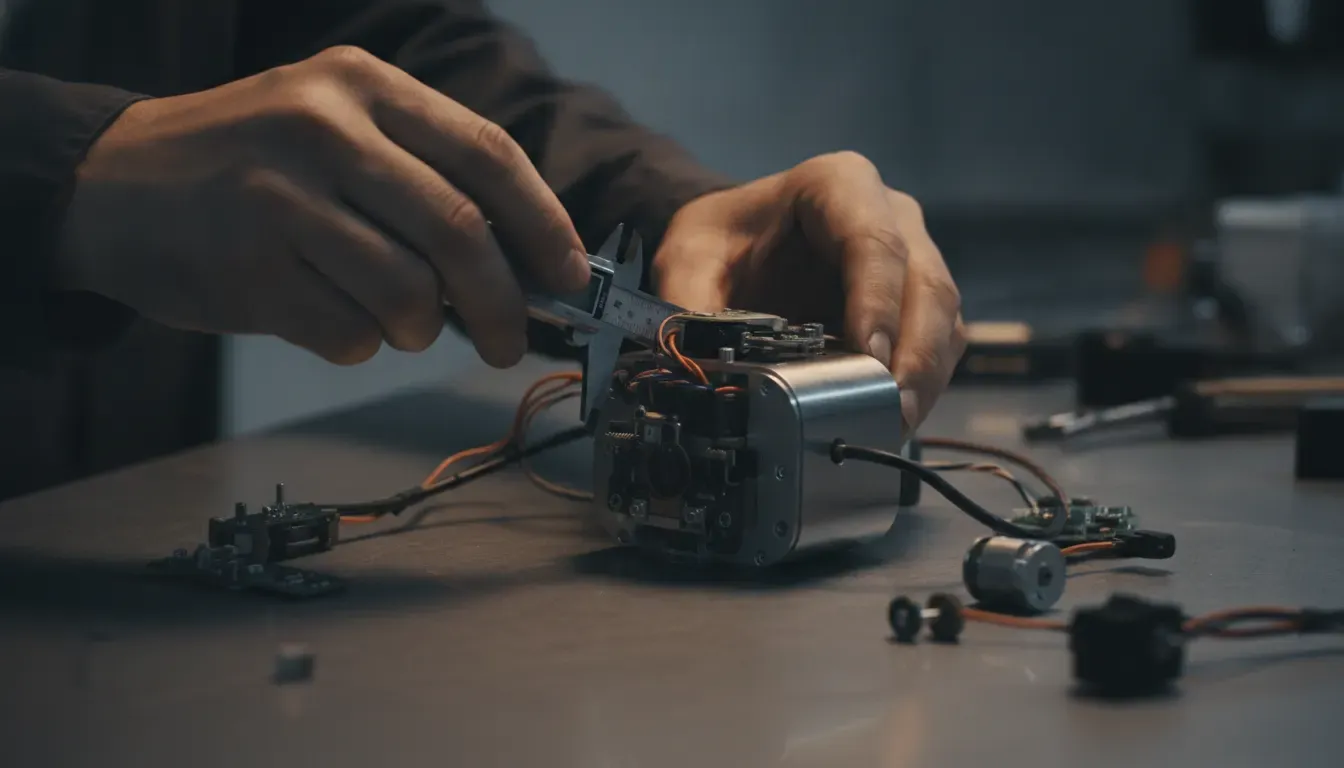
Electrical design connects the device's power, sensing, control, communication, and user-facing functions. Depending on the product, the work may include architecture, component selection, schematics, PCB layout coordination, power budgeting, signal integrity considerations, firmware interfaces, cable and connector choices, and manufacturing test access.
Early electrical decisions should account for the physical product. A board is not finished when the schematic is complete. It must fit the enclosure, accommodate thermal behavior, allow assembly and inspection, protect sensitive components, and expose the right points for bring-up and test. Connector selection can affect serviceability, sealing, strain relief, assembly time, and supplier availability.
Product teams should ask how the electrical work will be verified. A partner should explain which requirements are tested at the board level and which are tested at the system level. The partner should also explain how firmware and hardware interfaces are controlled. Finally, ask what evidence will be retained when a component or revision changes. Jackson Hedden's electrical design services provide a relevant reference point for this kind of multidisciplinary scope.
How does verification-minded design reduce late risk?
Verification-minded design means making requirements, acceptance criteria, test methods, and design outputs agree before the team is under schedule pressure. It does not mean testing everything at the end. It means planning how evidence will be produced while architecture, components, prototypes, and manufacturing methods can still change.
The FDA distinguishes design verification from design validation. In practical terms, verification asks whether the design output meets the specified input, while validation asks whether the resulting device meets user needs and intended use under defined conditions. The FDA's Design Controls presentation describes verification as objective evidence that design output meets design input and validation as objective evidence that specifications conform to user needs and intended uses.
- Verification: Can the device meet a defined requirement using a planned method and acceptance criterion?
- Validation: Does the representative device support the intended user, use, and environment as expected?
Both conversations should influence technical decisions. If a proposed material cannot support the planned cleaning exposure, that is a design decision, not a late test surprise. If a connector cannot be accessed by the intended operator, that is an interface decision, not merely a cosmetic issue. If a measurement cannot be reproduced because the fixture is unstable, the test method needs technical attention.
The FDA's QMSR Design and Development presentation lists planning, inputs, outputs, reviews, verification, validation, transfer, and changes as connected stages. The practical lesson is that evidence and change control should be considered during development, not added as paperwork after the design appears finished.
Teams that need a focused risk-management reference can also review Jackson Hedden's guide to ISO 14971 risk management. A public article cannot define the correct risk process for a specific product, but it can help a buyer ask whether a prospective partner connects risks to requirements and design decisions.
When should DFM and production planning begin?
DFM and production planning should begin when the first meaningful architecture decisions are made, then become more specific as the design matures. Waiting until a prototype is approved to discuss process, tolerance, supplier capability, or inspection can force avoidable redesign and make the prototype less representative of the product that will actually be built.
Early production planning does not lock the team into one factory or process. It surfaces constraints while alternatives are still available. A review can ask:
- Which parts are prototypes, and which parts need to represent the intended production process?
- Which dimensions, materials, interfaces, or finishes are critical to function or safety?
- Can the chosen process hold the proposed tolerances consistently?
- How will parts be oriented, inspected, assembled, and tested?
- Which supplier or component decisions create a single-source or lead-time risk?
- Which process outputs cannot be fully confirmed by inspecting the finished device?
DFM also improves the handoff between design and manufacturing. The goal is not to make every product generic or to remove every complex feature. The goal is to understand what a feature costs in tooling, variation, assembly time, inspection effort, or supplier risk, then decide whether its product value justifies that cost and risk.
Jackson Hedden's manufacturing services and design-for-manufacturing guide reflect this connected view of design and production. The appropriate manufacturing route still depends on the device, volume, materials, quality requirements, and supplier ecosystem. A responsible partner should make those dependencies visible rather than present one process as universally correct.
What can a medical device prototype prove?
A medical device prototype is most useful when the team defines the question it is meant to answer. A prototype can explore form, fit, ergonomics, component placement, assembly sequence, electrical behavior, test access, or a manufacturing assumption. It cannot automatically prove that a final device meets every requirement, supports intended use, or is ready for production.
Different prototype builds serve different purposes. A fast appearance model may help review size and interaction. A high-fidelity mechanical build may expose tolerance stack-up or assembly access. An electronics prototype may reveal power, sensing, thermal, or communication constraints. A production-representative build may be needed for more meaningful verification or validation planning. The partner should state what is representative, what is not, and what evidence the build can produce.
Prototype reviews should end with decisions. Record what passed, what failed, what changed, which assumptions remain open, and how the next build will answer the next question. That discipline keeps prototyping from becoming an endless sequence of attractive but inconclusive models. Jackson Hedden's medical device prototyping services page is a useful place to compare this focused, question-led approach with the broader prototyping scope.
What should a production handoff include?
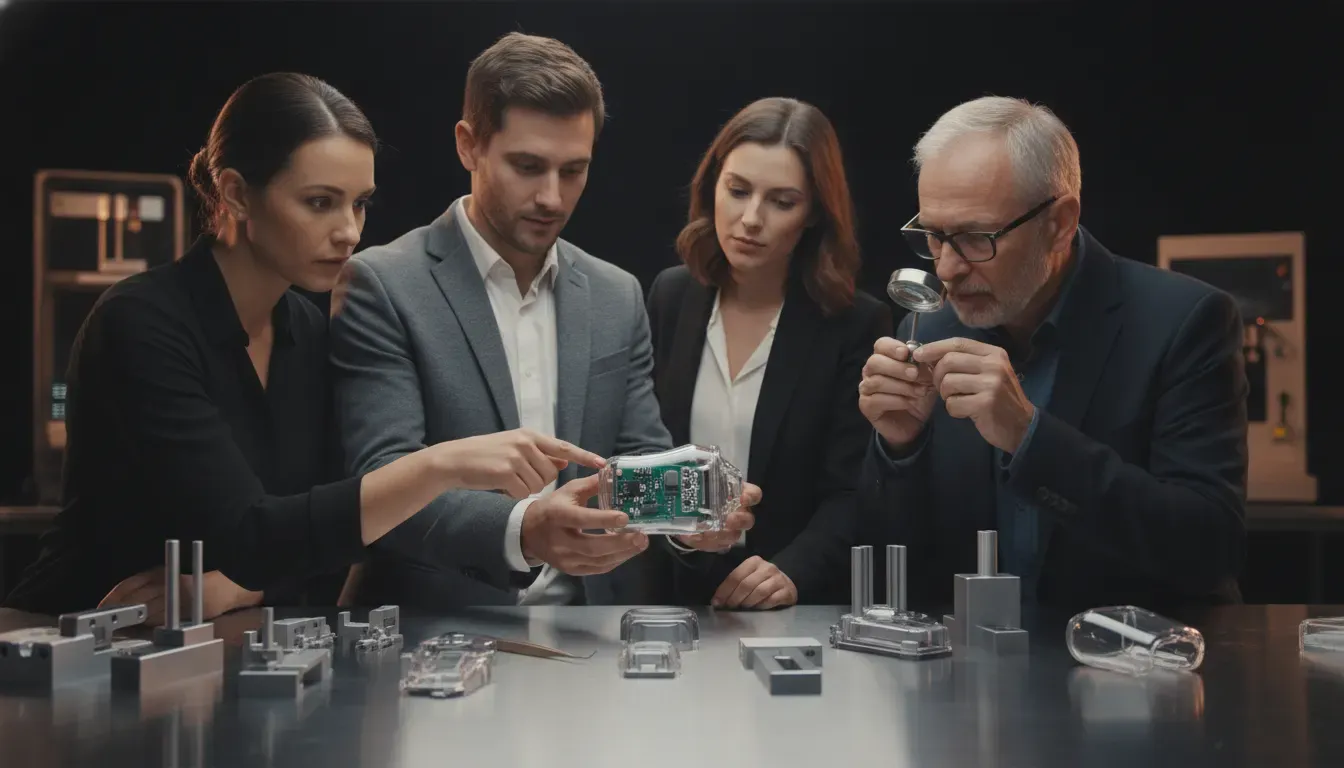
A production handoff should give the receiving team enough controlled information to build and inspect the approved design without depending on the original development team's memory. The exact package varies by product and quality system, but it should connect released design outputs to purchasing, production, inspection, testing, packaging, and change management.
- Released mechanical models, drawings, specifications, materials, finishes, and critical characteristics.
- Electrical schematics, PCB data, component information, firmware or software release references where applicable, and test access.
- A bill of materials with revision control, approved alternates where appropriate, and supplier assumptions.
- Assembly instructions, inspection methods, test procedures, acceptance criteria, and required fixtures.
- Packaging and labeling inputs that have been defined for the project.
- Pilot or production-representative build records, open issues, and corrective actions.
- Traceability from requirements to design outputs and verification evidence.
- A controlled method for reviewing and approving changes after handoff.
Not every item is created by the same vendor. A medical device development partner should clearly identify what it owns, what it contributes, and what remains with the manufacturer, quality team, regulatory specialist, or customer. Clear interfaces are part of the deliverable.
How do you evaluate a medical device development partner?
Evaluate a medical device development partner by the quality of its questions, the specificity of its deliverables, and its ability to carry decisions across disciplines. A portfolio of attractive products is useful, but it does not show whether the partner can manage requirements, evidence, interfaces, production constraints, and controlled change.
- Ask how the team starts. The partner should ask about intended use, users, operating environment, constraints, existing evidence, target markets, and the decisions that must be made next.
- Request a deliverable map. You should understand what the team will produce, when it will be reviewed, and how each output supports the next stage.
- Test cross-functional depth. Ask how mechanical, electrical, systems, usability, packaging, and manufacturing decisions are coordinated when one change affects another.
- Discuss verification before hiring. Ask for examples of requirements, acceptance criteria, test fixtures, prototype purpose, and how the team handles a failed result.
- Probe production readiness. Ask how the partner approaches tolerances, supplier capability, assembly, inspection, test access, pilot builds, and the final handoff.
- Clarify ownership and change control. Define who approves requirements, owns the design history, manages revisions, communicates supplier changes, and closes open issues.
- Confirm collaboration style. Product teams need a partner who can work with internal stakeholders, quality teams, manufacturers, and outside specialists without hiding decisions behind discipline-specific language.
A strong partner will also be honest about limits. Medical device development can require regulatory, clinical, quality, human factors, software, testing, and manufacturing expertise beyond one firm's scope. The right partner identifies those interfaces early and helps the product team coordinate them.
Medical device development vs. medical device development
Medical device development is the broader product and business journey from opportunity through launch and ongoing change. Medical device development is the technical execution layer that defines, builds, tests, and transfers the device within that journey. The two overlap, but they are not interchangeable.
- Medical device development: broader planning across product strategy, user needs, design, quality, regulatory planning, clinical considerations, manufacturing, launch, and lifecycle support.
- Medical device development: systems, mechanical, electrical, and production-focused work that turns requirements into design outputs, prototypes, testable evidence, and manufacturing-ready information.
This distinction helps teams hire accurately. If the immediate problem is an undefined product opportunity, the project may need broader development leadership. If the opportunity is clear but the team needs a coordinated architecture, prototype, verification plan, DFM review, or production handoff, medical device development support may be the more precise need.
Jackson Hedden's broader prototyping services can support physical learning, while the technical scope should be defined around the device's requirements, interfaces, risks, and production path. The best engagement is the one that makes the next decision easier and the next handoff safer.
Request a medical device development consultation
Frequently Asked Questions
What disciplines are involved in medical device development?
Medical device development commonly involves systems, mechanical, and electrical disciplines, with software, human factors, materials, packaging, manufacturing, quality, and regulatory interfaces added as the device requires. The right mix depends on intended use, architecture, risk, technology, and production plan.
What is the difference between design verification and validation?
Design verification evaluates whether design outputs meet specified design inputs. Design validation evaluates whether the resulting device meets user needs and intended use under defined conditions. They answer different questions and should use planned methods and acceptance criteria.
When should a medical device team involve a manufacturing partner?
Involve manufacturing input while the architecture and critical features are still flexible, not only after the prototype is complete. Early input can improve material, tolerance, assembly, inspection, supplier, and process decisions while changes remain less expensive.
Does a technical partner replace regulatory or quality expertise?
No. A technical partner can create technical outputs and evidence that support a quality and regulatory process, but it does not automatically replace the customer's quality system, regulatory strategy, clinical responsibilities, or specialized advisers. Responsibilities should be defined before work begins.
What should I bring to an initial medical device development consultation?
Bring the current product concept, intended users and use environment, known requirements, sketches or prototypes, existing test results, target market assumptions, manufacturing constraints, and the decisions causing the most uncertainty. A partner can then propose a focused scope instead of duplicating work that is already complete.
Sources and scope note
This article uses the FDA's public Design Controls and QMSR Design and Development presentations for the verification, validation, design-stage, and change-management distinctions described above. Requirements vary by product and jurisdiction. Use qualified regulatory and quality professionals for project-specific guidance.