What Is Heat Dissipation Design & Why It Matters
When you’re launching a physical product for a client, the stakes are high. A successful campaign depends on delivering a flawless brand experience, but one technical oversight can put the entire project at risk. An overheating device isn't just a minor glitch; it's a direct path to poor performance, system failures, negative reviews, and even serious safety concerns. This is why heat dissipation design is not an engineering afterthought, but a critical part of your project's risk management strategy. By planning for thermal control from the very first sketch, you protect your client’s brand, ensure a positive user experience, and deliver a final product that’s as reliable as it is creative.
Key Takeaways
- Integrate thermal design from day one: Your best defense against performance issues and safety hazards is to make strategic choices about materials, component layout, and airflow from the very first sketch.
- Select the right cooling strategy: The ideal cooling method balances performance needs with practical limits like budget, size, and user experience. The goal is to find the simplest, most reliable solution that gets the job done without over-engineering.
- Validate your design with physical tests: Digital simulations are a great starting point, but real-world testing is essential to confirm your product is safe and reliable. This final step verifies your engineering choices and protects your client's brand from the risks of overheating.
What is Heat Dissipation Design?
Ever held a phone that felt uncomfortably warm after a long video call, or noticed your laptop getting hot while running a big program? That’s a thermal management issue in action. Heat dissipation design is the engineering process of planning how a product gets rid of the heat it generates. It’s not an afterthought; it’s a critical part of the initial design phase that ensures a device stays cool, safe, and functional. Think of it as giving the heat an escape route. Every electronic component, from a tiny processor to a powerful motor, creates heat as a byproduct of its operation. Without a clear path for that heat to exit, it builds up inside the product’s enclosure, and that’s where problems begin. A solid heat dissipation strategy is fundamental to creating a reliable, high-performance product that people will love to use.
Why Thermal Management Matters in Product Development
As products become smaller and more powerful, managing heat becomes a central design challenge. You can’t just stick a fan in a sleek, modern device and call it a day. Effective thermal management must be integrated directly into the product’s architecture from the very first sketch. This means making strategic decisions about everything from the materials used in the casing to the placement of internal components. By planning for heat dissipation early, we can use tools like Computer-Aided Design (CAD) and thermal simulations to predict how heat will behave, ensuring the final product operates within its ideal temperature range without compromising its aesthetic or form factor.
How Heat Affects Performance and Reliability
Ignoring heat dissipation doesn't just lead to a product that feels warm. The consequences are far more serious and can undermine an entire project. When components overheat, their performance degrades, leading to slower processing, system glitches, and unexpected shutdowns. Over time, constant exposure to high temperatures causes physical wear and tear on sensitive electronics, leading to component degradation and drastically shortening the product's lifespan. For your client, this translates directly to a poor user experience, negative reviews, and potential safety risks. A product that constantly overheats isn't just unreliable; it's a liability that can damage brand reputation.
How Heat Moves Through a Device
Every electronic product generates heat, and that heat has to go somewhere. If it gets trapped, you run into performance issues, safety hazards, and a product that just doesn't feel right in a user's hand. Think of it like managing traffic in a city; you need clear routes for things to flow smoothly. In product design, we manage the flow of heat. Understanding how heat moves is the first step in creating a solid thermal management strategy. It’s not about becoming a physicist overnight; it’s about knowing the fundamental principles so you can make informed decisions about materials, form, and internal layout. For creative agencies, this is where engineering meets user experience. A product that overheats can undermine an entire campaign, while a well-managed device feels reliable and premium. There are three main ways heat gets from point A to point B in any device: conduction, convection, and radiation. Each plays a different role, and knowing how to use them is key to designing a product that works as beautifully as it looks. Getting this right ensures the final product is not only safe and functional but also aligns with the high-quality brand experience you're aiming to deliver. Let's break down what each one means for your project.
The Basics of Conduction
Conduction is simply heat transfer through direct physical contact. Imagine holding a hot cup of coffee—the heat moves directly from the cup into your hands. Inside an electronic device, the same thing happens. Heat travels from a hot component, like a processor, to cooler parts it's touching, such as the circuit board or a metal frame. For compact consumer electronics, this is the most important and effective way to move heat away from sensitive areas. A good heat dissipation design relies heavily on creating clear pathways for conduction to do its job, guiding warmth away from the core components to the product's exterior.
The Basics of Convection
Convection is heat transfer through the movement of a fluid, which in our case is usually air. Think about the steam rising from that same cup of coffee; that’s convection in action. The air near the hot surface warms up, becomes less dense, and rises, allowing cooler air to take its place and repeat the cycle. While this process helps cool a device, it’s often less efficient than conduction, especially in small, enclosed products with little to no airflow. Vents and fans are designed to improve convection, but for sleek, sealed devices, we can't rely on it alone. It’s a piece of the puzzle, but rarely the whole solution.
The Basics of Radiation
The third method is radiation, where heat is transferred as invisible infrared waves. You feel this when you stand near a campfire or out in the sun; the heat travels through the air to warm you without direct contact. Every object with a temperature above absolute zero emits thermal radiation. While it’s always happening, its impact on cooling most consumer electronics is pretty minimal compared to conduction and convection. We account for it in our engineering calculations, but it’s usually not the star player in the thermal strategy. The material finish and color can influence radiation, but we typically focus our efforts on mastering conduction and convection first.
Exploring Passive Cooling Techniques
Passive cooling is the art of designing a product to cool itself without using any power or moving parts. It’s all about smart engineering: using the right shapes, materials, and layouts to guide heat away from sensitive components. For any physical product, especially electronics, this is the first and most important line of defense against overheating. Passive cooling is silent, reliable, and cost-effective. It’s the foundation of good thermal design, ensuring a product not only looks great but performs flawlessly under pressure. When we design a product, we’re not just thinking about aesthetics; we’re building in these clever, invisible systems that keep everything running smoothly.
Using Heat Sinks and Thermal Spreaders
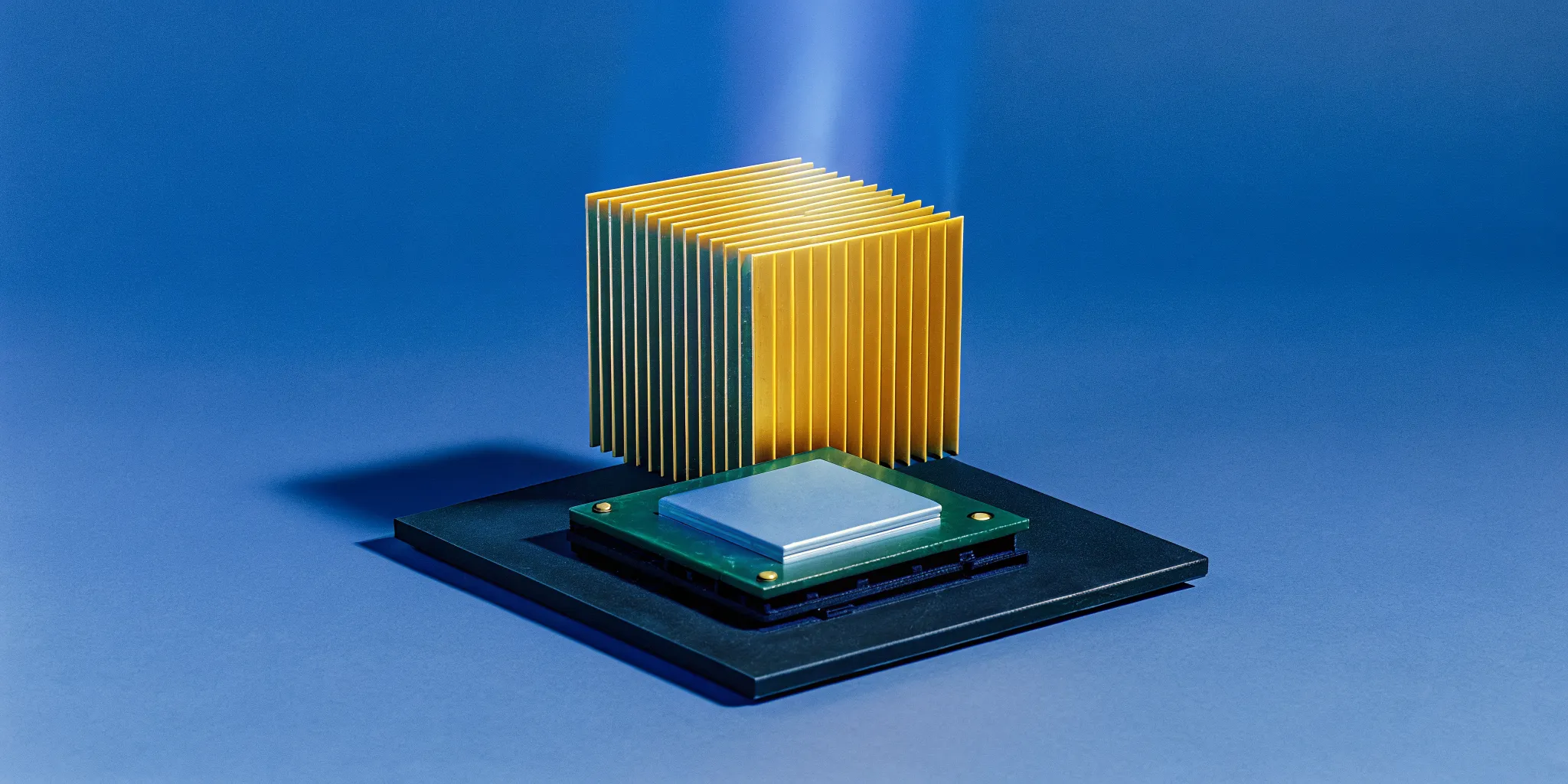
A heat sink is one of the most common tools in our thermal toolkit. It’s a piece of metal, usually aluminum or copper, designed with fins to maximize its surface area. We attach it directly to a hot component, like a processor, using a thermal paste or pad to create a seamless connection. The heat sink then pulls warmth away from the component and radiates it into the surrounding air. Think of it as giving the heat a large, open window to escape through. Heat spreaders work similarly but focus on distributing heat evenly across a larger area instead of just radiating it away, preventing damaging hot spots from forming.
Applying Thermal Interface Materials
Even surfaces that look perfectly smooth have microscopic gaps and imperfections. When you press a heat sink against a processor, these tiny air pockets can trap heat and prevent it from transferring efficiently. That’s where thermal interface materials (TIMs) come in. These are thermally conductive compounds, like pastes, pads, or adhesives, that we apply between two components to fill those gaps. By creating a perfect bridge for heat to travel across, TIMs ensure that your cooling system works as intended. It’s a small but critical detail that makes a huge difference in keeping a device’s temperature under control and ensuring its long-term reliability.
Optimizing Your PCB Layout
A product’s printed circuit board (PCB) is more than just a collection of components; it’s a key part of the thermal management system. How we arrange the components on the board has a massive impact on heat dissipation. We strategically place heat-generating parts away from sensitive areas and ensure there’s enough space for air to circulate. We also design the copper pathways on the board to help draw heat away from critical chips. Using tools like thermal simulation software, we can model how heat will flow through the PCB and optimize the layout before we even build a prototype. This proactive approach prevents performance issues and system failures down the line.
Choosing the Right Materials
The materials you choose for a product’s enclosure and internal structures are fundamental to its thermal performance. Some materials are great at conducting heat, while others are better at insulating. We often use highly conductive metals like copper and aluminum to create pathways for heat to escape. For a product’s outer shell, we might select a material that feels good to the touch but also effectively radiates heat away from the user. Modern manufacturing also gives us access to advanced ceramics and polymers with tailored thermal properties. The right material selection is a careful balance of function, aesthetics, and cost, ensuring the final product is both beautiful and technically sound.
A Look at Active Cooling Methods
When passive methods aren't enough to keep temperatures in check, it's time to bring in active cooling. Unlike passive techniques that rely on natural heat movement, active cooling uses energy, usually electricity, to forcefully remove heat from a system. This approach is essential for high-performance products that generate a lot of thermal energy in a small space, like powerful electronics, portable medical devices, or compact gadgets packed with features. If your product concept involves high-speed processors, powerful LEDs, or dense battery systems, an active cooling strategy is likely necessary.
Active solutions introduce more complexity and cost to a product’s design. They require power, take up valuable internal space, and often involve moving parts, which means more considerations for reliability, acoustics, and the overall user experience. However, for products that need to push the limits of performance, they are often the only way to guarantee stability and a long lifespan. Choosing an active method means you’re investing in a more robust thermal management system to protect the core function of your product and deliver on its promises. Let's explore some of the most common active cooling strategies your engineering partner might recommend.
Integrating Fan-Based Systems
The most familiar active cooling solution is the humble fan. It’s a straightforward and effective way to manage heat. By blowing air across a hot component or a heat sink, a fan dramatically speeds up the process of convection, carrying heat away much faster than air would move on its own. This is why you’ll find them in everything from laptops to high-powered electronics, where they are critical for keeping powerful chips cool and running efficiently. An effective fan-based system is often the first step into active cooling.
While fans are a cost-effective workhorse, they come with trade-offs. They consume power, produce noise, and introduce a mechanical component that can eventually fail. They also pull in dust, which can clog vents and reduce effectiveness over time. When designing a product for a brand experience, these factors are key. A noisy fan might be fine for a server rack, but it could ruin the premium feel of a desktop smart device or an interactive retail display.
Using Liquid Cooling Solutions
For products that generate extreme amounts of heat, liquid cooling offers a powerful alternative. This method works by pumping a coolant, typically a water-based fluid, through a sealed loop of tubing. The fluid absorbs heat directly from critical components like a processor, then travels to a radiator where the heat is released into the air, often with the help of a fan. This closed-loop system is far more efficient at transferring heat than air alone, making it a go-to for high-performance gaming PCs and data centers.
While once a niche solution, compact liquid cooling systems are becoming more common in specialized consumer electronics. The main hurdles are complexity and cost. A liquid cooling system involves a pump, tubing, radiator, and coolant, all of which must be carefully integrated into the product design to prevent leaks and ensure reliability. For a high-impact promotional product or a cutting-edge device, however, incorporating liquid cooling can be a major performance and marketing win.
Implementing Thermoelectric Coolers
Thermoelectric coolers (TECs), or Peltier devices, are a unique, solid-state cooling solution. Instead of using moving parts or fluids, a TEC uses an electrical current to create a temperature difference across a small ceramic module. One side gets cold while the other gets hot. By placing the cold side against a component, you can draw heat away with incredible precision. This technology can even cool a component to below the surrounding ambient temperature, something fans and standard liquid coolers can’t do.
Because they have no moving parts, TECs are silent, reliable, and great for compact designs. However, they aren't very energy-efficient and the "hot" side of the module still needs its own heat sink and sometimes a fan to dissipate the heat it pulls away. These devices are perfect for niche applications requiring precise temperature control, like portable mini-fridges or medical devices. For a creative agency, a thermoelectric device could be the secret ingredient for a product that delivers a surprising "cool-to-the-touch" experience.
Advanced Materials for Modern Cooling
Beyond traditional fans and heat sinks, a new generation of materials is changing the game for thermal management. These advanced solutions are perfect for high-performance electronics, compact devices, and ambitious product designs where every millimeter counts. They work at a microscopic level to move heat efficiently, opening up new possibilities for creating sleek, powerful, and reliable products. Whether you're developing a wearable device or a high-tech promotional item, understanding these materials can help you push creative boundaries without worrying about your product overheating.
Vapor Chambers and Heat Pipe Technology
If you're designing a slim, compact product, you know that space is a luxury. Traditional heat pipes are effective, but their tube shape can be difficult to fit into tight designs. This is where vapor chambers shine. Think of a vapor chamber as a super-thin, flat heat pipe. They are excellent at spreading heat quickly across a wide surface area. Inside the chamber, a small amount of liquid turns to vapor at a hot spot, rushes to a cooler area, condenses back into a liquid, and flows back to start the cycle again. This process is incredibly fast and requires no power, making it a powerful passive cooling solution for everything from high-end smartphones to custom handheld devices.
Phase Change Materials
Imagine a material that acts like a thermal battery, absorbing heat when your device is working hard and releasing it later when it cools down. That’s the magic of phase change materials (PCMs). These substances absorb a huge amount of energy as they change from solid to liquid, all while maintaining a stable temperature. This makes them ideal for products that experience short bursts of intense activity, like a smart device running a complex task or a piece of interactive tech at an event. By integrating PCMs, we can prevent temporary temperature spikes from affecting performance, ensuring a smooth and reliable user experience every time.
Carbon-Based Solutions and Metamaterials
Welcome to the cutting edge of thermal design. Researchers are now using machine learning and AI to engineer entirely new materials with specific thermal properties. Thermal metamaterials, for example, are engineered to control how heat is emitted, offering unprecedented control over a product's temperature. At the same time, advanced carbon-based solutions like graphene and carbon nanotubes are proving to be incredibly efficient at transferring heat. These next-generation materials are still emerging, but they represent the future of cooling, promising to solve thermal challenges in everything from aerospace technology to the next big consumer electronic device.
How to Choose the Right Cooling Strategy
Picking the right cooling strategy isn't just an engineering task; it's a core part of your product's design and business plan. There’s no single best answer. The ideal solution depends entirely on what your product is, what it does, and who will be using it. A simple, passive approach might be perfect for a low-power promotional item, while a high-performance device for a major brand launch might require a more robust active cooling system.
Making the right choice involves balancing performance needs with practical constraints like budget, size, and the user environment. For example, a fan might be effective, but the noise could ruin the user experience for a handheld device. A large heat sink might solve the thermal problem, but it could make the product too bulky or compromise the sleek aesthetic your client wants. Thinking through these trade-offs early in the design process is the key to developing a product that not only works flawlessly but also aligns with your project's creative and business goals. It’s about finding that sweet spot where function, form, and feasibility meet.
Consider Power Density and Space
As products get smaller and more powerful, managing heat becomes a bigger challenge. Think about it: you're packing more heat-generating components into a tighter space, leaving less surface area for that heat to escape. This is what engineers refer to as increasing power density, and it can create serious thermal bottlenecks. You have to get creative to guide heat away from sensitive chips.
When you're planning a product, especially a compact one like a wearable or a smart device, you need to think about this from day one. The available internal space will heavily influence your cooling options. A tiny enclosure might not have room for a fan, forcing you to rely on passive methods like heat spreaders or a carefully designed chassis that can radiate heat effectively.
Balance Cost and Complexity
Every project has a budget, and your thermal management solution is a significant part of it. It’s a classic balancing act. You need a system that can effectively dissipate heat without blowing up the bill of materials or making the assembly process a nightmare. A complex liquid cooling loop might be technically impressive, but it’s often too expensive and complicated for most consumer products.
The goal is to find the simplest, most reliable solution that gets the job done. For many devices, a well-designed passive system using heat sinks and good airflow is more than enough. It’s crucial to match the complexity of the cooling solution to the actual needs of the product. Over-engineering is just as risky as under-engineering, as it can eat into your profit margins and introduce unnecessary points of failure.
Factor in Environment and Integration
A product doesn't exist in a vacuum. Where and how it will be used has a massive impact on its thermal design. A device meant for outdoor use in direct sunlight faces a much tougher challenge than one that will live in an air-conditioned office. You have to account for ambient temperatures, humidity, and potential exposure to dust or water. A thoughtful electronics enclosure design is your first line of defense, protecting internal components while helping manage heat.
You also need to consider how the device will integrate with other systems. If it’s part of a larger installation or will be enclosed in a display case, airflow could be restricted. These external factors can completely change your thermal calculations, so it's vital to think about the entire user journey and environment from the start.
How to Design for Optimal Thermal Performance
Once you have a cooling strategy, the next step is to integrate it into your product’s design. This is where thoughtful engineering turns theory into a reliable, functional product. Getting this right means carefully balancing component layout, digital testing, and real-world manufacturing considerations.
Plan Component Placement and Airflow
Think of your product's internal layout as a puzzle where every piece affects the flow of heat. The goal is to arrange components strategically to keep things cool. High-power parts that generate a lot of heat, like processors, should be placed where they can get the most airflow. It's also critical to keep them away from temperature-sensitive components like batteries. A good heat dissipation design ensures there are clear pathways for air to move, preventing hot spots from forming. This foundational step is all about giving heat an easy escape route from the very beginning.
Use Thermal Simulation and Modeling
Before you ever build a physical prototype, you can predict how hot your product will get using thermal simulation. Using Computer-Aided Design (CAD) models, engineers can run advanced 3D simulations for heat transfer to create a virtual heat map of the device. This process identifies potential problem areas early, allowing engineers to test different solutions without the cost or time of physical builds. They can digitally move components, add vents, or test different heat sink designs to see what works best. It’s like having a crystal ball for thermal performance, ensuring the design is optimized before it ever leaves the screen.
Account for Manufacturing Constraints
A brilliant thermal design is only effective if it can be manufactured reliably and on budget. This is where we factor in real-world production realities. For example, a custom-machined heat sink might offer perfect cooling in a simulation, but its cost could make the final product unprofitable. A good design team always works with manufacturing in mind, ensuring that every component, from thermal pads to enclosure vents, is practical to produce at scale. Partnering with an experienced firm helps you align your design with a solid product design and manufacturing strategy, creating a seamless handoff to the factory and a more reliable final product.
What Happens When Products Overheat?
When you’re focused on bringing a big creative idea to life, it’s easy to overlook the less glamorous details, like how a product handles heat. But thermal management isn’t just an engineering footnote; it’s fundamental to a product’s success, safety, and the user’s perception of your brand. Ignoring how a device dissipates heat can lead to a cascade of problems that undermine the entire project, turning an exciting launch into a customer service nightmare.
Think of it this way: every electronic component generates heat as a byproduct of its operation. If that heat has nowhere to go, it builds up, and that’s when things start to go wrong. The consequences range from subtle performance drops to catastrophic system failures. A product that constantly overheats will have a shorter lifespan, perform unreliably, and can even pose serious safety hazards. For agencies creating physical products for a campaign or brand, this translates directly to brand risk. A product that fails prematurely or feels uncomfortably hot to the touch reflects poorly on the brand it represents. Getting thermal design right from the start protects the user, the product, and ultimately, the brand’s reputation.
Component Failure and Shorter Lifespans
Inside every electronic device, components are designed to operate within a specific temperature range. When a product overheats, it pushes these components past their limits, causing them to degrade much faster than they should. This consistent thermal stress can weaken solder joints, damage sensitive microchips, and reduce the overall component reliability. The result is a product that might work perfectly at first but is destined for an early demise.
This isn’t just a long-term problem. Excessive heat can cause immediate performance issues as the device struggles to keep up. For a branded product, a short lifespan leads to unhappy customers, negative reviews, and costly returns, tarnishing the brand equity you worked so hard to build.
System Instability and Safety Risks
Beyond simply wearing out components, overheating can cause a product to become unstable and unpredictable. A device running too hot might freeze, crash, or restart without warning, creating a frustrating and unreliable user experience. Internally, the heat can damage circuits or cause different parts of the system to fail, leading to a total breakdown.
More importantly, poor thermal management introduces serious safety risks. A product that gets too hot can cause skin burns, a major liability for any consumer-facing item. In the worst-case scenario, an overheating battery or component can even become a fire hazard, posing a danger to users and their property. These aren't edge cases; they are real-world consequences of cutting corners on thermal design.
Poor User Experience and Product Liability
Even if an overheating product doesn’t fail completely, it can still ruin the user experience. No one wants to hold a device that feels uncomfortably warm. It immediately signals poor quality and can make the user feel unsafe. Many modern devices are also programmed to protect themselves from heat by “throttling,” or intentionally slowing down their performance to cool off. This leads to lag and sluggishness, which is incredibly frustrating for the user.
From a business perspective, these issues open the door to significant product liability. If a product causes injury or damage, the brand is on the hook. This is why it’s absolutely essential to consider heat dissipation from the earliest design stages, ensuring the final product is not only functional and beautiful but also safe and dependable.
How to Test and Validate Your Thermal Design
A great thermal design looks good on paper, but you can’t know for sure how it will perform until you test it in the real world. This is the phase where we move from theory to reality, ensuring the final product is not just beautiful and functional, but also safe and reliable. For agencies, this step is crucial because it protects your client’s brand from the risks of overheating, like poor performance or product failure. It’s how we guarantee that the physical product you deliver is ready for the spotlight.
Validating the thermal design involves a series of rigorous tests where we push the product to its limits under controlled conditions. We simulate real-world use cases, from a device running for hours in a warm room to a product sitting in a sunny storefront display. By gathering concrete data, we can confirm that our design choices were correct and that every component stays within its safe operating temperature. This isn't just about checking a box; it's about delivering a polished, professional, and dependable product that reflects the quality of your creative vision. Think of it as the final quality check that turns a great idea into a market-ready success.
Methods for Thermal Testing
To get a clear picture of how heat moves through a product, we use a few key testing methods. The goal is to pinpoint any potential "hotspots" where heat isn't dissipating effectively. One of the most powerful tools is thermal imaging, which uses an infrared camera to create a visual map of the surface temperatures. This allows us to literally see where heat is building up in real time.
For more precise measurements at specific points, we use thermocouples. These are tiny, accurate sensors that we can place directly on critical components like processors or power regulators. By monitoring these components under various loads, we can collect exact temperature data to ensure nothing is getting too hot. This hands-on approach gives us the hard numbers we need to confirm our design works as intended.
Verifying Simulations and Benchmarking Performance
Before we even build a physical prototype, we run extensive thermal simulations using specialized software. These models predict how heat will behave based on our design, but they are still just predictions. The real test comes when we benchmark a physical prototype against those simulation results. We run the device and measure the temperatures of key components, then compare that data to what our models predicted.
If the real-world temperatures are higher than our simulations suggested, or if they exceed the safe limits for a component, we know we have to make adjustments. This might mean changing the placement of a component, improving airflow, or adding a larger heat sink. We then repeat the process of analysis and testing until the physical results align with our targets, ensuring the final product is both stable and reliable.
Related Articles
- Electronics Enclosure Design Tips & Best Practices | Jackson Hedden Inc
- What is Miniaturization and Why Does It Matter?
- Mechanical and Electrical Engineering: Which Do You Need?
Frequently Asked Questions
How early do we need to consider heat dissipation in our project? You should think about it from the very first sketch. Thermal management isn't something you can add at the end; it fundamentally influences the product's shape, the materials you can use, and where components are placed internally. Addressing it from day one ensures the final product works reliably without forcing last-minute compromises that could affect the design.
Will adding a cooling system compromise the look and feel of our product? Not at all, if it's done right. Great industrial design integrates thermal management so seamlessly that you'd never notice it. For many products, we use passive cooling, which has no moving parts. This can involve using the metal enclosure itself as a heat sink or choosing advanced materials that manage heat invisibly. The goal is always to balance function and form, so the final product is as beautiful as it is reliable.
Does every electronic product need a fan? Definitely not. In fact, most consumer products don't use fans. Fans are a form of active cooling, which is typically reserved for high-performance devices that generate a lot of heat, like a gaming laptop. The vast majority of products rely on silent, passive cooling methods like heat sinks and clever internal layouts to keep temperatures in a safe range.
Our product idea is simple, not high-tech. Do we still need to worry about this? Yes, even simple electronics generate heat. Think about products like portable chargers, LED displays, or smart speakers. While they may not have powerful processors, their components still need to operate within a safe temperature range to ensure a long life and prevent safety issues. Proper thermal design protects the user and ensures the product, no matter how simple, is a positive reflection of the brand.
What's the biggest risk if we get the thermal design wrong? The biggest risk is damaging your client's brand reputation. A product that overheats leads to a poor user experience, from feeling uncomfortably hot to performing sluggishly or failing completely. This results in negative reviews, costly returns, and in the worst cases, can create serious safety liabilities. Getting the thermal design right is about protecting the user, the product, and the brand.