Manufacturing Project Management for Product Teams
Manufacturing project management is the coordination layer that moves a physical product from a production-ready design toward an organized launch. It connects suppliers, materials, schedules, quality checks, changes, and handoff decisions so the product team can see what happens next and who owns it.
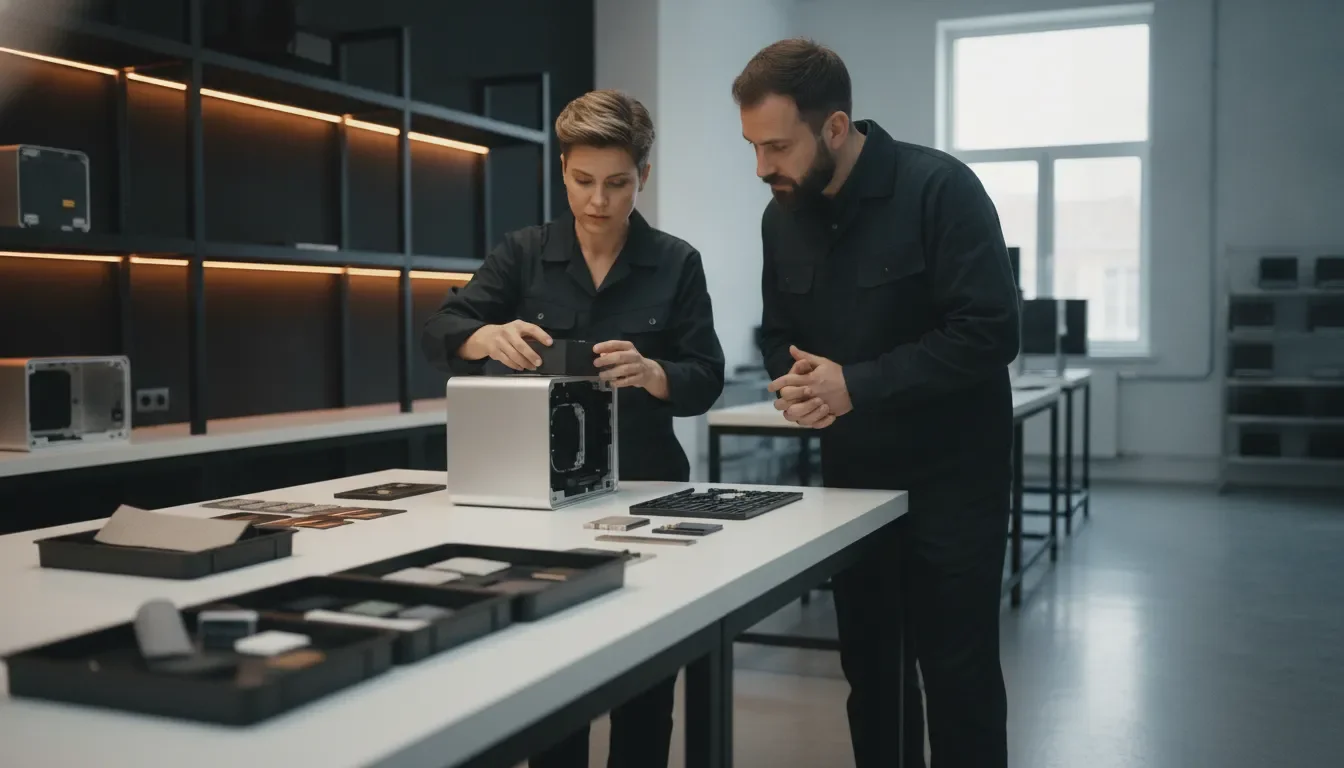
For product teams and agencies, the challenge is rarely one isolated task. The work crosses design, sourcing, prototyping, manufacturing, logistics, and stakeholder review. A good manufacturing project-management approach keeps those workstreams connected without pretending that every product follows the same schedule.
What is manufacturing project management?
Manufacturing project management is the structured coordination of people, suppliers, decisions, materials, milestones, and quality checkpoints needed to prepare and produce a physical product. It turns a broad launch goal into a sequence of owned actions, review gates, and documented decisions.
The project manager's job is not to replace the specialists doing the work. It is to make sure the right information reaches the right person at the right time. That means clarifying the current version of the design, confirming what a supplier needs, tracking open decisions, and escalating risks before they become expensive surprises.
The strongest plans connect three views of the same project:
Product view: What must the product do, and what must remain true as it moves toward production?
Production view: Which materials, suppliers, processes, fixtures, samples, and checks are needed?
Business view: What decisions protect the launch goal, budget, timing, customer experience, and brand?
When these views stay separate, a change in one area can create confusion everywhere else. When they are managed together, the team can make tradeoffs deliberately.
Why the production handoff needs a management layer
A production handoff is more than sending a file to a supplier. It is a transfer of understanding. The receiving partner needs enough information to interpret the product consistently, source the right materials, build the intended form, and report questions before work moves too far.
That transfer can become difficult when a product team is moving quickly or when several outside partners are involved. A revised component may not be reflected in every document. A material substitution may change the look or feel of the product. A supplier question may wait for an answer while another workstream continues. These are coordination problems, not just document problems.
Manufacturing project management creates a shared operating rhythm around the handoff:
A single current set of product information is identified.
Open decisions have owners and due dates.
Supplier questions are collected and answered in a visible place.
Quality expectations are defined before a sample or production run is reviewed.
Changes are recorded with their effect on timing, cost, materials, and downstream work.
For a deeper look at the design side of the handoff, see design for manufacturing guidance. This article stays focused on coordinating the work around that design.
A practical manufacturing project management workflow
There is no universal schedule for a physical product. However, a repeatable sequence makes it easier to see missing work and prepare for decisions. The following framework gives product teams a starting point.
Define the production objective: Confirm what is being made, the intended use, the current product version, the expected production stage, and the decisions that must be made before the next gate.
Build the workstream map: List the product information, supplier activity, material decisions, prototypes or samples, quality checks, logistics, approvals, and launch dependencies that must move together.
Confirm supplier and material paths: Identify who is responsible for each component or service, what information they need, which alternatives are acceptable, and when their feedback is required.
Set milestone gates: Create review points for sourcing, sample evaluation, production readiness, quality approval, and handoff. Each gate should define the evidence needed to move forward.
Coordinate the first build or production run: Track questions, changes, sample observations, and unresolved issues as they happen rather than relying on memory after the run.
Close quality and change actions: Assign each issue an owner, next action, and decision date. Separate a cosmetic preference from a condition that prevents the product from moving forward.
Prepare the next owner: Confirm the final information set, approved changes, open risks, shipping or logistics details, and follow-up responsibilities before the project changes hands.
The value of this workflow is visibility. A milestone is not useful because it has a date on a calendar. It is useful because everyone understands what will be reviewed, what decision it supports, and what happens if the result is not ready.
How should product teams manage suppliers?
Supplier coordination works best when the product team treats each supplier as part of a connected system rather than as a separate inbox. Every supplier should understand the product context, the immediate request, the information needed in return, and the decision that depends on that response.
Give every request a clear purpose
A request for a quote, material sample, production sample, or process recommendation should state why the information is needed. A supplier is more likely to provide a useful response when the request explains the part's role, the relevant constraints, and the date of the next review.
Keep one decision record
Record the question, options considered, selected path, owner, and date. This protects the team from reopening a decision simply because someone cannot find the original reasoning. It also makes it easier to explain a change to a client or partner.
Separate facts from preferences
A part may fail a functional requirement, miss a defined tolerance, or arrive with a visible finish issue. Those are different from a preference about color, texture, or packaging detail. A clear record helps the team prioritize issues without losing the product vision.
Jackson Hedden's supplier collaboration guide provides a related resource for teams building stronger supplier communication habits.
How do you build a manufacturing schedule?
Build the schedule backward from the next meaningful business decision, not from a guessed launch date. Start by identifying the required inputs for that decision. Then map the supplier responses, samples, reviews, corrections, and approvals that must happen first.
A useful schedule includes more than task names and dates. For each milestone, include:
Owner: The person responsible for moving the action forward.
Input: The file, sample, quote, material, measurement, or decision needed to begin.
Review standard: The criteria used to decide whether the work is ready.
Dependency: The task or response that must happen before the milestone can close.
Next action: The first step after approval, revision, or a no-go decision.
Checkpoint: Supplier path; Review question: Can the selected partner support the required materials and process?; Evidence: Supplier response, sample, or sourcing record; Decision: Confirm, compare, or assign a follow-up
Checkpoint: Sample review; Review question: Does the sample match the approved product direction?; Evidence: Sample notes, photos, measurements, and open issues; Decision: Approve, revise, or hold
Checkpoint: Production readiness; Review question: Are the information, materials, and owners ready for the next run?; Evidence: Readiness checklist and unresolved-risk list; Decision: Move forward or close gaps
Checkpoint: Quality review; Review question: Does the current output meet the agreed review standard?; Evidence: Inspection notes and tracked actions; Decision: Accept, correct, or review again
Checkpoint: Handoff; Review question: Can the next owner act without missing context?; Evidence: Current files, decisions, risks, and responsibilities; Decision: Transfer ownership and schedule the next review
This structure makes schedule risk easier to see. If a supplier response is late, the team can identify which review is affected and whether an alternate path is available. If a sample needs revision, the schedule can show which downstream tasks should wait instead of allowing outdated information to spread.
For context on the broader path from concept through manufacturing, link the schedule to the product development timeline guide. Keep the manufacturing project plan narrower, focused on the coordination needed for the current production stage.
Which quality checkpoints belong in the plan?
Quality checkpoints should be planned before a sample or production run arrives. Otherwise, the team may react to what it sees without a shared understanding of what good looks like.
A defined review checkpoint helps a product team compare the current sample with the approved product direction.
Depending on the product and stage, a checkpoint may review:
Material, finish, color, texture, and surface consistency.
Fit, movement, interfaces, and assembly behavior.
Dimensions or other product requirements that affect function.
Packaging, labeling, shipping protection, and handling needs.
Differences between the approved reference and the current sample.
Each checkpoint should end with a decision: approve, approve with a tracked action, revise and review again, or stop while a larger issue is resolved. The record should include photographs or measurements when they help explain the issue, along with the owner and next review date.
Use the site's manufacturing quality-control guide when the project needs a more detailed discussion of quality practices. The project-management question is simpler: who reviews what, when does the review happen, and what decision follows?
How should teams track manufacturing risks and changes?
A risk register does not need to be complicated. It needs to be current. Track the issue, its likely effect, the signal that would show the risk is increasing, the owner, and the next action.
Common risk categories include:
Supplier risk: A supplier cannot meet the required material, process, quantity, or response timing.
Information risk: Different partners are working from different versions of the product information.
Quality risk: A sample or run does not meet the agreed review standard.
Schedule risk: A late response, revision, or approval affects a dependent milestone.
Logistics risk: Materials, samples, or finished goods require a shipping or handling plan that is not yet confirmed.
Change control belongs beside risk tracking. When a change is proposed, ask what it affects, what must be reviewed again, and who must approve it. A small change to a material, finish, component, or assembly method can create new work in sourcing, quality, packaging, or logistics.
For a research reference on tactical planning for manufacturing innovation projects, see this open-access manufacturing planning study.
For a related readiness lens, see what production readiness means. That resource can support a readiness review without turning this guide into a second production-readiness article.
What does manufacturing project management look like for agencies?
Creative and advertising agencies often need to turn a campaign idea, branded product, physical mailer, retail display, or merchandise concept into a real object. The agency may own the client relationship and creative direction while a product-development partner coordinates the physical product work behind the scenes.
In that model, the project plan should make handoffs easy for both sides. Define the agency's approval points, the client's decision rights, the partner's deliverables, and the supplier's required inputs. Keep creative intent visible while documenting the product details needed for a reliable build.
The best collaboration model is not the one with the most meetings. It is the one that makes decisions easy to find and makes risk visible early. A short weekly review can be useful when it answers four questions:
What changed since the last review?
What needs a decision now?
What could affect the next milestone?
Who owns the next action?
When the work includes physical prototypes, use the prototyping services page as a next step for making and evaluating the product before a broader production commitment.
When should a product team bring in manufacturing support?
Bring in manufacturing support when supplier coordination, production preparation, or quality review has become a meaningful project risk. That may happen before a supplier is selected, during a difficult handoff, when a prototype needs a production path, or when an agency needs a behind-the-scenes partner for a physical deliverable.
Early support can help the team ask better questions before options narrow. Later support can help organize a stalled handoff, compare sourcing paths, prepare a production plan, or create a clearer review rhythm. The right timing depends on the product, the team's internal capacity, and the decisions still open.
Jackson Hedden's manufacturing service covers supplier identification, material sourcing, cost analysis, production planning, and related support. If you are deciding what help your project needs, contact Jackson Hedden with the current product stage, key constraints, and the next decision on your schedule.
Frequently Asked Questions
What is the goal of manufacturing project management?
The goal is to coordinate people, suppliers, information, milestones, quality reviews, and changes so a product can move toward production with clear ownership. The plan should make decisions visible and show what must happen before the next stage.
Is manufacturing project management the same as product development?
No. Product development covers the broader journey from concept through product definition and launch preparation. Manufacturing project management focuses on coordinating the production path, including suppliers, materials, schedules, quality checkpoints, changes, and handoff.
What should a manufacturing project plan include?
A manufacturing project plan should include the current product version, workstreams, owners, supplier inputs, milestones, review standards, dependencies, open decisions, risks, change records, and next actions. It should also identify the evidence required to approve each gate.
How do product teams manage supplier delays?
Product teams manage supplier delays by recording the affected milestone, identifying dependent work, confirming the cause, assigning an owner, and evaluating an alternate path. The schedule should show the decision deadline rather than hiding the delay until the next review.
When should quality checks happen?
Quality checks should happen at the review gates that matter for the product, such as material approval, sample review, production readiness, first build, and pre-shipment review. The exact gates depend on the product and production path.
Can an agency use manufacturing project management support?
Yes. An agency can use manufacturing project management support when it needs to deliver a physical product, campaign asset, branded package, display, or merchandise item without building a full product-development function in-house. A clear plan keeps creative approvals and production decisions connected.
Build a clearer path from handoff to production
Manufacturing project management gives product teams a practical way to connect suppliers, schedules, quality decisions, risks, and production handoff. The goal is not to add process for its own sake. It is to make the next decision clear, keep the current product information visible, and give every open issue an owner.
Start with the next production decision. Identify the inputs it needs, the people who own them, the risks that could delay it, and the review standard that will determine whether the work can move forward. If you need help coordinating sourcing, production planning, quality support, or logistics, visit Jackson Hedden's manufacturing services or request a consultation.
