Tetra Pak’s Ice Cream Wrap Makes Opening Part of the Test
On October 6, Tetra Pak announced Ice Cream Wrap, a flexible package for frozen treats made with up to 85% paper. The material is not at broad commercial rollout yet: the company says it is being validated with European ice-cream producers, including Sweden’s Triumf Glass, ahead of a phased Q4 2026 launch. The design story is therefore less “paper replaces plastic” than “a new material stack has to work through a cold, wet, fast-moving product experience.”
The percentage is a starting point, not the brief
Tetra Pak describes the wrap as up to 85% paper from FSC-certified forests and other controlled sources. It also says the remaining portion includes polymer, ink and lacquer, and that protective layers help preserve product quality. The launch announcement does not publish a complete layer-by-layer construction, comparative life-cycle assessment, or independent production-trial results. Those limits matter: a high paper share is a material fact, but it does not by itself tell a brand how the pack performs or what happens after use.
The launch has been covered by Packaging Insights, which likewise describes a paper-based wrap and phased rollout. That reporting corroborates the announcement, but the technical performance claims remain Tetra Pak’s until wider trial data becomes available.
For design teams, this is a familiar trade. A familiar material appearance can signal simplicity, while the functional package may depend on multiple thin layers. The brief should describe the protection job—moisture, grease, aroma and product quality through frozen storage and handling—rather than treating a material label as a performance specification.
Cold-chain performance reaches the hand
An ice-cream wrapper has a demanding sequence: it is stored cold, handled with potentially damp fingers, opened quickly, and discarded beside the point of consumption. A technically sound barrier can still create a poor experience if the wrap tears unpredictably, sticks to the product, exposes too much surface at once, or becomes difficult to grip with cold hands.
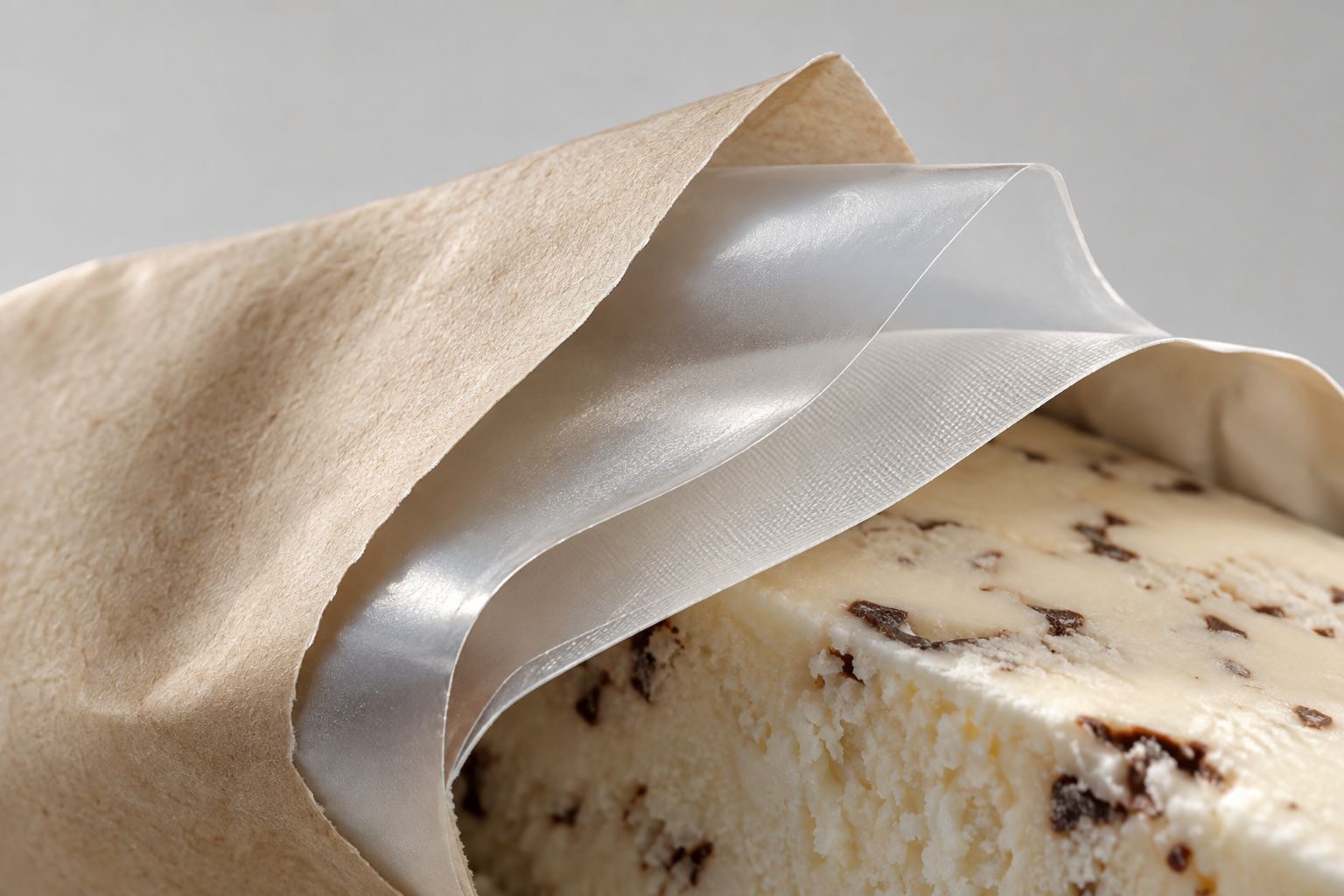
Illustrative design study of layered packaging; not the announced material construction.
These are design questions to validate, not reported failures of Tetra Pak’s concept. A useful trial plan would compare opening force and tear path across temperatures; check whether condensation changes grip or print legibility; observe how the wrapper behaves after freezer storage and brief warming; and test whether people can open it without crushing a bar or getting the product on their fingers. Include users with limited dexterity and test both intended opening cues and the cases where the first tear starts in the wrong place.
The material change can also reach the factory. Tetra Pak says the solution is undergoing validation in live production settings. That wording signals that line performance remains part of the work. A package may need to travel at existing speeds, seal consistently, tolerate normal web tension, and fit the producer’s equipment. If the conversion requires a different sealing window, additional inspection, or altered downstream handling, those changes affect cost and launch risk as much as the paper percentage does.
Design the whole disposal decision
The announcement says the wrap is made from multiple layers and up to 85% paper; it does not make the pack plastic-free. Tetra Pak’s Swedish-language release says the format is designed for paper-recycling systems where that infrastructure exists. Local collection and sorting rules still determine whether that route is available to a particular shopper. A recycling statement should therefore be tied to the market and disposal pathway, not presented as a universal property of the object.
The shopper sees one small wrapper, not a materials specification. Clear disposal guidance, readable from the package itself, can prevent a paper-like surface from becoming a misleading cue. Teams should confirm which components remain after use, how the pack behaves in the local recycling stream, and whether food residue or coatings change the accepted route. The package’s end-of-life message belongs in the design system alongside its opening notch, seal and graphic hierarchy.
A practical validation brief
Before substituting a new wrap across a product line, define the test around the full trip: converting, filling, sealing, frozen distribution, retail storage, purchase, opening and disposal. Compare the new format against the current pack on protection, opening, line compatibility, material mass and locally available recovery. Keep the comparison conditions visible; “up to” figures and selected benchmark materials should not be generalized beyond what was tested.
That discipline fits the broader work of product design, prototyping and manufacturing planning: a package is both a material assembly and a user interface. Tetra Pak’s announcement is a promising development, but its own validation phase is the important signal. The next design decision is whether the barrier, line and opening experience can succeed together in a specific product and market.
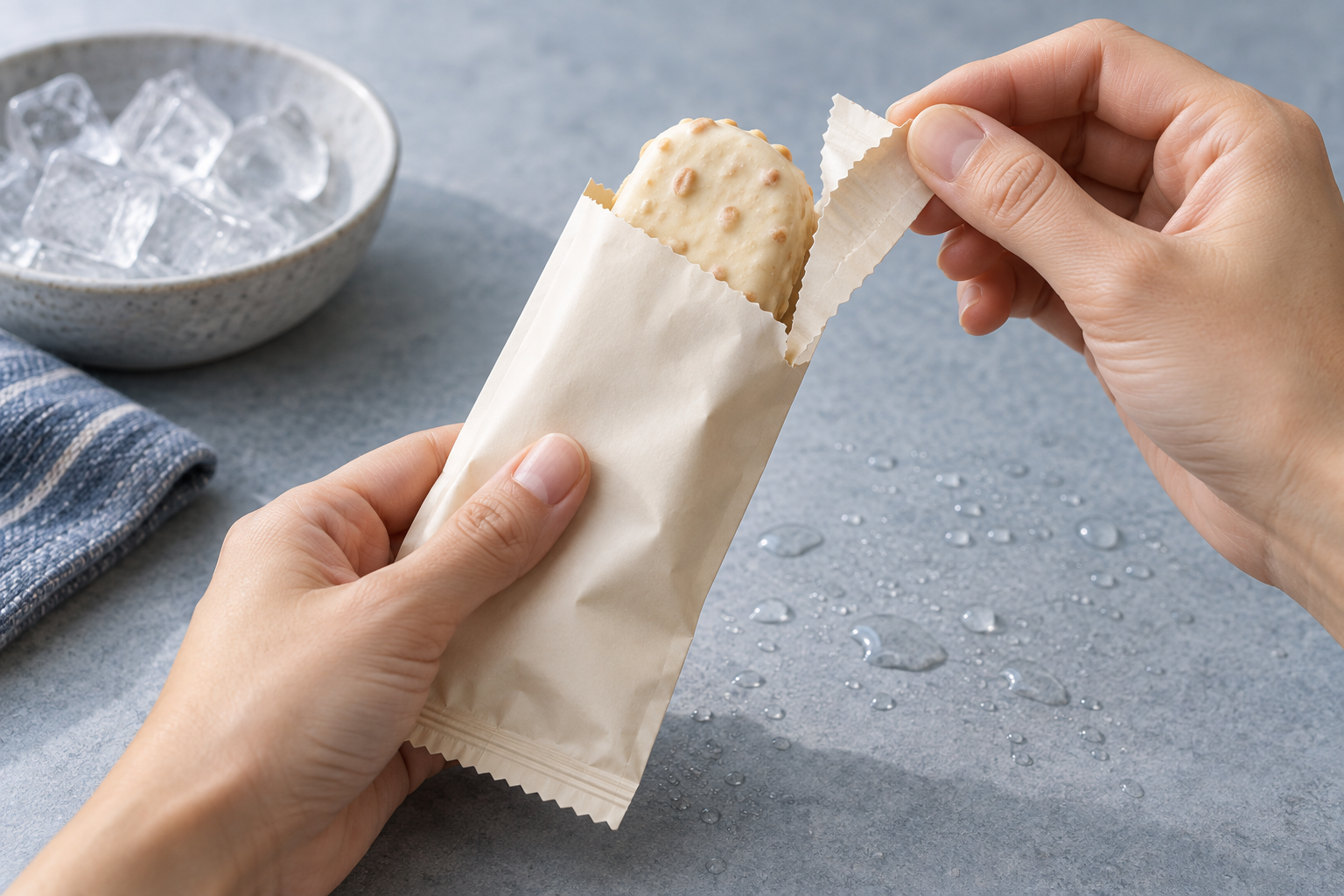
Illustrative design study of an opening sequence, not a Tetra Pak product trial.
If you are developing a consumer product or package, talk with our team about the tradeoffs to resolve before tooling or a material change is locked in.