AeroPress Walnut: The Design Cost of Natural Materials
On September 28, 2026, AeroPress introduced its Premium Walnut Brewer and Walnut Manual Grinder, bringing solid walnut into two familiar coffee tools. Both launched at $249.95 in the United States. A September 29 correction to the company announcement updated hyperlinks; the launch date remains September 28.
The useful design question is what happens after the attractive countertop photograph. Changing a material changes the ownership experience: how a product feels, how it ages, what users must do to maintain it, and what a manufacturer must control. For founders developing a premium physical product, this launch offers a concrete brief: make the material's benefits and obligations equally clear.
A familiar mechanism, a different relationship
The brewer combines a double-wall borosilicate glass chamber with metal components and a walnut plunger and flange. The scoop and stirrer are also walnut. AeroPress presents the collection as equipment intended to remain on display. TechRadar's September 28 launch coverage corroborates the two products and their materials, but it does not establish long-term performance of the new walnut versions.
Our interpretation is that the material becomes part of the purchase decision even when the core brewing task stays familiar. A visible tool participates in the room: its color, grain and finish matter beside cabinetry, cups and other appliances. That can support a premium position, provided the product remains comfortable to use and easy to understand.
A product design brief should therefore specify two experiences. One concerns making coffee. The other concerns living with the object between uses. Treating the second as an afterthought risks approving a beautiful product whose storage, cleaning or aging behavior conflicts with its intended setting.
Care instructions are part of the interface
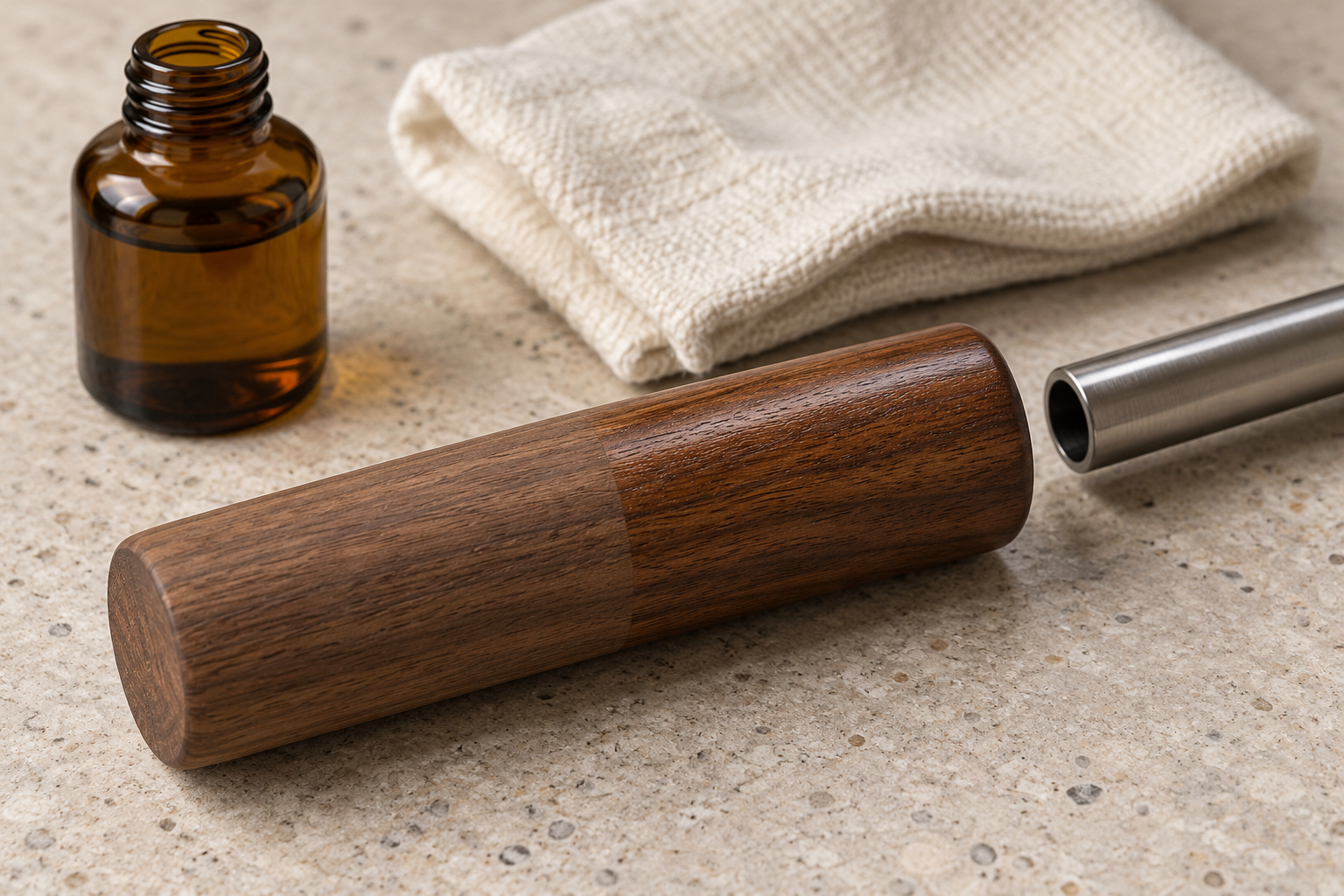
AI-generated conceptual illustration of wood care. Follow the manufacturer’s instructions for an actual product.
The brewer's official care guidance makes the tradeoff explicit. It is hand-wash only. AeroPress calls for monthly application of food-safe mineral oil to the wooden surfaces, prompt drying after any necessary damp wiping, and avoidance of soap or abrasive cleaners on wood. The company warns that heat and moisture can eventually cause drying, warping or cracking.
Those instructions do not demonstrate a defect. They define a maintenance obligation. For someone who enjoys caring for kitchen objects, that obligation may fit the ritual. For a household where everything goes through the dishwasher, it may be a poor match.
The design opportunity is to make that distinction visible before purchase and reinforce it at unboxing. Show which surfaces need which treatment. Make care instructions easy to retrieve later. Test whether people can explain the maintenance routine after reading the packaging once. A premium finish earns trust when expectations match ordinary use.
Choose wood's role before choosing its color
The grinder's specifications describe an aluminum body and catch, a walnut casing around the catch, and a walnut grip on the metal handle. This matters because the visible material and the underlying mechanism have different jobs. The manufacturer also specifies more than 60 grind settings, a 25-gram catch capacity, brush cleaning rather than soap and water, and monthly oiling of the wood.
For another product team, the relevant decision is where a natural material contributes most: a grasp surface, a visible enclosure, a structural member, or a replaceable component. Each role creates a different verification plan. A grip needs evaluation across hand sizes and repeated handling. A housing needs an assembly strategy. A component intended to be replaced needs accessible fastening and a realistic spare-parts route.
These are development questions, not claims about the AeroPress construction. We have not tested this collection or inspected its joints. In prototyping, teams can compare actual material samples, representative assemblies and use sequences before committing to a final finish.
Approve a range of appearances
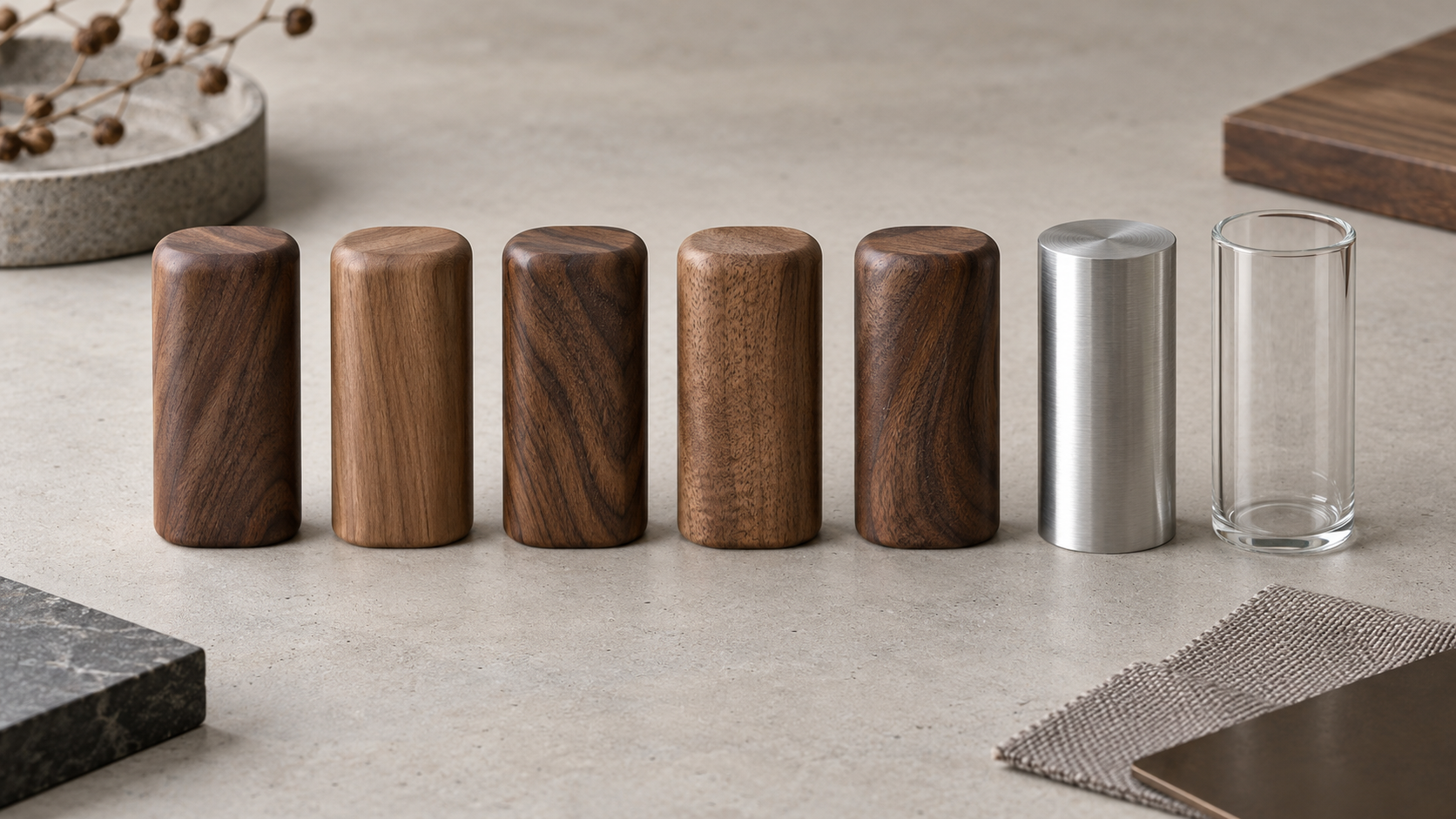
AI-generated conceptual material study showing wood variation, not AeroPress production samples.
A render usually shows one ideal grain pattern. Production requires decisions about acceptable variation. Teams using wood should approve multiple physical samples under consistent lighting, identify objectionable grain or color conditions, and define how adjacent components should relate visually.
That approval process can preserve natural character without treating every difference as a quality failure. It also helps photography and customer expectations: one unusually perfect sample should not become the only reference for what every buyer receives.
The premium promise includes ownership
The launch materials do not establish that walnut improves coffee flavor, reduces environmental impact, or extends service life. Those conclusions would require separate evidence. Natural appearance alone supports none of them.
The practical takeaway is to price and communicate the whole experience. Decide what the material improves, verify those benefits, and disclose the care it requires. Consider alternatives when the audience prioritizes quick cleaning or rough handling. A premium product is more convincing when the attractive finish, daily routine and long-term support all point in the same direction.
If your team is weighing a material change for a consumer product, discuss the product challenge with Jackson Hedden and define what needs to be tested before production.