Nothing’s Headphone (1) Pro Makes Fit Part of the Upgrade
Nothing announced the Headphone (1) Pro on September 28, and the $399 over-ear headphones went on sale September 29. The product combines a three-driver audio system with a machined aluminum and titanium structure, glass earcup windows, tactile controls, and revised cushions. Its clearest design lesson is that premium hardware is not only about materials or specifications: performance still depends on how reliably the object fits different people.
Nothing’s launch announcement describes a triple-driver architecture, a neutral “Flat EQ” mode, new spatial-audio options, and a structure using aluminum, titanium alloy, and glass. The US product page lists the U.S. price at $399 and specifies a 40 mm bass driver, a smaller precision driver, and an xMEMS tweeter. These are manufacturer specifications; the product-design implications below are analysis, not a claim of hands-on evaluation.
Visible construction sets an expectation
The Pro carries forward Nothing’s transparent design language, but the company says the glass windows reveal only hints of the driver architecture. That distinction matters: the window is part of the product’s identity, while the aluminum and titanium structure does the less visible job of supporting the assembly. Materials are being used both to signal precision and to explain why the object costs more.
The composition creates a balancing act. Glass can make an electronic product feel distinctive and let a buyer see that it is engineered, but a window can also expose visual clutter or make the product appear fragile. Metal parts can add rigidity and a premium hand feel, yet they require careful transitions where metal meets glass, cushions, and moving joints. Nothing lists the new model at 327 grams; whether the material choices feel comfortable over a long session depends on distribution around the head, not the scale number alone.
Physical controls put common adjustments within reach
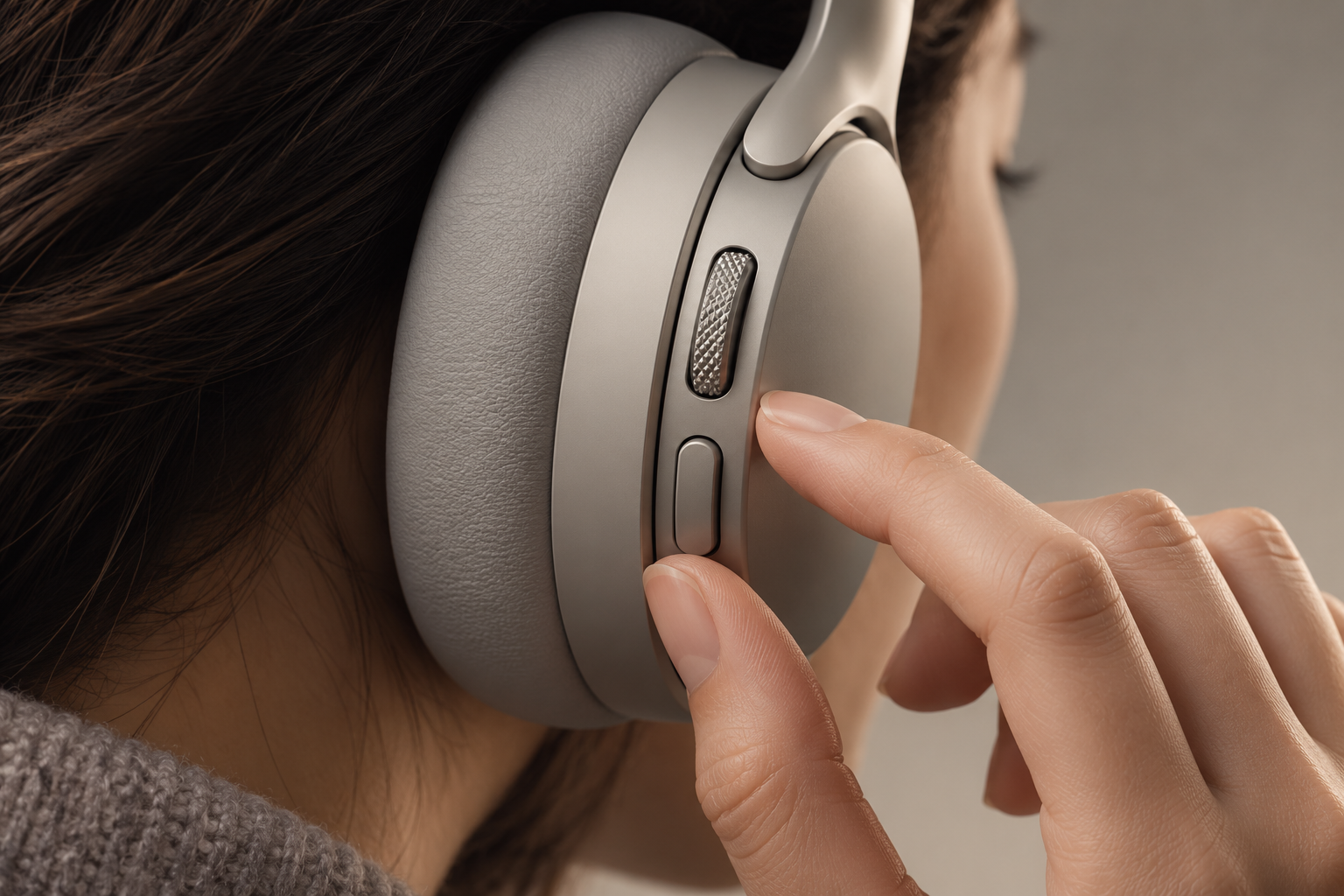
AI-generated conceptual illustration; generic controls, not a depiction of Nothing’s product.
The control layout is another product decision with practical consequences. Nothing retains a roller for volume and playback, a paddle for track and call actions, and a button that owners can configure. The Pro adds a physical switch for “Flat EQ,” allowing a listener to move between a usual sound profile and a neutral one without first opening an app. That switch makes a software setting discoverable through touch.
Dedicated controls can reduce menu navigation, but they take space and need distinct shapes, placement, and feedback. A roller, paddle, and switch should remain distinguishable when a user reaches up without looking. Their functions should also be easy to remember. Product teams can test this with short use tasks—change volume, pause, skip a track, switch listening modes—while users wear the object and cannot see the controls.
Acoustic architecture meets human variability
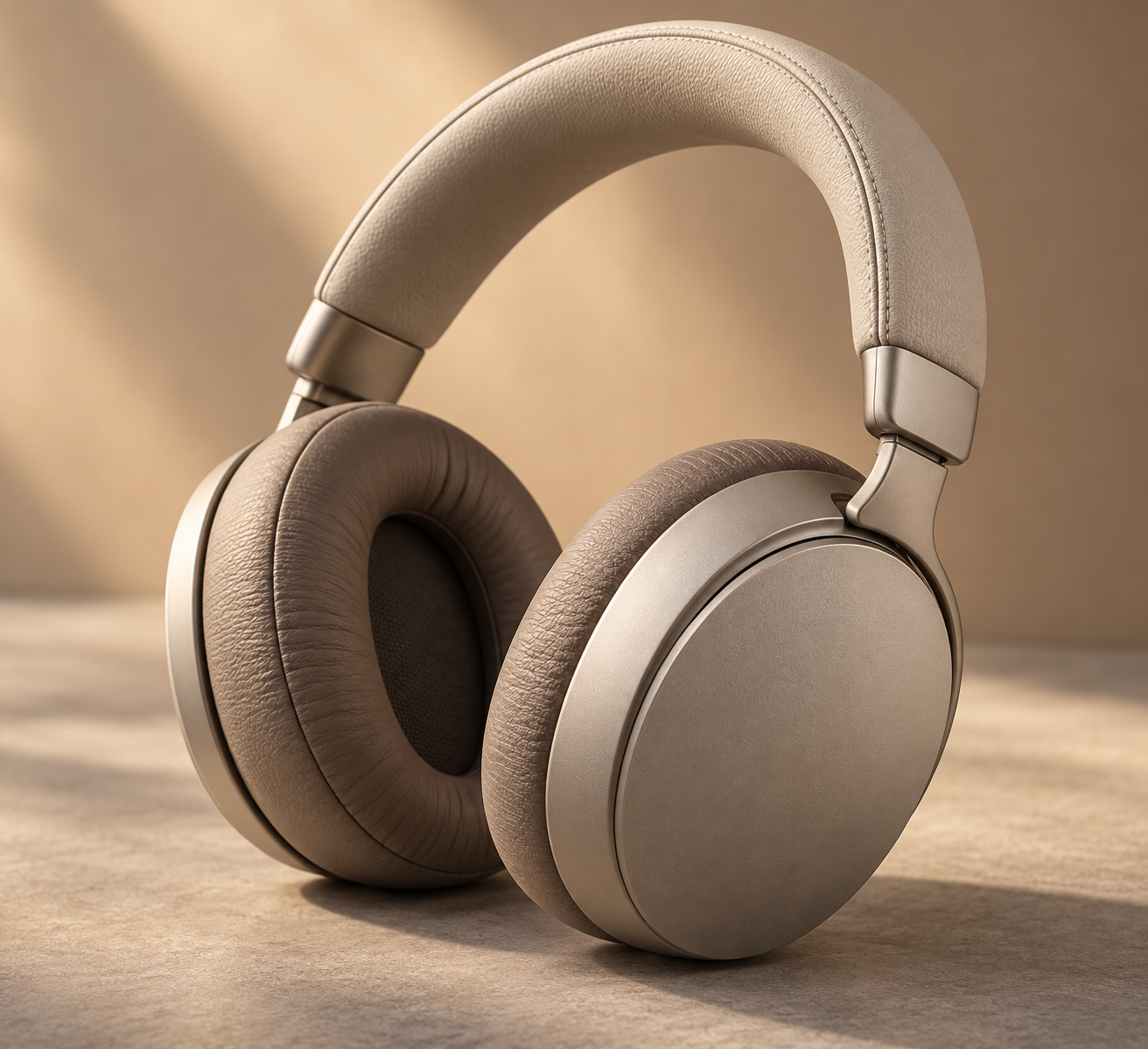
AI-generated conceptual illustration; not the actual cushion geometry or materials.
Three drivers divide bass, midrange detail, and treble across separate components. In principle, that gives engineers more control over each frequency region. It also makes tuning and packaging more complex: the drivers, acoustic paths, electronics, and earcup geometry must work together in a small enclosure. The number of drivers alone does not tell a listener whether the final sound is cohesive.
The physical interface is equally important because active noise cancellation depends on a good seal. Nothing says the new cushions are 50% softer than the previous model and that the headband and padding have been enlarged. Those changes suggest attention to pressure and fit, but comfort is personal and a soft pad can still leak sound if it does not stay sealed around the ear.
In a five-day review, SoundGuys—whose review unit was supplied by Nothing—reported that the earcup seal was difficult for its reviewer to maintain, with jaw movement sometimes reducing noise attenuation. That is one tester’s observation, not a universal verdict. It is still a useful test case: the function a headphone advertises can shift when someone talks, chews, wears glasses, has longer hair, or moves their head. The same review notes that the battery claim is up to 30 hours with ANC on; Nothing’s prior Headphone (1) was rated at 35 hours, while SoundGuys measured 43 hours in its own test of the older model. The new claim has not yet been independently tested by that outlet.
What product teams can learn
The Headphone (1) Pro makes the relationship between appearance, control, and fit unusually visible. Its transparent panels and metal details tell a premium story; its physical controls make everyday adjustments tangible; its cushions and geometry determine whether the acoustic system can perform consistently for an individual.
Test fit and acoustic seal across a range of head shapes, glasses, hair, and ordinary jaw movement—not only on a stationary test fixture.
Make controls identifiable by touch, then observe whether users can complete common tasks without looking or opening an app.
When adding components such as multiple drivers, treat acoustic integration and enclosure space as linked design problems.
Validate product claims with repeatable use tests. Softer padding or a higher driver count does not, by itself, prove better comfort or sound.
For teams bringing complex consumer hardware from concept into production, Jackson Hedden’s product design and prototyping work connects form decisions with real use. Talk with the studio about a product challenge.
Sources
Nothing Community: Headphone (1) Pro announcement, September 28, 2026.
Nothing US: Headphone (1) Pro specifications and product information, accessed September 29, 2026.
SoundGuys: Headphone (1) Pro review, published September 28, 2026; reviewer says unit was supplied by Nothing and reports five days of testing.
SoundGuys: Headphone (1) Pro launch coverage, September 28, 2026.