CJ Biomaterials: Designing Cutlery for Home Composting
On September 30, 2026, CJ Biomaterials announced home and commercial compostability certifications for PHACT CB0104A, an injection-molding compound intended for applications including cutlery. The company reports BPI Commercial and Home certification and TÜV AUSTRIA OK compost HOME and INDUSTRIAL certification. Its announcement specifies home-compost certification at thicknesses up to 1.8 millimeters.
This is a certification announcement, rather than proof that a newly launched consumer utensil will perform well in every kitchen or compost pile. For product leaders, its value is more specific: it puts geometry, manufacturing, use, and disposal into the same design conversation. A fork must work during a meal before its end-of-life route can matter.
Thickness connects the claim to the drawing
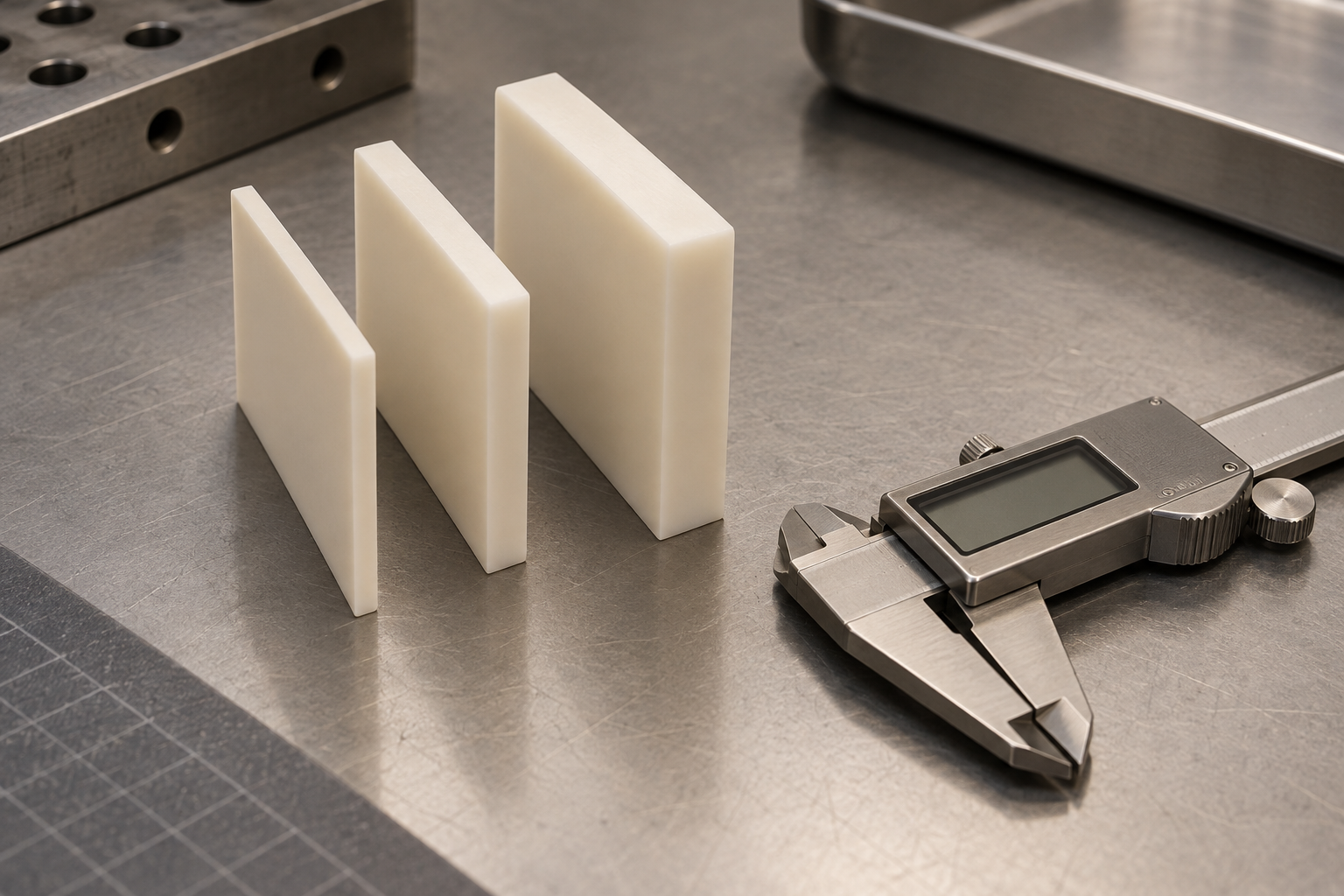
AI-generated conceptual thickness study. No measurements, certified limits, or test results are depicted.
A material specification cannot be separated from the shape built with it. A thicker handle may feel more substantial; a rib may improve stiffness; a heavier junction may resist bending. Those choices also change the part that needs evaluation for disintegration.
BPI's certification guidance explains that the maximum thickness or grammage used in disintegration testing determines the certified maximum for the item. It also distinguishes home and commercial testing conditions. This provides an independent basis for treating thickness as a design constraint, although we have not independently retrieved the specific CB0104A certificate or its complete scope.
Our design interpretation is straightforward: put the relevant limits into the part review, rather than leaving them in a supplier email. Inspect the thickest local regions, not just the nominal wall. Ask the certifier and supplier how the intended geometry, colorants, and other constituents fit the applicable approval. Do that before artwork implies the finished object has a certification it has not earned.
The molding trial still has to answer ordinary questions
CJ Biomaterials describes the compound as a blend of amorphous and semi-crystalline PHA and says it can run on existing injection-molding equipment. It reports promising internal cycle-time results, but the announcement does not supply a numerical comparison, detailed test protocol, or a cost model for a particular utensil.
The June 2026 technical data sheet adds useful specificity. It lists the two PHA grades and calcium carbonate in the composition, gives drying and processing conditions, and recommends moisture management to prevent viscosity degradation during processing. Its reported heat-deflection temperature exceeds 140°C under the specified ASTM test load. That laboratory property should not be read as a finished utensil's universal service-temperature rating.
For a brand commissioning cutlery, a practical trial would examine filling, ejection, flash, dimensions, breakage, and the quality of the mouth-contact edges. Then test the intended foods and handling sequences using production-representative parts. A thick sample coupon and a thin fork tine answer different questions.
Manufacturing planning should compare the full process: resin preparation, acceptable-part yield, cycle time, packaging and quality checks. An equipment-compatibility statement is a useful starting point, not a substitute for that comparison.
Make disposal understandable after the wrapper is gone
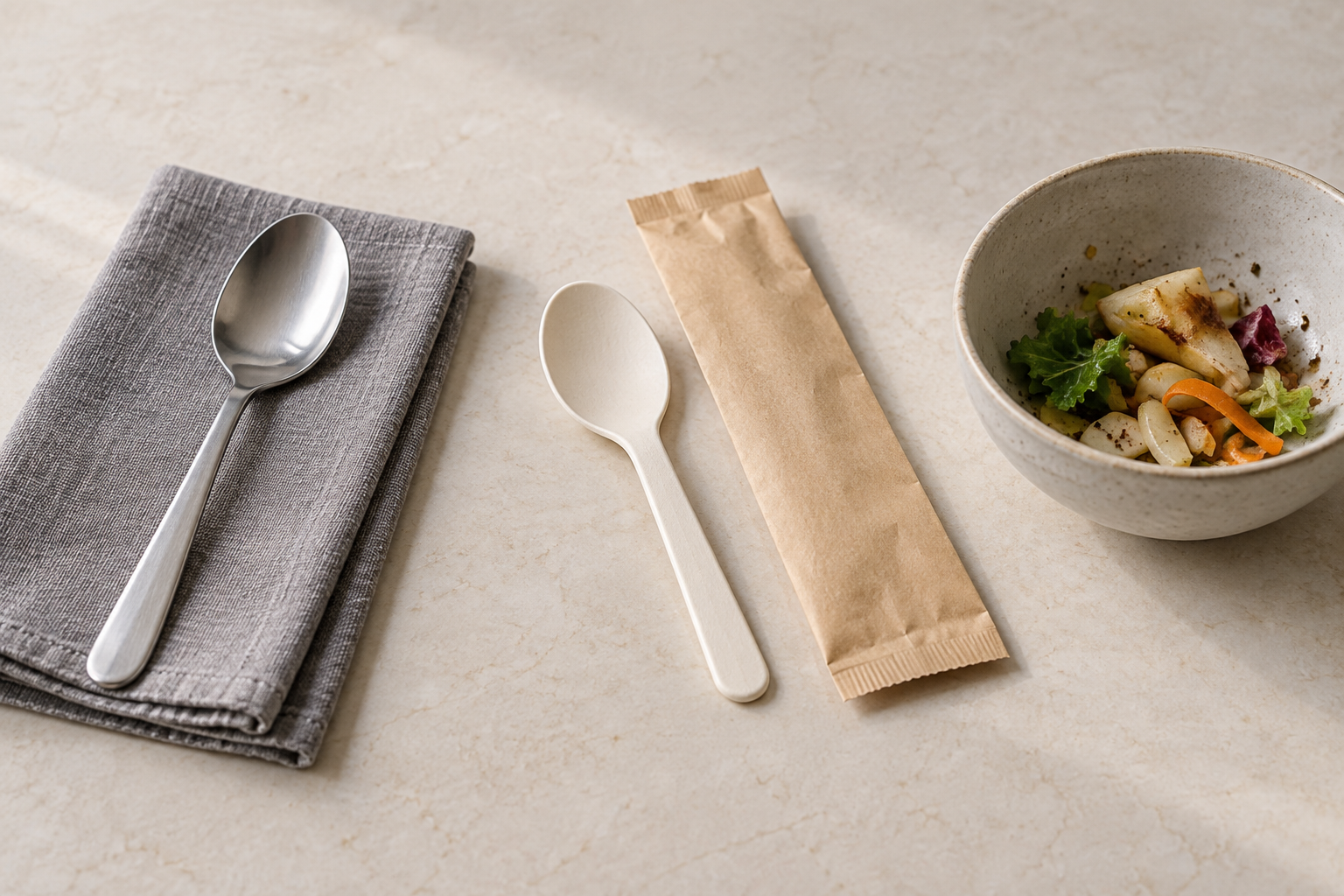
AI-generated conceptual illustration of a product system. This is not disposal guidance; follow the actual product and local collection instructions.
A consumer may see a compostability claim on a sleeve and later hold an unmarked utensil beside several bins. The product system needs to carry the relevant instruction to that moment. The utensil, packaging, foodservice setting and collection route should communicate the same destination.
BPI's public catalog guidance makes an important distinction: all listed items are commercially certified, while home certification is separately identified. A generic reference to a compostability program therefore does not tell a reader which conditions apply to a particular item.
A useful prototype study can evaluate recognition as well as grip. Present the actual proposed utensil and packaging, remove the wrapper, and ask people to explain the intended disposal route. Confusion is actionable design evidence. A clear answer still needs to match the finished product's verified certification and the receiving program's instructions.
Choose the system before choosing the headline
The announcement does not establish that this compound has lower overall environmental impact than every alternative. That comparison depends on the application and evidence about production, use and the actual end-of-life route. Nor does a material's certification automatically settle the design of a finished product.
Consider whether reusable serviceware fits the setting, whether disposable cutlery is necessary, and whether an intended composting route is available and accepted. For an application that proceeds with this material, define the geometry, manufacturing acceptance criteria, functional tests and certification scope together.
The useful consequence of the September 30 news is a more concrete development brief. Home-compostable cutlery requires a working utensil and a credible route after the meal. If your team is evaluating a new material for a consumer product, discuss the design challenge with Jackson Hedden before committing to tooling.