Eska Leaf Turns Fallen Leaves into a Packaging Surface
On September 23, 2026, RDM Group announced Eska Leaf, a premium packaging board developed with materials company Releaf. The construction pairs Eska recycled solid board with a paper lamination made using fallen leaves. RDM announced a debut at Luxe Pack Monaco from September 28 to 30; the event’s September 11 preview had already introduced the concept, while RDM’s newer release describes the partnership and material construction. The announcement adds detail to a concept previewed earlier this month: the material story is a layered package surface, not a claim that an entire rigid box is made from leaves.
That distinction matters for product teams. A new input can create a recognizable surface and provenance story, but packaging still has to protect the product, run through converting and assembly, and meet the brand’s recovery and sourcing requirements. Eska Leaf is a useful prompt for how to evaluate a novel material before turning its story into a product brief.
Read the construction before writing the claim
RDM describes the material as Eska recycled solid board paired with Releaf’s leaf-paper lamination. Releaf’s leaf-derived sheet supplies the visible layer; the solid board provides the base. The company says the lamination preserves the natural appearance and texture of the raw material. The announcement describes a Luxe Pack Monaco presentation for packaging teams to examine samples.
The distinction between a material ingredient and a finished package should guide both design and communications. The announcement does not give the leaf fiber’s share by mass, a life-cycle assessment, a certification, or end-of-life test results for a finished laminated pack. So a brand brief should avoid translating “made with fallen leaves” into broader claims such as lower carbon impact or easier recycling without supporting evidence.
Make the surface work across the whole pack
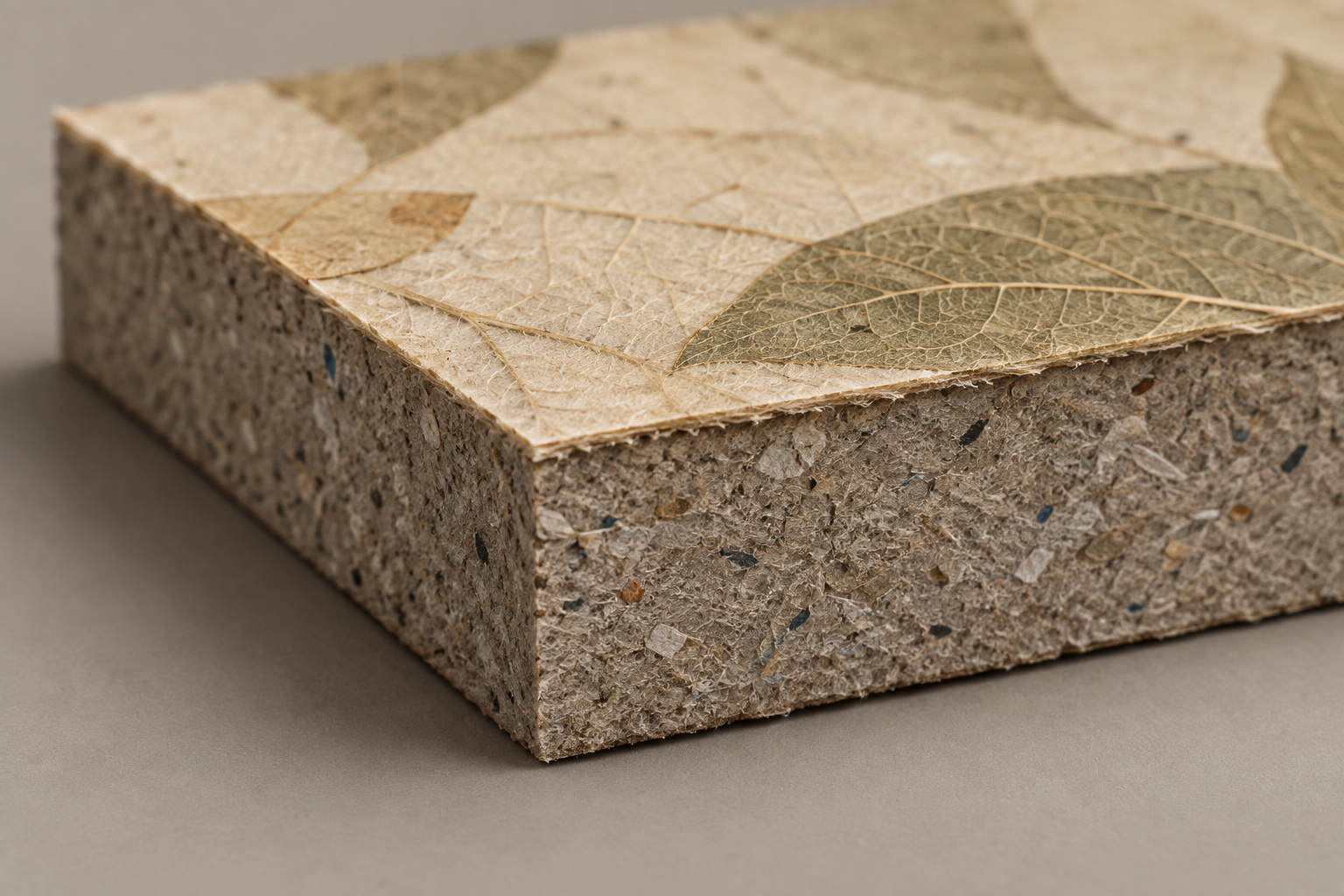
AI-generated conceptual illustration of a possible material stack; supplier specifications may differ.
A distinctive paper surface can help a premium package communicate texture and material origin before the customer opens it. But the decision is not only about a flat swatch. Designers should review how the surface behaves at folds, corners, seams, closures, and cut edges. Grain direction, color variation, scuffing, coating, and adhesive choice can all change the appearance or the way the package is converted.
Ask for samples across more than one production lot and inspect them under the lighting and viewing distance customers will encounter. Confirm whether seasonal collection and fiber preparation introduce variation that needs to be accepted, sorted, or managed with a surface finish. Then make a representative structure: a wrapped board, a deboss, a printed mark, or a rigid-box corner. That will reveal whether the leaf-paper layer supports the intended visual language or competes with legibility and finish details. Teams building a package around a distinctive substrate should bring the product design brief and graphic system into the same review; changing material can shift both color reproduction and the amount of contrast needed for required information.
Test converting and use, not just the story
Packaging has to survive its route from converter to customer. Before specifying a new laminate, teams should test the actual board construction through the intended cutting, creasing, wrapping, gluing, and assembly steps. Check registration, delamination, cracking at tight folds, edge fray, and handling marks. If the package protects a fragile product, run the relevant transit and drop tests on the finished structure rather than assuming the substrate alone answers that question.
Recovery also needs to be tested for the actual combination of layers. A paper face on a board base may be compatible with a particular recycling stream, or it may require separation or specific collection conditions. The September 23 announcement does not publish a finished-pack recyclability assessment. Ask the supplier for the test method, market, and package configuration behind any end-of-life statement before putting it on-pack.
Specify the evidence alongside the material
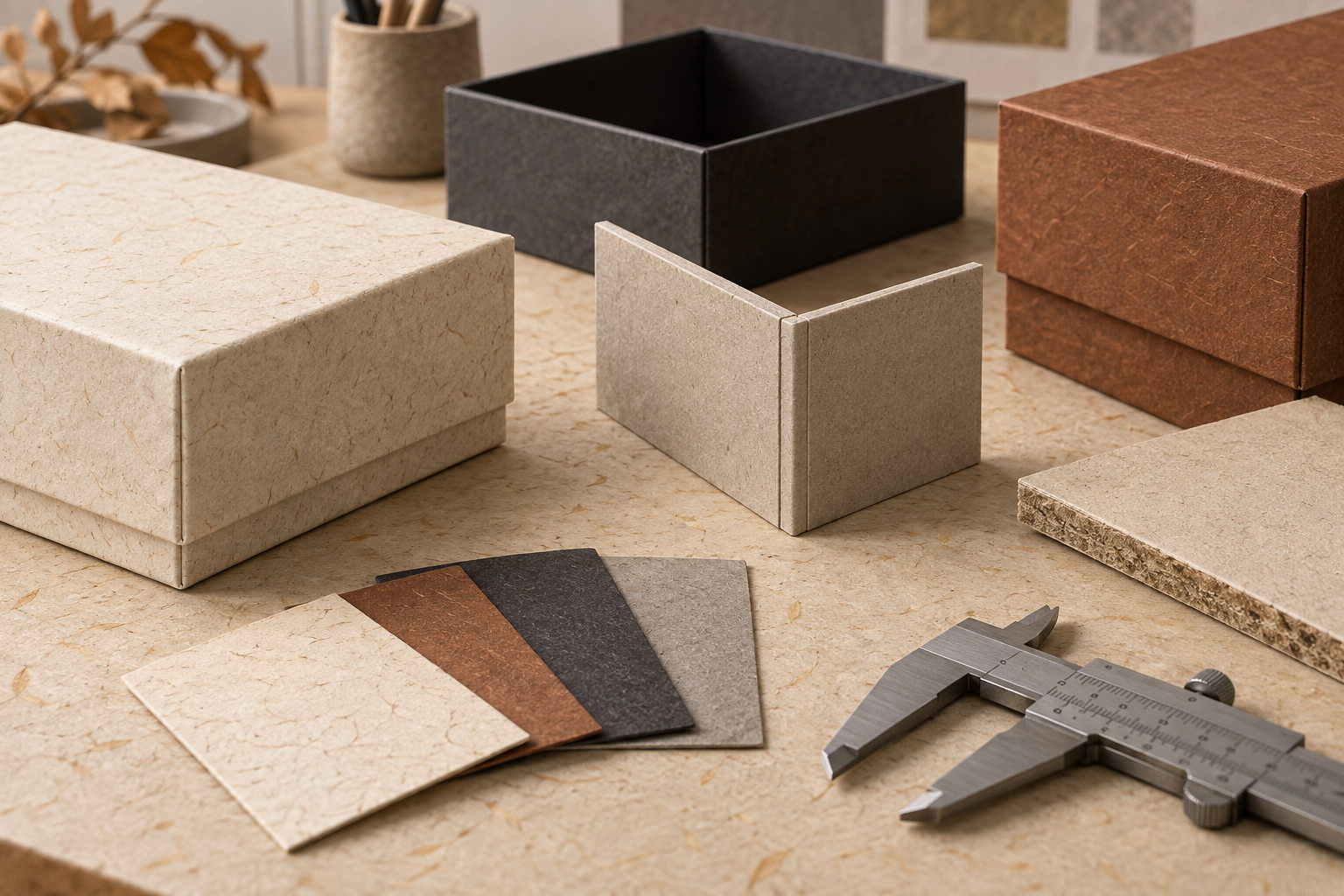
AI-generated conceptual illustration of packaging details to evaluate in prototyping.
A practical material brief should record the base-board grade, the lamination composition, adhesive and coating details, expected visual variation, converting limits, and availability by region. Those details help a sourcing team compare a promising sample with the material that can be delivered consistently at the required scale. Add acceptance samples and tolerances so procurement and production teams can judge consistency. Request documentation for fiber content, chain of custody, food-contact suitability if relevant, and end-of-life claims applicable to the exact structure.
Eska Leaf points to a useful design opportunity: material character can become part of brand experience when it is treated as a system of substrate, surface, graphics, and manufacturing choices. The next step for a product team is to compare a finished prototype against its functional, visual, and evidence requirements. A short prototyping plan can expose issues while geometry, finish, and pack-out are still inexpensive to revise. If you are evaluating a new packaging material, Jackson Hedden can help translate the concept into a testable product and packaging brief.