GUBI’s Totto Stool Shows How Much a Small Seat Must Do
GUBI announced the Totto Stool by GamFratesi on September 22, 2026. The compact, three-legged design is positioned as a seat, side table, and sculptural object. Its significance for product teams is not that one small stool can replace several pieces of furniture. It is that a familiar archetype can gain new value through a few carefully coordinated decisions about proportion, touch, material, and context.
GUBI describes the Totto as a reinterpretation of the traditional three-legged stool, with rounded edges, a tray-like top, and turned solid-wood legs. The manufacturer says it is made from FSC-certified Sapelli and wood from other responsible sources, and offers natural and dark-stained finishes. Independent design coverage reports a footprint of about 31 centimeters and a height of 32.6 centimeters. These are product facts; the design implications below are analysis, not hands-on findings.
A familiar form lowers the learning curve
A three-legged stool is legible. People understand where to sit, how to move it, and why it takes up little floor space. The Totto preserves that immediate recognition while softening its profile: GUBI highlights a shallow, tray-like surface and rounded transitions, while the legs are turned rather than treated as anonymous straight supports.
That combination is a useful design strategy. Instead of adding a mechanism or a novel interaction, a designer can make an everyday object feel distinct through the points users see and touch. The rim can suggest a more finished top and provide a visual boundary for objects placed on it. Curved edges may feel more comfortable to grasp when moving the stool. The three legs create a clear silhouette and can sit on uneven floors without the rocking associated with some four-legged stools. Those are plausible benefits of the archetype and geometry, not verified performance claims for this particular product.
The tradeoff is that small differences become highly visible. With few components, the junctions between seat and legs, the consistency of the turning, the radius of the rim, and the contact points at the floor carry much of the perceived quality. A restrained design concentrates scrutiny on execution.
Three roles create a real ergonomic test
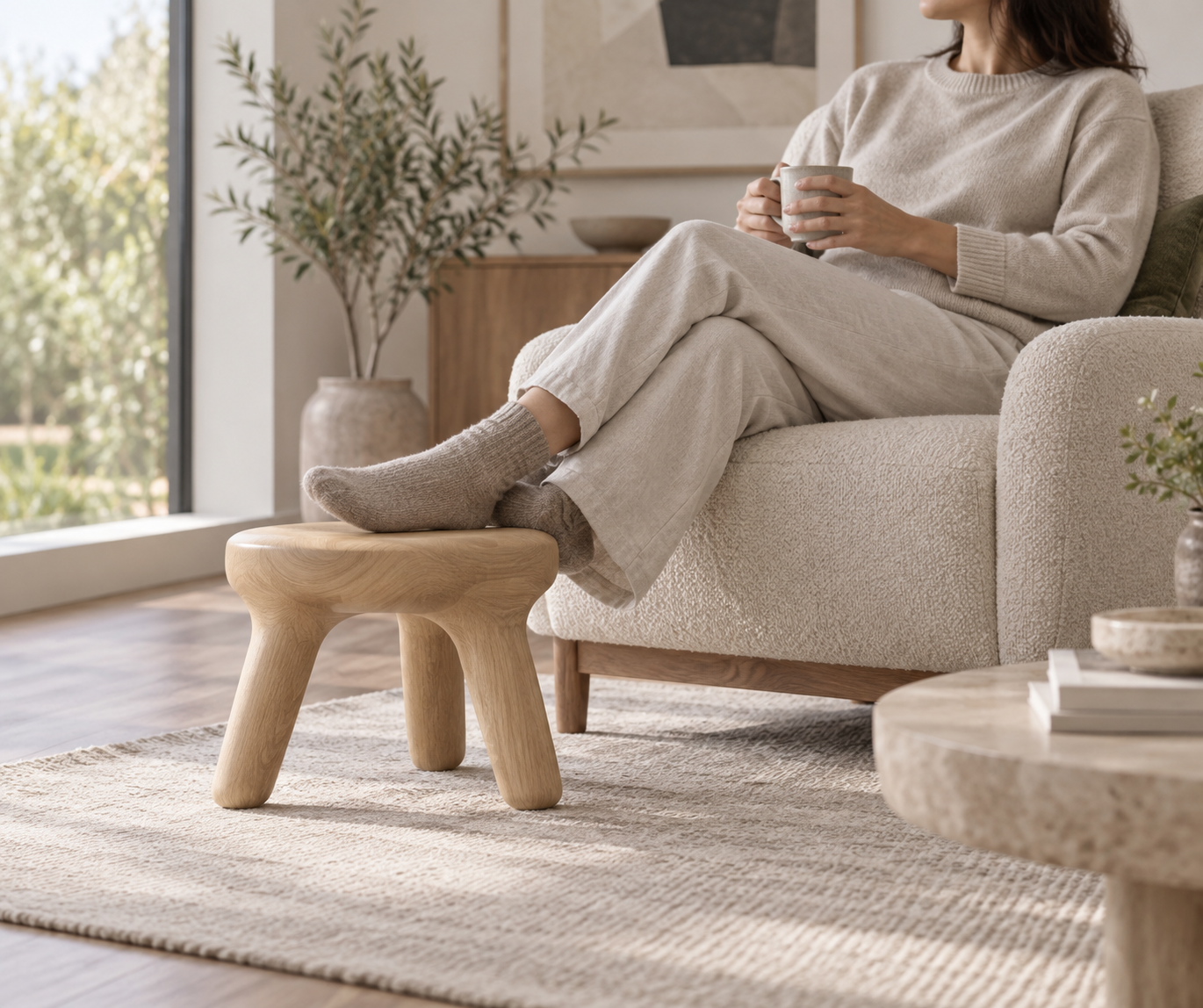
AI-generated conceptual illustration; not GUBI’s actual product.
GUBI presents the stool as a flexible object that can serve beside a lounge chair or bed, hold a book or object, or provide an additional seat. The appeal is easy to understand in small homes: an item that can move between rooms may earn more floor space than a single-purpose accent piece.
But “multifunctional” only helps when the form works well enough in each role. At 32.6 centimeters high, the Totto is lower than many dining chairs; that may make it useful as a perch or low occasional seat, but it will not suit every body, task, or transfer need. The small top may be convenient beside a lounge chair yet less forgiving as a surface for a cup, especially if it is not level or the user expects a larger landing area. Its compactness also means the object can be easy to move but may offer limited support for extended sitting.
For a team developing a similar product, the right validation is contextual. Test the actual intended heights next to common chairs and beds. Observe how people sit down and stand up, where hands land when they move the piece, and whether objects remain stable on the surface. Include users with different mobility needs. A product photo can communicate versatility; only use in context can show whether the compromises are acceptable.
Material and finish shape the product’s promise
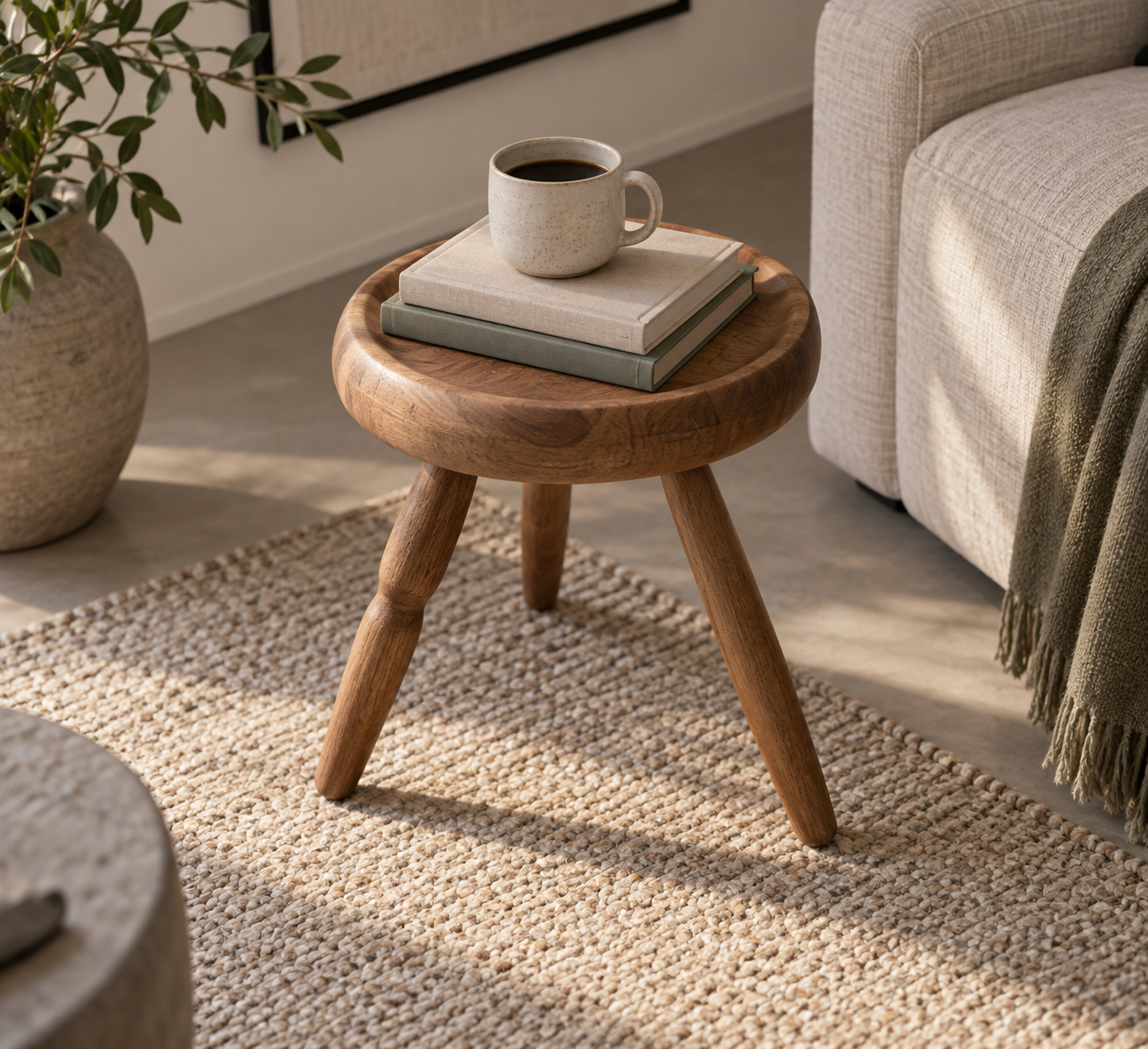
AI-generated conceptual illustration; not GUBI’s actual product.
GUBI specifies Sapelli and two finishes, letting the grain and tone play a central role in the object’s identity. The brand’s FSC statement is a sourcing claim that should be understood as such; it does not, on its own, answer questions about the complete supply chain, coatings, repair, or end-of-life. The product page also describes a lacquered dark-stained finish. That may offer a more uniform, darker appearance, while the natural option makes variation in the wood more prominent.
These choices expose a recurring design tension: natural variation creates warmth and makes each piece distinctive, but buyers may expect consistency from a premium product. A dark stain can establish a controlled visual language while obscuring some variation; it also makes scratches or repairs potentially more noticeable depending on how the coating wears. Those outcomes depend on the finish system and real use, so they should be tested rather than assumed.
Production decisions matter here as much as styling. A tray-like seat, turned legs, and precise joints require a clear plan for tolerances, assembly, finishing, and quality inspection. If a team wants the visual softness of a solid-wood object, it should prototype the touch surfaces and joints at full scale, then test finish samples under handling and cleaning. A rendering cannot resolve those questions.
What product teams can take from it
The Totto is a useful case study in restraint: start from a known object, improve the moments people notice, and make the intended uses easy to understand. Its strongest design question is not whether one stool can technically serve three functions. It is which use should lead, and how the details support the secondary roles without making the main one worse.
Choose a primary use before adding secondary ones; let dimensions and stability serve that use first.
Prototype the edges, grip points, joints, and floor contacts at full scale. Those are the details carrying much of the design character.
Evaluate material samples in realistic lighting and after repeated handling, cleaning, and minor damage.
Test the object beside the furniture and in the rooms where people will actually use it.
For teams turning a familiar product category into a new physical product, Jackson Hedden’s product design and prototyping work connects form decisions with use and validation. If you are weighing a similar design challenge, talk with the studio.
Sources
GUBI: Totto Stool product information (manufacturer; accessed September 29, 2026).
Design Angle: GUBI Totto Stool coverage (published September 24, 2026; reports the September 22 announcement and dimensions).