Medical Device Design Services: A Practical Guide
A medical device can look promising in a concept sketch and still fail when real people use it in real environments. The strongest development decisions connect user needs with ergonomics, technical feasibility, manufacturing realities, and the requirements that shape the project from the start.
Short answer: Medical device design services help healthcare companies turn an opportunity, unmet need, or early concept into a considered product direction. With support that may include user research, ergonomic studies, concept development, prototyping, CAD documentation, and preparation for manufacturing. The right scope depends on the device, intended users, use environment, and production plan.
Talk with Jackson Hedden about your medical device project
That scope is not a fixed package. It should reflect the decisions your team needs to make next. From clarifying who will use the device to determining what must be tested, refined, documented, and handed off for production. Here is what a well-defined engagement can include.
What Do Medical Device Design Services Include?
Short answer: Medical device design services can cover the work needed to turn a healthcare product opportunity into a clear, usable, and production-ready design. Depending on the project, that scope may include user and design research, concept development, physical and digital product design, technical integration, prototyping, documentation, and preparation for manufacturing.
The work usually begins with discovery and feasibility. A design partner helps clarify who will use the device, where it will be used, what problem it must address, and which requirements will shape the product. The device-user system includes the user, the use environment, and the user interface, so these factors should be considered together rather than treated as separate design decisions. FDA human-factors guidance describes this relationship as a core consideration in medical-device use.
Research, requirements, and concepts
Early work may include design research, user research, ergonomic studies, and a review of existing products or workflows. These activities help teams move beyond assumptions and define practical product requirements. They can also reveal constraints that affect the form, controls, materials, cleaning approach, storage, service, or interaction model.
From there, the team may develop sketches, explore multiple concepts, and refine the strongest direction. Industrial design is not limited to appearance. It considers how the product is held, positioned, understood, operated, and maintained in its intended setting. Jackson Hedden's product design services support this broader path from research and concept development through CAD documentation and design-for-manufacturing considerations.
Integration, prototypes, and production preparation
Depending on the brief, the scope may also include mechanical and electrical integration, materials selection, enclosure development, control placement, and coordination with embedded components. These capabilities are not automatic inclusions in every engagement. They should be defined around the device, the available technology, the intended use, and the team's internal resources.
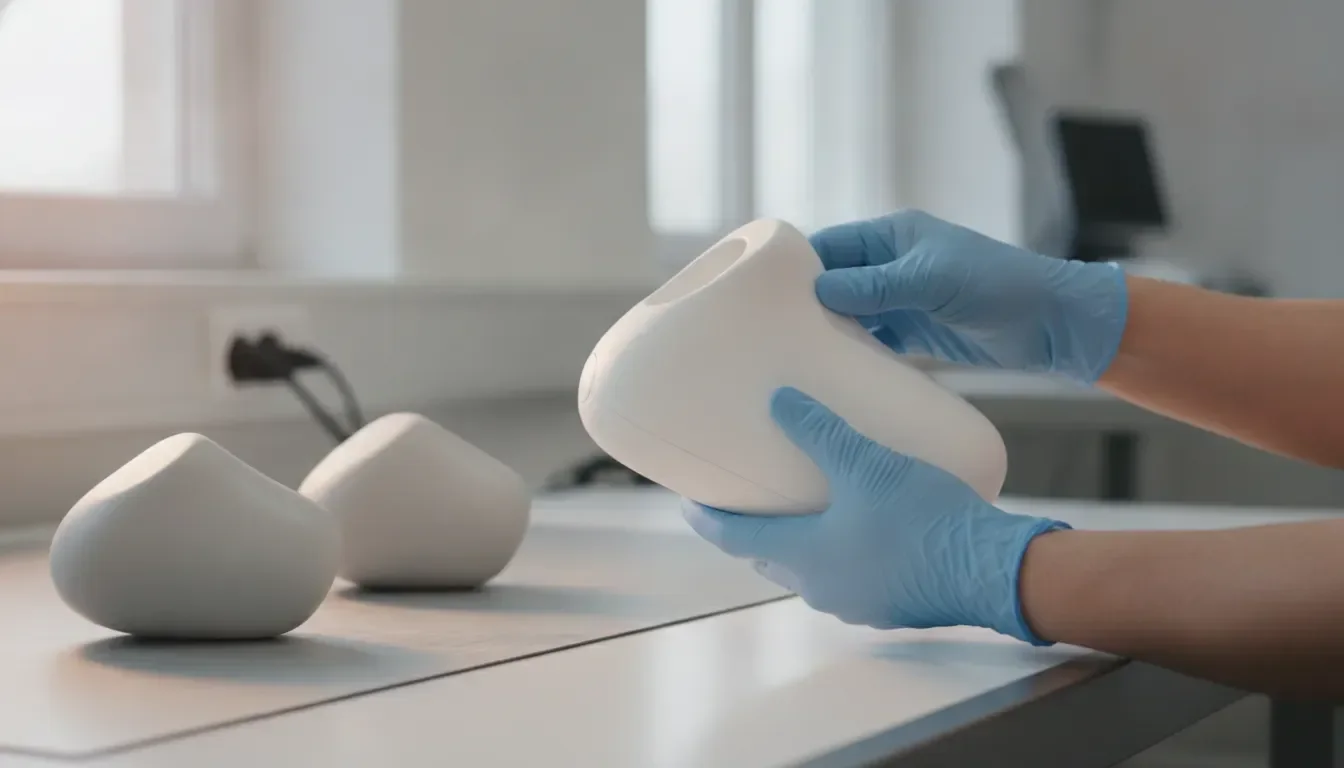
Prototypes provide a way to evaluate form, fit, and function before major tooling decisions. Findings from those evaluations can guide iterative refinement. Later-stage services may include production-ready CAD, 2D control drawings, assembly layouts, bills of materials, design-for-manufacturing review, and tooling strategy. The result is not simply a compelling concept. It is a documented design that gives the client and manufacturing partners a clearer basis for the next decision.
Start With Users, Use Context, and Product Requirements
Short answer: Start with the people who use the product, their environments, and the requirements each interaction creates. That includes clinicians, patients, caregivers, installers, cleaners, maintenance staff, and repair technicians.
The FDA describes the device-user system as the relationship between users, use environments, and user interfaces. These elements should be considered together. The same control, display, grip, or setup step can behave differently in a clinic, an ambulance, a home, or a storage area. Lighting, noise, available space, protective equipment, time pressure, and the user's physical or cognitive demands can all affect how a product is understood and handled. See the FDA's human factors considerations for the agency's explanation of this device-user system.
Start by mapping the full set of intended users and their responsibilities. A professional caregiver may prioritize speed, clear status information, and efficient cleaning between uses. A patient or family caregiver may need an intuitive setup sequence, readable feedback, and controls that work without specialized training. A person who installs, cleans, maintains, repairs, or reprocesses the device has different requirements around access, disassembly, durability, and error recovery. If those perspectives are omitted, a product can satisfy the formal brief while creating avoidable friction in everyday use.
Use requirements should describe what people need to accomplish, not only what the object should look like. Define the task, setting, frequency of use, foreseeable interruptions, hand positions, cleaning routine, storage conditions, and consequences of a missed or misunderstood step. The FDA notes that correct use can support safe and effective use, while use error can lead to unsafe or ineffective use. That relationship makes usability a product requirement, not a cosmetic layer added after the form is finished.
Research published in PubMed presents two complementary streams of participation: end users and professional users. It describes involvement from conceptualization through market deployment, including healthcare professionals, patients, people with disabilities or special needs, and caregivers. Read the study on user involvement in medical-device development for the full framework. In practice, this means translating observations and interviews into testable requirements, then revisiting those requirements as concepts become more specific.
A strong requirements set connects user needs to design decisions without treating any single stakeholder as the entire audience. It gives the product team a shared basis for prioritizing ergonomics, interface behavior, cleaning, service access, materials, and feasibility. Regulatory, clinical, and quality responsibilities remain project-specific and should be confirmed with qualified specialists.
How Does the Process Move From Concept to Prototype?
Clarify the need and project requirements
Development begins by defining what the device needs to do, who will use it, and where that use will happen. Discovery can include design research, user research, ergonomic studies, and a review of technical, material, and manufacturing considerations. The output is a clearer set of product requirements and decision criteria, rather than a concept based only on appearance or a single stakeholder's assumptions.
Explore and compare concepts
Sketch ideation turns the requirements into multiple possible directions. The team can compare how each concept supports the intended interaction, physical handling, interface, assembly, and production goals. Concept refinement narrows the field while preserving the strongest ideas. Early feedback is useful here because it can reveal a mismatch between the intended experience and what a person can realistically understand, hold, clean, or operate.
Develop the selected design
Once a direction is selected, the design becomes more precise. CAD documentation, material choices, enclosure details, controls, and interfaces can be developed together. The level of detail depends on the project, but the goal is to make key decisions visible and testable. This is also where physical constraints and production considerations should inform the design, not wait until after the form is considered finished.
Build prototypes for form, fit, and function
Physical prototypes make the developing product easier to assess. A model may focus on form and ergonomics, fit within an existing system, or selected aspects of function. Jackson Hedden's prototyping services can support this stage with physical models and iterative refinement before tooling decisions are made. The prototype approach should match the question the team needs to answer, rather than assume every project needs the same build method.
Evaluate the prototype with the right reviewers
Review sessions examine how the concept performs against its requirements. Depending on the project, reviewers may consider handling, access, visibility, cleaning, assembly, serviceability, and interaction details. Feedback from relevant users and internal stakeholders can expose issues that drawings alone do not show. Findings should be recorded as decisions, open questions, or changes to investigate.
Refine the design and plan the next decision
Prototype findings guide the next design iteration. Some projects need another focused model, while others can advance into more detailed CAD, documentation, or production planning. For a broader view of how these activities connect, see the medical device development stages. The process is not a fixed checklist: its scope should reflect the device, users, unresolved risks, and the evidence needed for the next responsible decision.
Where Do Electronics and Physical Design Meet?
Electronics integration is not a separate layer added after the product shell is finished. The enclosure, controls, sensors, power source, and embedded components all influence one another. A change to a board location can affect grip, wall thickness, heat management, access for assembly, or the way a user sees and reaches a control.
Design the enclosure around the interaction
The physical form should make the product understandable and comfortable to use in its intended setting. That means considering how a person holds, positions, cleans, carries, opens, or adjusts the device. Controls need enough separation to reduce accidental activation, while displays, indicators, and tactile elements should be placed where users can find and interpret them without awkward hand positions.
Sensors and embedded components also need a deliberate physical home. Their location can affect what the device detects, how it is protected, and whether the surrounding materials interfere with access or performance. Battery placement may change weight distribution and balance. It can also influence charging access, replacement decisions, enclosure size, and the sequence used to assemble or service the product. These questions are best addressed while concepts are still flexible, not after the exterior has been finalized.
Include serviceability in the product experience
A production-minded design accounts for the people who maintain, inspect, clean, repair, or reassemble the product. Fasteners, access panels, cable paths, seals, and replaceable components should be considered alongside the visible form. Serviceability is not only a manufacturing concern. It can determine how much time a technician spends diagnosing an issue and whether the product can be returned to use without unnecessary disassembly.
Jackson Hedden can connect these decisions through user-centered medical device design, bringing physical form, interaction, and technical feasibility into the same conversation. The exact balance depends on the device, its use environment, and the components selected.
Use review loops to resolve tradeoffs
Review loops give the team a structured way to test those connections before they become expensive changes. Early reviews may focus on ergonomics and control placement. Later reviews can shift toward component access, assembly order, or service tasks as the design matures. Review structure should match the situation and state of the design. Broader reviews can also bring different perspectives into a more complete system discussion.
Each loop should end with clear decisions, open questions, and assigned next steps. That record helps the team refine the physical product without losing sight of the electronics or the people who will use and support it.
What Deliverables Support a Production-Ready Handoff?
A production-ready handoff gives the next team enough clarity to build, review, source, and assemble the product without guessing at design intent. The exact package depends on the device, manufacturing method, materials, and project scope. But the goal is consistent: turn an approved concept into coordinated information that supports practical decisions.
Production-ready CAD. Form, interfaces, and spatial relationships. Creates a shared 3D reference for review and manufacturing.
2D control drawings. Dimensions, tolerances, materials, and finishes. Reduces interpretation gaps during production.
Assembly layouts and BOM. Part relationships, quantities, and assembly order. Supports sourcing, assembly planning, and revision control.
DFM review and tooling strategy. Process fit, manufacturing assumptions, and open decisions. Surfaces avoidable issues before handoff.
Core design documentation
The package may include production-ready CAD, 2D control drawings, assembly layouts, and a bill of materials (BOM). CAD defines the three-dimensional form and interfaces. Drawings communicate dimensions, tolerances, materials, finishes, and other details that a manufacturer needs to interpret consistently. Assembly layouts show how components relate to one another, while the BOM identifies the parts, quantities, and relationships that make up the product.
These files should agree with one another. A revision to an enclosure, fastener, interface, or internal component can affect several documents at once. Keeping the package coordinated helps reviewers understand what changed and gives manufacturing partners a reliable reference.
Design for manufacturing and tooling decisions
Design for manufacturing (DFM) review examines whether the proposed design can be produced using the intended process. It can surface concerns about part geometry, draft, wall thickness, material behavior, assembly access, finishing, and inspection before those concerns become expensive changes. Early manufacturing-option planning can also help a team compare tooling approaches as volume and production needs develop. The principle is simple: identify and remove avoidable manufacturing problems while the design is still flexible, rather than waiting until handoff. This is the practical role of DFM planning.
Tooling strategy should be treated as a decision, not an automatic deliverable. The right approach depends on the selected process, expected demand, material, part complexity, and tolerance requirements. A strong review records the assumptions behind that decision and identifies what must be confirmed with the selected manufacturer.
Reviews and manufacturing communication
Handoff work also includes communication. Teams can use focused checkpoints to review form, interfaces, assembly sequence, material choices, and manufacturing constraints before approving the next phase. Review structure should match the state of the design, and broader reviews can bring useful perspectives into the same discussion. A review should adapt to the situation and design state.
Exploded assembly views are especially useful during these conversations because they help participants walk through assembly order and identify where jigs, fixtures, access, or service considerations may matter. At each checkpoint, document open questions, decisions, owners, and revision status. That record turns a collection of files into an actionable handoff.
When a project needs broader sourcing or production coordination, manufacturing support can help connect design intent with the realities of the build. Regulatory, quality-system, and testing responsibilities remain project-specific and should be confirmed with the appropriate qualified specialists.
How Should Teams Plan Validation and Regulatory Responsibilities?
Validation planning should separate design questions from clinical, quality, testing, and regulatory questions. A product design partner can make intended use visible in the physical product, interface, controls, instructions, and use environment. That support is important, but it does not replace the manufacturer's responsibility for defining the device pathway, maintaining quality records, or deciding what evidence a market requires.
Use human factors to inform design decisions
The FDA describes the device-user system as the interaction among device users, use environments, and user interfaces. Its human-factors guidance aims to help manufacturers maximize the likelihood of safe and effective use for intended users, intended uses, and intended environments. The same guidance explains that improved device design can help minimize use errors and the risks associated with device use. See the FDA guidance on human factors and usability for the agency's recommendations.
For a design engagement, that may translate into documented assumptions, user and use-environment research, ergonomic studies, interface decisions, prototype evaluations, and revisions that respond to observed problems. The exact activities depend on the device and its risk profile. They should be planned with the people who own the product requirements and the qualified specialists responsible for the applicable human-factors, clinical, testing, and quality work.
Define ownership before testing begins
Teams should agree early on who will define acceptance criteria, select participants, write protocols, manage test records, analyze results, and approve design changes. A product design partner may support prototypes, test fixtures, evaluation sessions, or design documentation. The manufacturer and its qualified advisors remain responsible for determining whether those activities satisfy the project's validation, verification, clinical, quality-system, or submission needs.
Risk work should be connected to design decisions rather than left as a final paperwork exercise. A documented risk process can help the team trace foreseeable use problems to requirements, design controls, prototype findings, and residual-risk decisions. Review the approach to medical device risk management with the appropriate quality and regulatory specialists, especially when the device, market, intended users, or use environment changes.
Match the evidence plan to the device
There is no universal validation package for every medical device. Responsibilities depend on the device classification, intended use, users, markets, risk analysis, manufacturing approach, and applicable quality-system requirements. FDA materials also note that the level of human-factors information included in a marketing submission should follow a risk-based approach. Treat the design team as one contributor to a broader evidence plan. And document the handoffs so no assumption about testing, approval, certification, or regulatory representation is left implicit.
How Do You Choose a Medical Device Design Partner?
Start by testing whether a potential partner can understand the product in use, not just make an attractive concept. Ask how the team will learn about users, care settings, cleaning routines, storage, maintenance, and the moments when the device could be difficult to understand or handle. A credible partner should connect those observations to clear product requirements and design decisions.
Look for connected capabilities
Medical device work often crosses user research, ergonomics, industrial design, mechanical and electrical integration, prototyping, documentation, and manufacturing preparation. These capabilities do not all need to sit in one engagement, but the handoffs should be clear. Ask who owns each decision, what information is needed from your team, and how changes in one area will affect the others. A partner should be able to explain its available capabilities without implying that every project needs the same scope.
Ask to see how ideas become testable
Request examples of prototypes used to evaluate form, fit, function, controls, or handling. The useful question is not whether a firm can produce a polished model. It is whether the model helped the team learn something, make a decision, and refine the design before a tooling commitment. Discuss what will be evaluated, who will review it, and how findings will be recorded. A clear plan for prototyping services is more valuable than a gallery of finished-looking objects.
Check production thinking early
Ask how the partner considers materials, assembly, service access, manufacturing methods, tolerances, and the transition from design files to supplier conversations. Even when production is outside the initial scope, the team should identify the decisions that could create downstream rework. Review the expected deliverables, such as CAD, drawings, assemblies, or bills of materials, and confirm who will maintain them as the design changes.
Set the review and communication rhythm
Agree on decision checkpoints before work begins. Reviews may need input from product, clinical, quality, manufacturing, and commercial stakeholders, depending on the device and project stage. Ask how feedback is gathered, how open decisions are tracked, and what happens when stakeholders disagree. Finally, define scope boundaries in writing: included activities, assumptions, client responsibilities, handoff materials, and conditions that would require a new decision. This clarity helps you evaluate fit without relying on rankings or promises.
Contact Jackson Hedden to discuss your medical device design services needs
Frequently Asked Questions
What does a medical device designer do?
A medical device designer turns user needs and product requirements into practical concepts, physical forms, interfaces, prototypes, and documentation. The work can include user research, ergonomic studies, sketch ideation, concept refinement, CAD, and coordination across design and product development decisions.
What do medical device design services include?
Scope depends on the device and project stage. Available services may include discovery, user research, industrial and product design, mechanical and electrical integration, materials selection. Prototyping, testing support, production-ready CAD, 2D drawings, assembly layouts, bills of materials, design-for-manufacturing review, and tooling strategy.
When should a company engage a design partner?
Engage one when the team needs to clarify user needs, assess feasibility, develop concepts, improve usability, prepare prototypes, or move an existing concept toward production. Earlier involvement can help connect user requirements with form, function, manufacturing decisions, and project scope before those choices become expensive to change.
How does prototyping fit into medical device development?
Prototypes make it possible to evaluate form, fit, function, ergonomics, and interactions before tooling decisions. Teams can use what they learn to refine the design, resolve open questions, and align stakeholders around a clearer product direction.
Who handles regulatory and validation responsibilities?
Design support is not the same as clinical, quality-system, testing, or regulatory representation. Responsibilities depend on the device, market, risk profile, and intended use. Qualified regulatory, clinical, and quality specialists should define the required evidence and submission responsibilities. FDA guidance recommends a risk-based approach to human-factors information in marketing submissions: FDA guidance.
Ready to Discuss Your Medical Device Design Services Needs?
A focused conversation can help clarify your product goals, development stage, and the next decisions needed to move toward a production-ready design.
Contact Jackson Hedden to discuss your next product-development step.
Gloved hands evaluating a white medical device prototype in a lab setting