Polaroid Mod Makes Creative Choice a Physical Interface
Polaroid announced the Mod instant camera on September 29, 2026, with four creative shooting modes selected on a physical dial. Split Shot, Motion Freeze, Double Exposure and Light Painting give the user distinct starting points for an image. The company listed direct availability from September 29 and selected US retail availability from October 6, followed by broader retail distribution in early 2027. Read Polaroid’s launch announcement.
For consumer product teams, the useful news is the relationship between the control and the promise. This is a camera that makes experimentation visible on the object. Our design reading is that it offers a lesson in moving a product’s defining experience out of an instruction sheet or companion screen and into the user’s hand.
The dial turns a feature into an invitation
A menu can hold many choices, but those choices may remain invisible until someone goes looking for them. A dedicated physical selector makes a smaller set of possibilities continuously present. The user can notice a mode, turn toward it and begin without first navigating a hierarchy.
Polaroid’s announcement describes Split Shot as dividing a frame with an accessory, Double Exposure as layering two exposures, Motion Freeze as recording movement before a flash at the end, and Light Painting as capturing moving light during a long exposure. These are documented mode descriptions, not results from our own testing.
The broader product design decision is about what deserves a place on the surface. A physical control consumes space and creates an engineering commitment. In return, it can make the product’s identity easier to understand. A mode that matters to the buying proposition may deserve more visibility than a rarely changed setup preference.
That does not make a dial the right answer for every product. A device with frequent feature changes or many context-dependent options may benefit from a screen. The relevant question is whether the control architecture communicates the main experience clearly enough for the intended user.
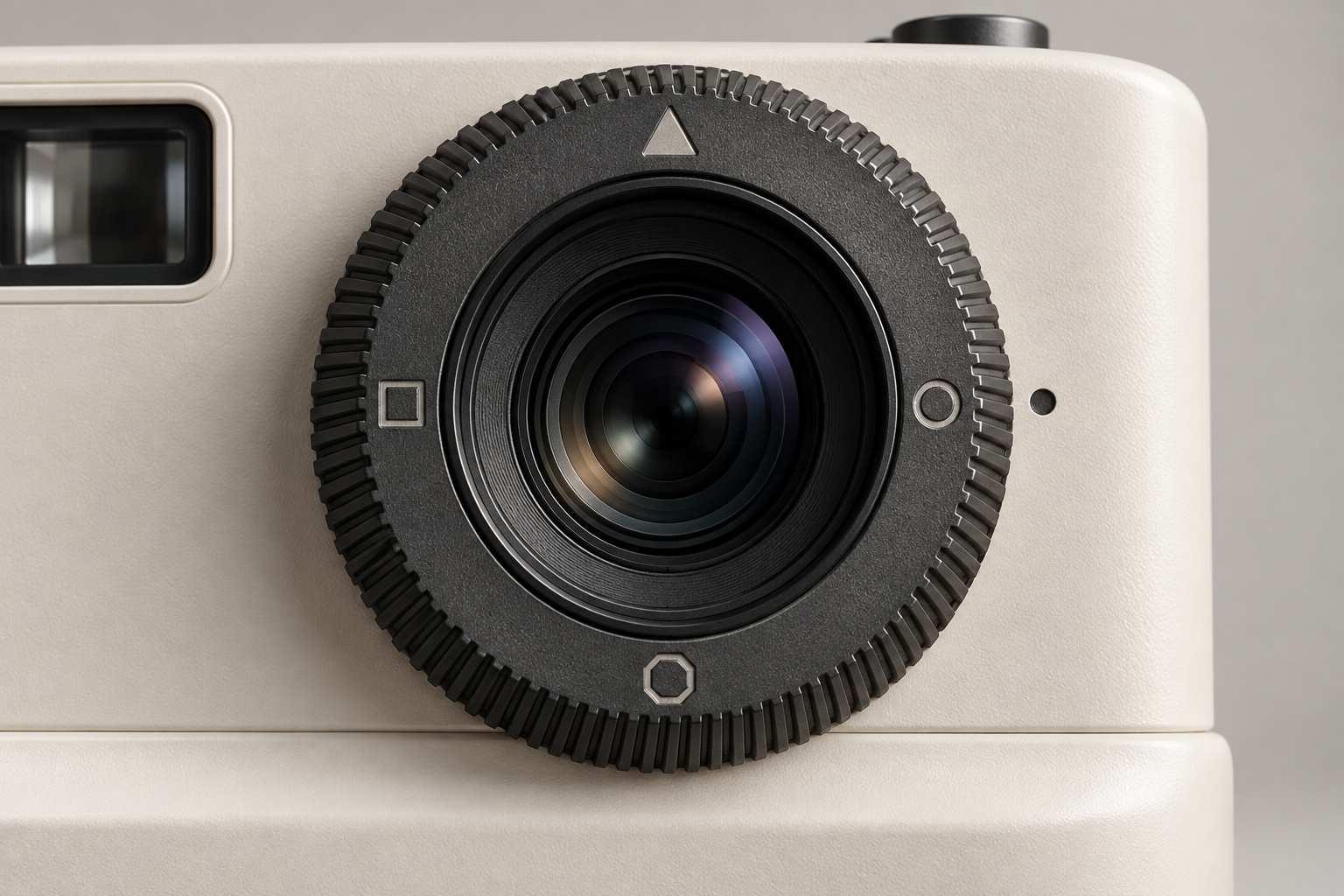
Conceptual illustration of a tactile selector, not Polaroid Mod hardware or tested control geometry.
Selection is only the first step in feedback
Being able to select a mode does not establish that a person knows how to complete it. Some creative actions involve a sequence rather than one shutter press. The interface has to distinguish choosing, starting, continuing and finishing.
DPReview’s September 29 coverage corroborates the camera’s move toward creative effects without requiring a phone or app. That is a useful account of the proposition, rather than proof that every first-time user will understand every mode. The absence of a companion screen increases the importance of the cues that remain on the object and in its supporting instructions.
Our proposed validation task is simple: give someone an unfamiliar two-step mode and watch whether they can tell what has happened and what comes next. Do they mistake the first action for completion? Can they recover after an interruption? Does the selected symbol explain the effect, or merely label it?
In a kitchen appliance, similar questions appear when a user selects a recipe program but still needs to add an ingredient. In a creative tool, they arise when one output depends on several gestures. A good selector brings people into the experience; feedback keeps them oriented once they are there.
Design the cost of learning alongside the delight
Experimentation has a different consequence when each attempt consumes a physical material. Digital previews can invite repeated trials at little immediate material cost. Instant film creates a tangible output, but it also asks the user to spend a consumable while learning.
In her September 29 Digital Camera World review, Hillary K. Grigonis described the creative modes as enjoyable while noting the cost of failed experiments, the need to consult the included guide and challenges with precise framing. Those are one reviewer’s observations, not universal outcomes. They identify useful questions for product teams: what learning support belongs in the box, and how much uncertainty will the intended customer welcome?
A brand can encourage playful results while still reducing avoidable confusion. A concise guide can explain setup, show a representative effect and distinguish a technique problem from a product fault. Packaging can make the accessory’s role clear before it gets separated from the camera. Support content can show the sequence without promising the same image every time.
This is where prototyping the complete experience matters. Review the control, instructions, accessory storage and first-use sequence together. Measuring only whether someone can turn the dial leaves out whether they understand the commitment behind that turn.
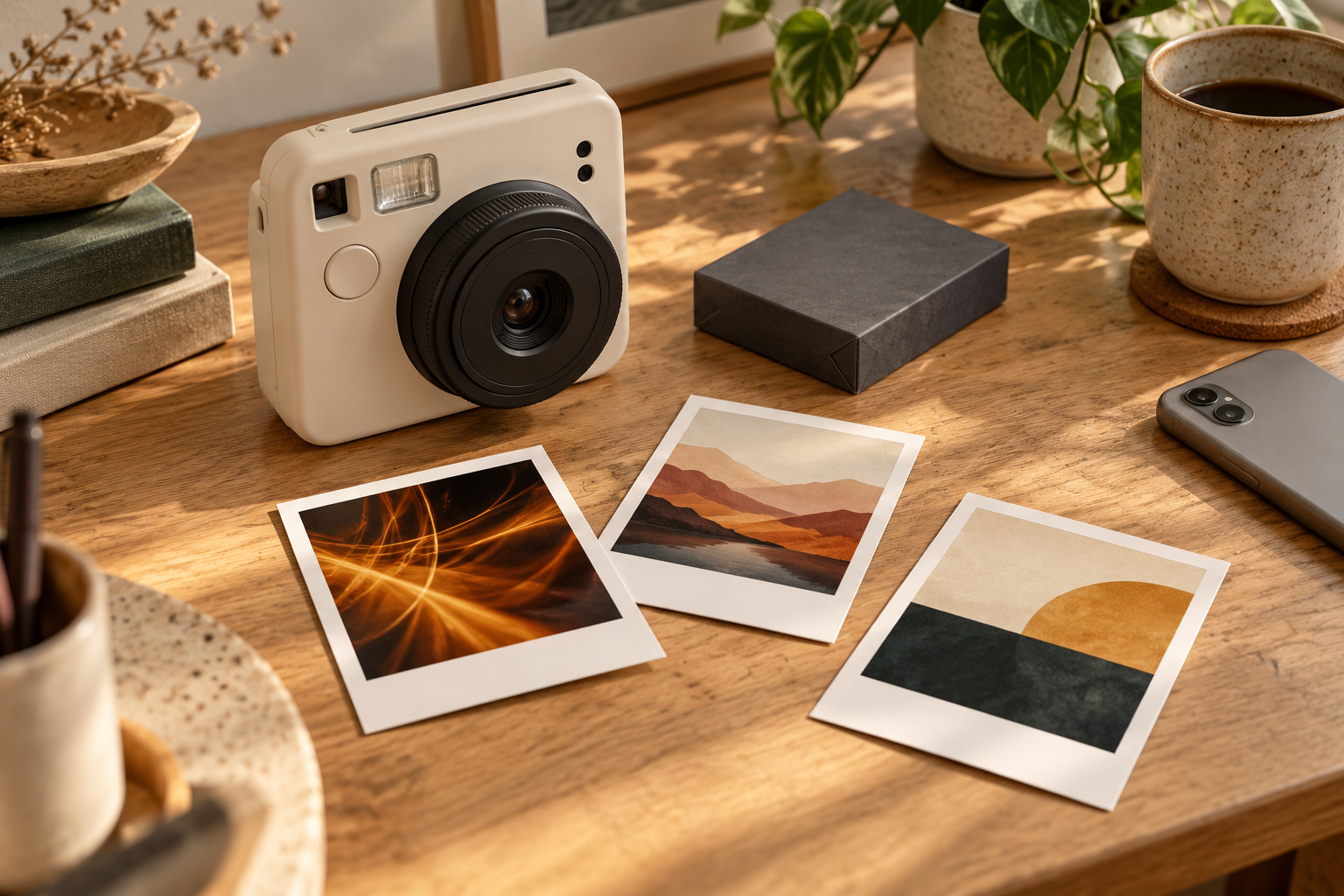
Illustrative design study of a creative routine, not photographs made with Polaroid Mod.
A focused interface is a commercial choice
Our interpretation is that Mod’s visible modes make a distinct reason to choose the object easier to communicate. They put an activity on the product surface, rather than making the buyer infer it from a long feature list. That can give an advertising image or retail demonstration something concrete to explain, without establishing any sales or adoption result.
The tradeoff is deliberate constraint. A small set of recognizable creative paths may suit someone seeking accessible play. Someone seeking detailed control over every variable may want a different tool. Product positioning should make that distinction clear before purchase, so that simplicity does not become a surprise limitation.
For founders and brands, the takeaway is to identify the experience that should be visible, then develop its control, feedback and learning support as one system. The physical interface is part of the business promise. If your team is deciding what belongs on a consumer product’s surface, discuss the design challenge with Jackson Hedden.