Meta’s Muse Charm Tests the Dedicated AI Device
Meta introduced Muse Charm in its September 24, 2026 recap of the Connect event held the day before. The company describes it as a pocket-sized device for talking with its Muse assistant, using a real-time voice model, and says it will share more later this year. Axios also reported the announcement and Meta’s stated plan to make it available by December. Price, final specifications, and the full interaction model remain undisclosed.
That short brief is enough to surface the core design question: what useful job justifies a new object when the same assistant is already available through a phone, and is coming to glasses? The answer will depend less on novelty than on whether the dedicated form makes a frequent interaction clearer, faster, or more comfortable.
A dedicated device needs a distinct job
A phone is already a capable general-purpose screen and communication tool. Glasses promise hands-free access, though they bring fit, social signaling, battery, and privacy considerations. A small companion device occupies a different space: it can be carried, picked up, and addressed directly. That physical separation could make an assistant feel more available, but it also adds one more object to charge, carry, set up, and remember.
Design teams should define the job before refining the form. Is the device meant for a brief voice exchange while walking, a visual question that requires showing the assistant something, or longer conversations? Each use case changes decisions about activation, microphone pickup, camera placement if any, feedback, pocketability, and how a person knows the device is listening. Meta’s public description does not yet specify those interactions, so they remain open design questions rather than confirmed features.
The distinction matters commercially as well. A dedicated object needs a reason to stay in a user’s daily routine after the first week. That reason could be a particular interaction advantage, but it cannot be inferred from the announcement alone. Teams should test the task and context that justify a new device before treating small size or a memorable character interface as sufficient differentiation.
Make activation and feedback unambiguous
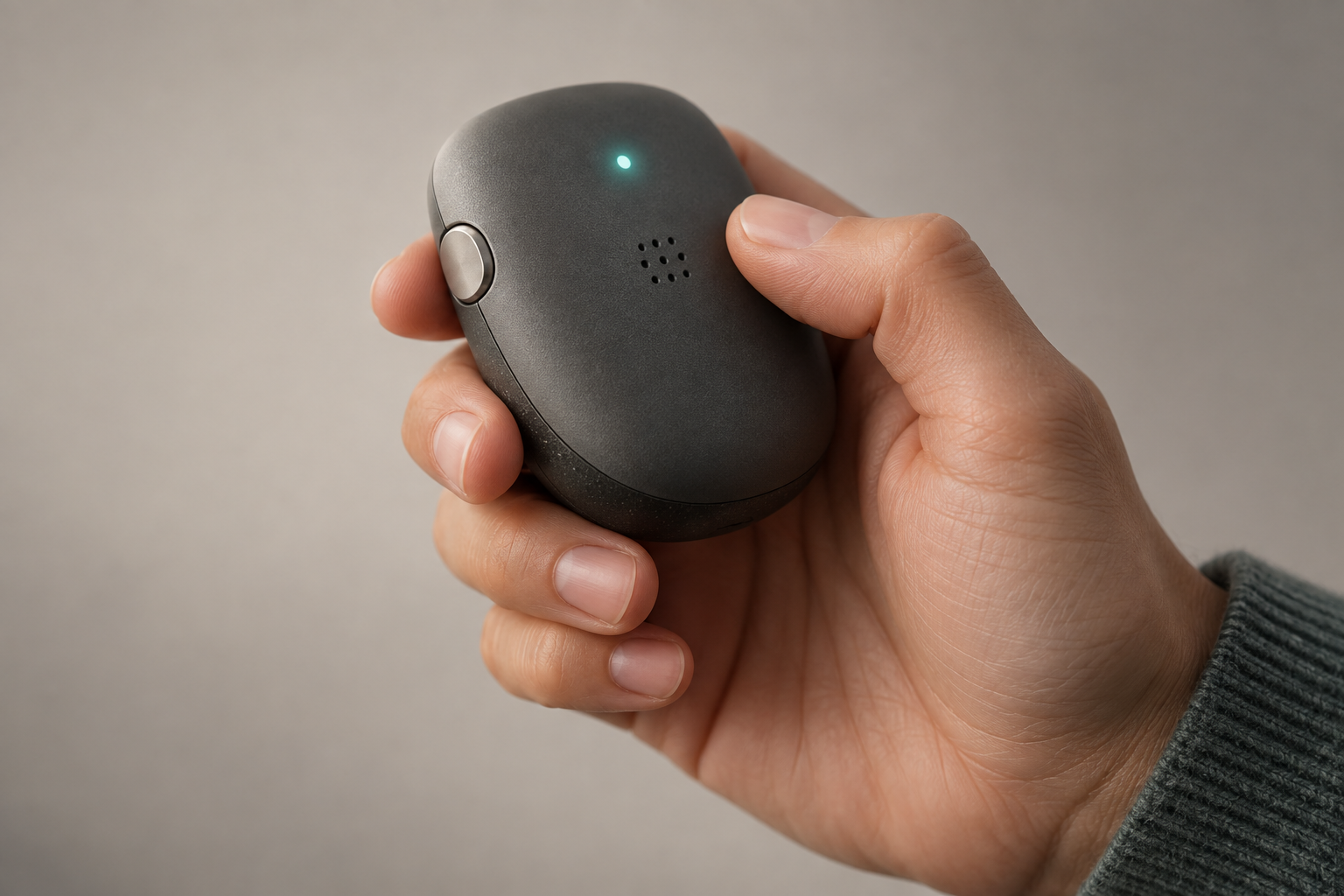
AI-generated conceptual illustration; not Meta hardware or a validated usability result.
Voice interfaces shift some interaction from taps and menus to turn-taking. The user needs to know when the device is ready, when it has heard a request, whether it is still processing, and when a response is complete. If the product also has a screen or expressive character, that visual language should support the conversation rather than create decorative activity that obscures state.
These details affect trust and accessibility. A clear physical activation action can help prevent accidental listening; an obvious listening indicator can make the device’s state legible to people nearby. Audio responses may work well in some environments but become impractical in a quiet room, public transit, or a conversation with another person. A well-designed system considers how users can pause, silence, or switch to a private mode, and offers a non-audio way to confirm important state changes where possible.
That is not a claim about Muse Charm’s eventual controls. It is a test plan for any voice-first product: observe whether new users can start, interrupt, correct, and end a conversation without coaching, then repeat in noisy and socially sensitive situations. Measure misunderstandings and recovery effort, not only how quickly a scripted demo completes.
Portability is a chain of small decisions
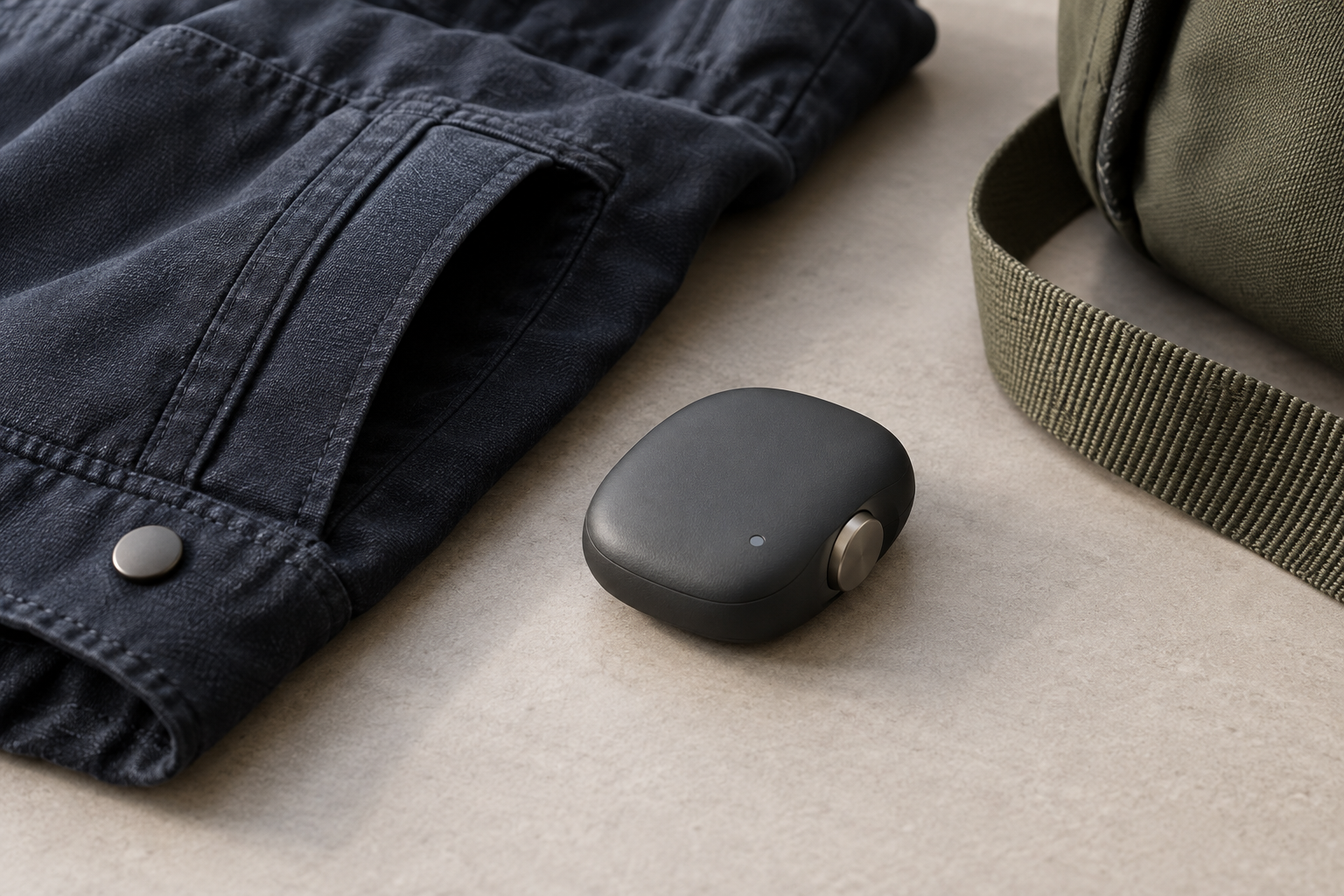
AI-generated conceptual illustration of generic carry context; not an accessory or configuration announced by Meta.
Calling something pocket-sized does not settle how it travels. The case, attachment point, surface friction, button placement, and resistance to everyday knocks determine whether it feels secure or becomes another fragile gadget. If a product is carried on a keychain or lanyard, designers also need to consider snagging, swinging, accidental activation, and whether the object can be removed easily for use.
Portability also depends on the supporting system: setup through another device, account access, charging, connectivity, and what happens when the network is unavailable. Meta’s public recap does not specify those details. Product teams should map the first-time setup and a full day of carrying and use before locking enclosure dimensions or accessory decisions. The companion phone app may enable configuration, but the standalone product should make its own status and next action understandable.
Prototype the routine before the object
Because Meta has not published a full specification or price, the announcement is best read as an early product direction, not proof of a finished market category. For other teams, the useful sequence is to prototype the routine first: identify the moment, the hands and attention available, the information the device needs, and the feedback the user expects. A rough phone-based or audio prototype can test whether a dedicated form solves a real interruption before a custom enclosure and electronics create sunk cost.
Then test the physical brief: can someone locate it, activate it, understand its state, and put it away without breaking the flow? How often does it compete with the phone already in hand? Where does it live when not in use? Clear answers can guide shape, attachment, controls, acoustic output, and charging architecture together.
Muse Charm’s next details will determine whether its dedicated form solves a specific interaction problem or simply packages an assistant in a new object. Jackson Hedden helps teams connect industrial design and engineering decisions early. Explore product design, use prototypes to test an interaction, or talk with the studio about a connected product brief.