Snap Specs and the Everyday Design Test for Wearables
Design news and analysis · September 21, 2026
Snap's September 16 SPECS launch announcement puts a familiar product-design tension back in view: a device can remove a task from your hands while adding responsibilities elsewhere. Snap describes standalone augmented-reality glasses, controlled through hands and voice, with computing hardware inside the frames. It also introduced a separately sold cellular charging case. Shipping is expected later this fall; this is a launch announcement, not evidence of widespread everyday use. Read Snap's announcement.
For teams developing wearables, the useful question is broader than whether an interface feels impressive in a demonstration. What must someone carry, tolerate, understand, charge, and explain to other people to receive its benefit? Our view: those obligations belong in the product brief alongside the headline capability.
Define the moment worth wearing a computer for
A wearable competes with habits before it competes with another device. A phone can stay in a pocket until needed. Glasses occupy the face even when their digital functions are idle. That difference changes what a compelling use case needs to prove.
Start with a specific episode: following instructions while both hands are occupied, for example. Compare the entire sequence with the existing method. Include finding the device, putting it on, resuming the task, handling an interruption, and taking it off. Saving a few seconds during the central action may not compensate for setup and recovery.
Write a narrow success criterion that can be observed. Can someone resume the correct step after a conversation interrupts them? Can they dismiss guidance without losing their place? This gives industrial design and interaction design a shared target. A long feature list cannot substitute for one dependable reason to wear the object.
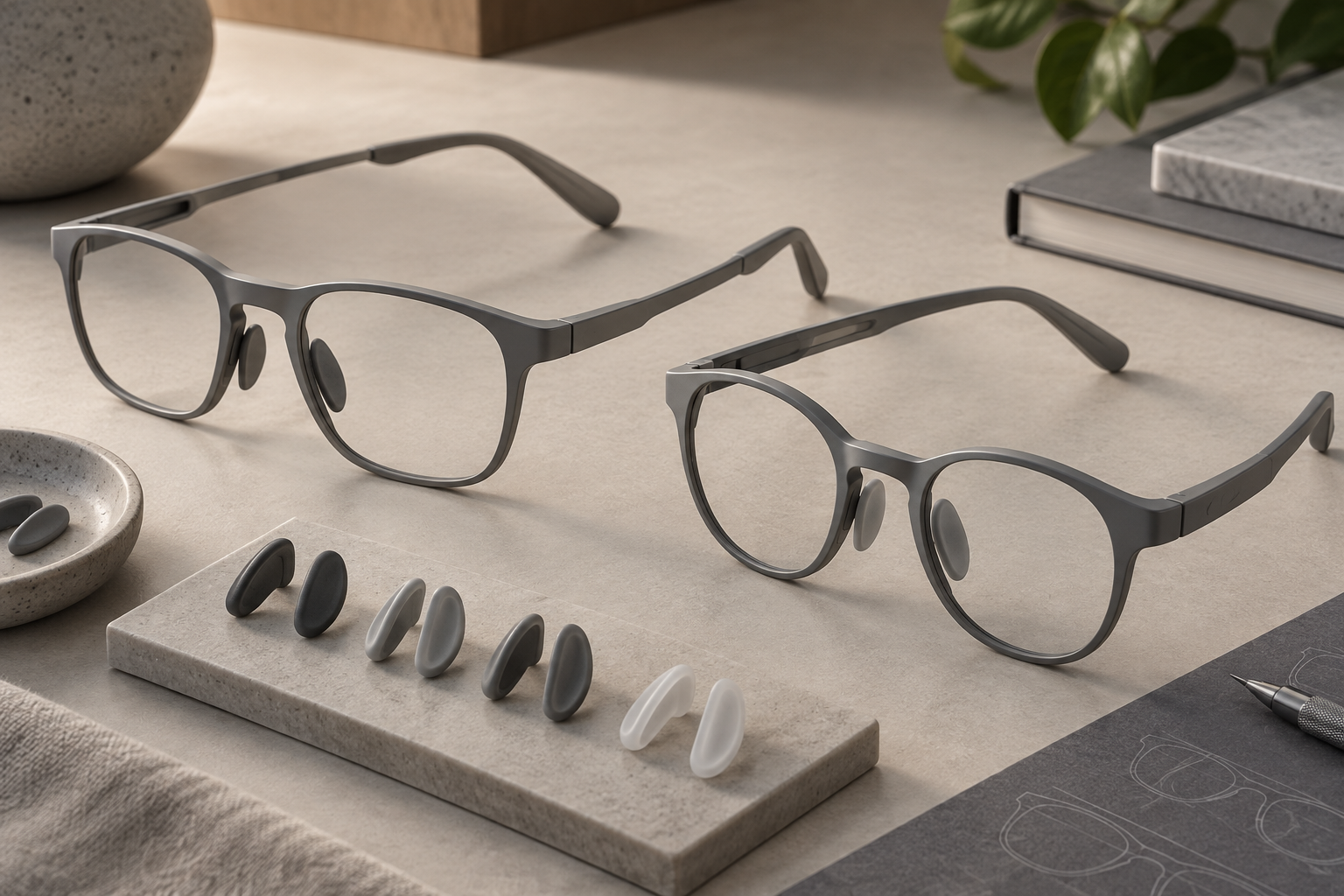
AI-generated conceptual fit study; not SPECS or a physical studio test.
Evaluate fit as a changing condition
A compelling silhouette is only the beginning of an eyewear brief. Teams should examine how contact points behave as the wearer turns, bends, speaks, and repeatedly removes the frames. Evaluate the distribution of pressure, the effort required to adjust the fit, and whether adjustments disturb the intended viewing position.
Use early physical models to compare alternatives under equivalent conditions. Keep a record of where participants reposition the device and when they choose to remove it. Include different face shapes and relevant prescription needs rather than treating one comfortable fit as representative. Longer sessions may reveal different problems from an initial try-on.
This is a proposed evaluation approach, not a claim about SPECS performance. Jackson Hedden has not tested the glasses. A launch presentation cannot establish comfort across a population, and a short demonstration should not be reported as evidence of all-day suitability.
Make the product understandable to people nearby
Snap says a prominent external LED signals photo, video, or audio recording. That is an important physical interface: it communicates with someone who may never read the owner's onboarding screens. Snap outlines the recording indicator and privacy behavior here.
The broader design lesson is to test signals with bystanders as well as owners. Ask what people think a visible light means before explaining it. Compare its visibility from different angles and in different lighting. Check whether recording, standby, and a fault can be confused. A signal that technically exists may still fail to communicate the intended state.
Consider the social action too. How does a wearer pause an experience when another person asks for attention? Can they make that pause apparent? These questions connect a small hardware detail with the larger experience of using the product around others. The aim is understandable behavior, supported by consistent software and physical cues.
Design the time between uses
The announced charging case highlights a second boundary: the product system continues after the glasses leave the face. Snap says its optional cellular case provides four additional charges. That remains a manufacturer claim; it does not tell a prospective buyer how a particular daily routine will work.
For a new wearable, prototype the return-to-case action as carefully as the primary control. Test whether the orientation is obvious, the lenses remain protected, and the device reliably makes contact without a corrective nudge. Explore how the case fits the intended bag or pocket and where the cable exits when space is limited.
There are legitimate tradeoffs. A larger case may make placement easier while becoming less convenient to carry. More protection can mean more bulk. A separate accessory can extend capability while introducing another item to remember. Evaluate these choices against the intended routine instead of optimizing each component in isolation.
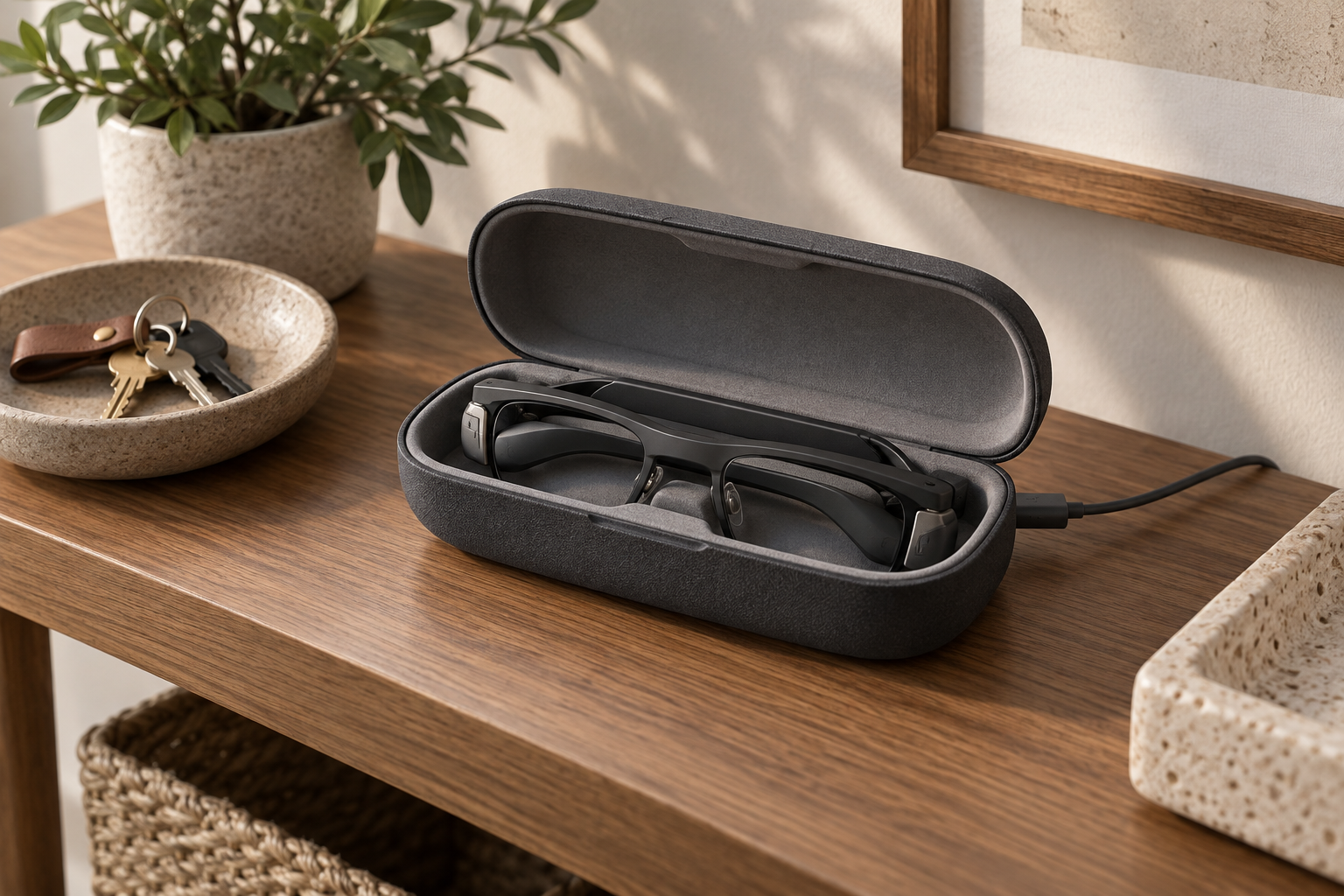
AI-generated conceptual illustration of storage and charging; not SPECS.
Build evidence around the complete routine
The next useful step for a product team is a small, focused prototype study that follows one task from storage to use and back again. Separate what the form model can establish from what requires working electronics or software. Record assumptions, observed difficulties, and the changes needed before the next round.
Snap's launch makes wearable computing timely, but the lesson extends to earbuds, body-worn controls, and connected accessories. A convincing demonstration earns attention. A product that fits ordinary routines has a better-defined path toward repeat use. Neither adoption nor commercial success can be inferred from the announcement alone.
If your team is developing a wearable or connected physical product, discuss the design challenge with Jackson Hedden.
Editorial note: Reporting above is attributed to Snap; the evaluation recommendations are Jackson Hedden design analysis. All images are AI-generated conceptual illustrations, not photographs of SPECS or evidence of testing.