Technics A1000 Makes the Mechanism Part of the Identity
Technics announced the EAH-A1000 wireless headphones on September 29, 2026. The launch combines an acoustic engineering story with a visible change in how the product is supported, finished, and controlled. For teams developing premium consumer hardware, that combination raises a useful question: can the details customers touch communicate the same intent as the technology inside?
The official announcement describes a new 40 mm Magnetic Fluid Driver, a metal Flow Arm with single-sided support, metal housing panels, and physical buttons with a slide control. These are documented features. The design interpretation below concerns the product brief they suggest; Jackson Hedden has not tested these headphones.
All three images are AI-generated conceptual illustrations of generic headphones, material samples, and evaluation objects. They do not depict the EAH-A1000 or its actual components.
Make the mechanism part of the identity
Technics says the Flow Arm transitions from a square section at the slider to a triangular section at the hanger. It pairs this support with circular housings and carries forward a circular machining treatment associated with the brand. The product comes in Black and Platinum Greige. These choices give the industrial design a specific vocabulary beyond an otherwise familiar headphone outline.
Our reading is that the support mechanism becomes an opportunity to express identity. A founder commissioning a physical product can use the same question without borrowing this form: which necessary part could make the product recognizable? A hinge, handle, adjustment track, or closure is often more consequential than an ornamental badge because the user encounters it repeatedly.
That opportunity carries obligations. A narrow-looking arm still needs a credible structural specification. An exposed adjustment needs predictable motion. An elegant junction should remain understandable when the product is folded, carried, or adjusted without looking. Appearance provides a proposal; engineering and use evaluation determine whether the proposal survives.
In a product design brief, describe the intended relationship between these things. Rather than requesting a premium-looking object, identify the interaction that should feel deliberate and the visible detail that should support it.
Review the finish as a family of decisions
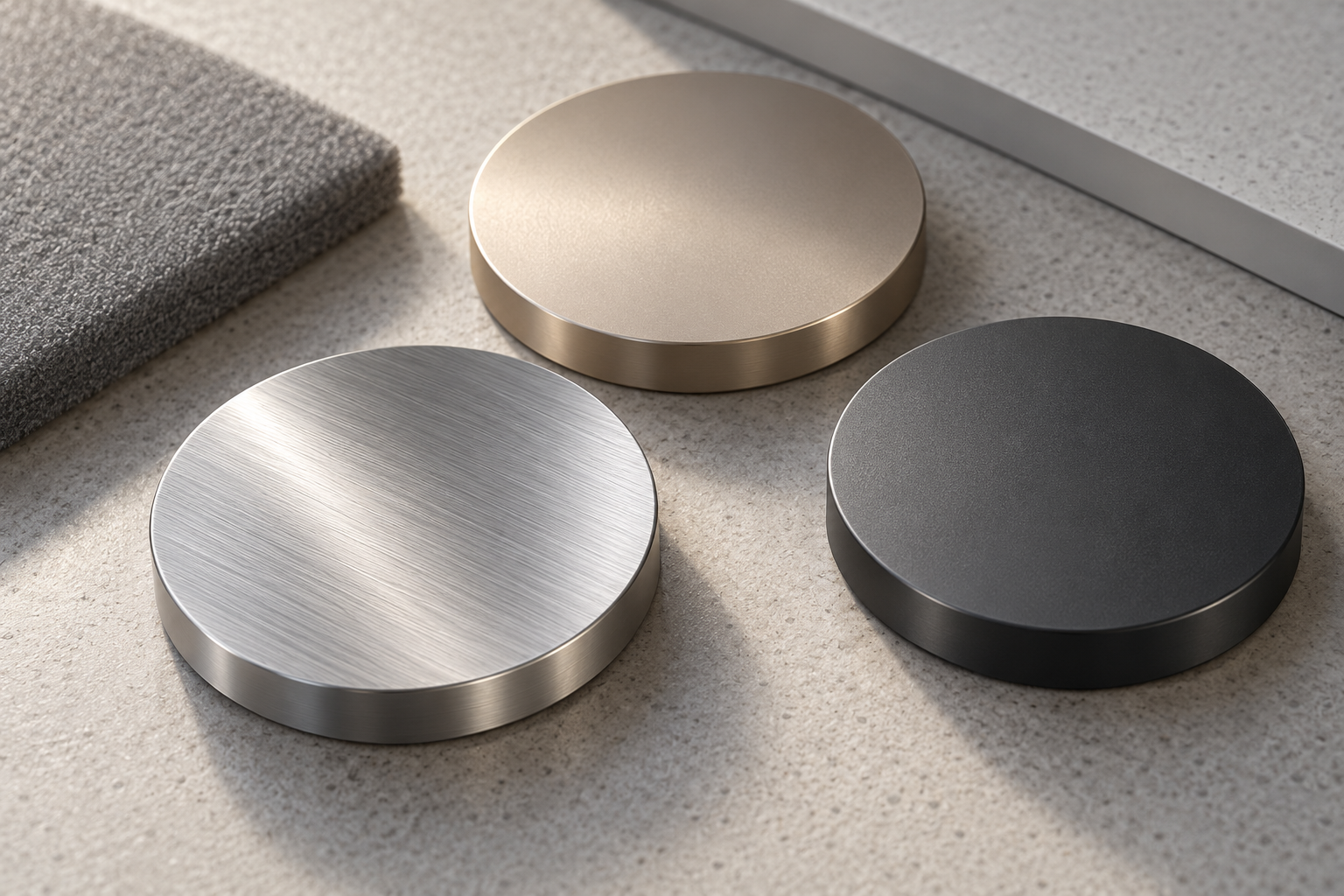
AI-generated conceptual illustration of generic finish samples, not Technics components or measured results.
TechRadar's September 29 initial report describes a review of multiple ear-cup top-panel samples with the design team. The publication also clearly says its testing was incomplete. That reporting offers context about the development process, not a finished verdict we can extend to every user.
A practical takeaway is to review color, material, and finish together with the mechanism. A metal sample that looks considered on its own may look mismatched next to a cushion, plastic shell, or painted seam. The important comparison is the assembled relationship under relevant lighting, including reflections produced by curved and flat surfaces.
Ask for samples that show the transitions, not only the broad surfaces. Look at the edge where the material changes, the area around an adjustment, and the point a finger contacts during use. Agree on acceptable variation before approving a visual direction. A beautiful presentation sample does not establish what a production batch will consistently deliver.
This does not mean every premium product needs metal. A well-specified polymer can serve the intent, and a decorative metal part can introduce weight or complexity without helping the user. The choice should follow the experience and manufacturing constraints, then become a coherent visual language.
Physical controls deserve their own brief
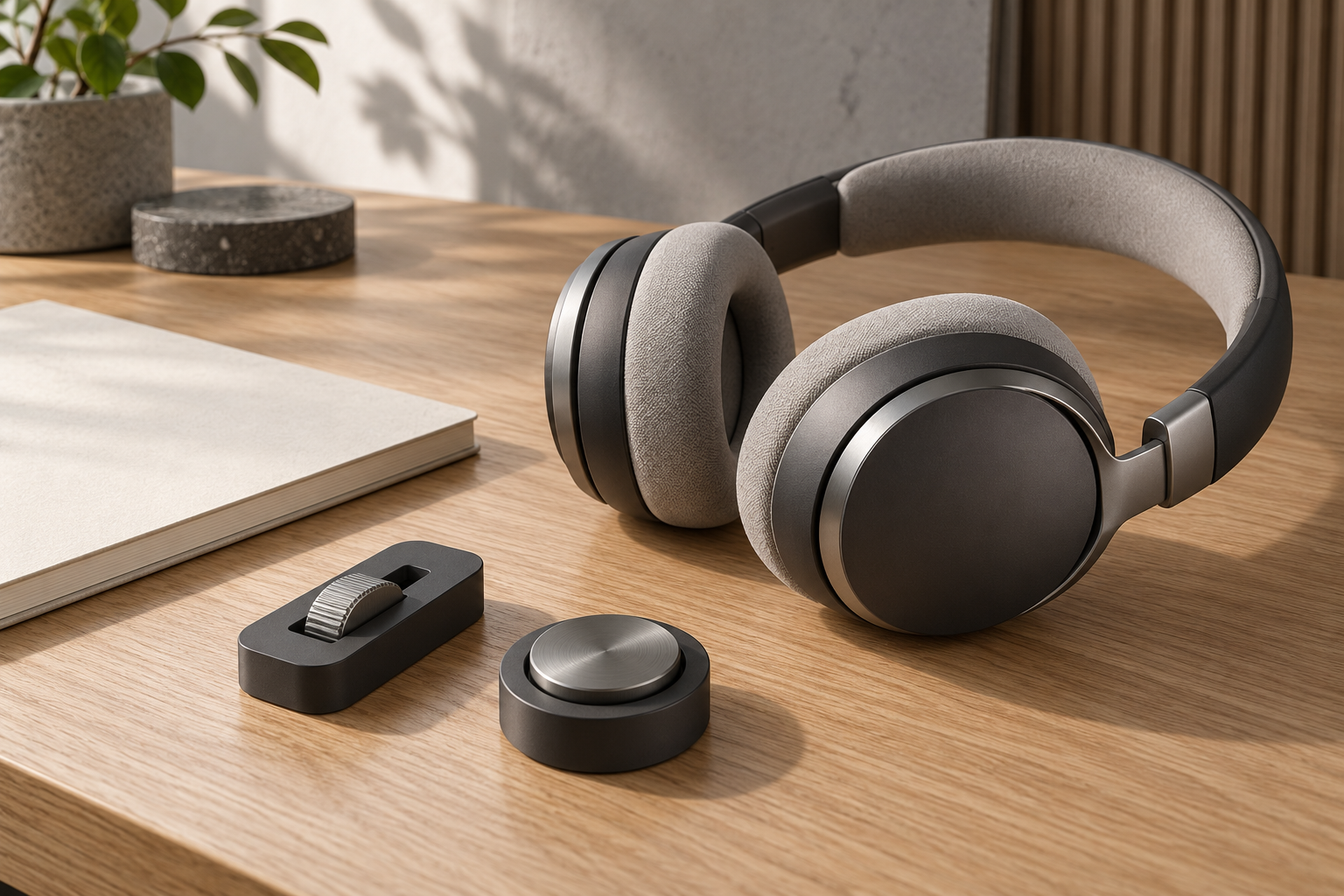
AI-generated conceptual illustration of a generic control review, not a tested Technics prototype.
The launch's button-and-slider approach is a reminder to specify controls as objects, not just functions on a feature list. Our suggested review asks whether someone can locate the control by touch, distinguish its actions, and understand the result. The answers should come from representative use, not from the designer's familiarity with the prototype.
A physical control occupies space and requires mechanical integration. A touch surface can simplify some visible geometry, but needs a different approach to discoverability and feedback. Neither is automatically right. Compare alternatives against the actual sequence: adjusting the product, changing playback, packing it away, and returning to it later.
Use prototypes to separate those questions. A form model can help evaluate reach and recognition; a functioning control can reveal travel and feedback. Record which question each model can answer so an attractive appearance model is not mistaken for a validated interaction.
Keep the commercial story tied to what is available
As checked October 1, the US Technics store lists the A1000 at $449.99 on pre-order. It estimates shipping on or before October 15 for Black and October 30 for Platinum Greige, and says those estimates can change. The announcement date and a customer's likely delivery date are different facts.
For a brand planning a premium launch, our recommendation is to align the public story with the object it can actually deliver. Specify the recognizable mechanism, evaluate the assembled finish, and test the controls as part of the complete experience. Technical claims should retain their evidence and scope rather than becoming a general promise of superiority.
If your team is deciding how a mechanism, material palette, and user interaction should work together, discuss the product brief with Jackson Hedden while those decisions are still open.