Packaging has to do more than make a product look finished. It must help the product present clearly, stay secure through handling, fit the intended packout, and move cleanly from concept into production. Those decisions are easier when the team treats the package as part of the product experience and fulfillment workflow, not as artwork added at the end.
Talk with Jackson Hedden about your packaging development needs.
Retail packaging is the coordinated package system used to present, contain, identify, protect, and move a product through retail and e-commerce channels. It connects shelf communication and customer interaction with product fit, handling, packout, and production requirements.
That broader view starts with a useful distinction: a package can be well designed as an object yet still miss the needs of a specific sales channel. The next step is to clarify what retail packaging must accomplish, and how those responsibilities differ from general packaging design.
What Is Retail Packaging, and How Is It Different from General Packaging Design?
Retail packaging is the package a customer encounters when a product is presented for purchase, whether that purchase begins on a store shelf or an online product page. It must do more than contain the item. It also has to communicate what the product is, support practical handling, and fit the way the product moves from production to storage, fulfillment, display, and use.
That broader role is consistent with the EPA's definition of packaging, which describes it as material used to wrap or protect goods and notes its role in shipping, storage, protection, sales, and marketing. The category can include paper and paperboard, glass, steel, aluminum, plastics, wood, and other materials. The right choice depends on the product and the channel, not on a universally superior material.
General packaging design may focus on the package as a physical object: its structure, closure, graphics, dimensions, and relationship to the product. Retail packaging includes those decisions, then adds a channel strategy. A product team must consider how the package is recognized, handled, stocked, opened, stored, shipped, and replenished. It may also need to account for different packout decisions between store distribution and direct-to-consumer fulfillment.
This distinction does not mean retail packaging is only a branding exercise. A visually strong package still needs a workable structure, a sensible product fit, clear production information, and a handoff that suppliers can act on. A packaging partner may support packaging systems design, structural packaging design, brand-aligned packaging, and prototype development, with the work moving from concept toward production-ready specifications. Confirm the partner's exact capabilities, deliverables, and handoff responsibilities before the project begins.
For teams refining the customer interaction, packaging opening and shelf presentation are useful considerations, but they are only part of the retail packaging brief. The complete brief connects presentation with protection, handling, packout, fulfillment, and production readiness.
What Does Retail Packaging Need to Do Across Shelf and E-commerce?
Retail packaging has to make a useful first impression while remaining practical through the rest of the product journey. On a shelf, the package may need to communicate what the product is, support easy identification, and create a clear interaction with the shopper. In e-commerce, the same package may spend more time in storage, transit, or a customer's hands before it is opened. Those contexts can reward different priorities, even when they share one structural design.
Start with the product itself. The package should hold the product securely, fit its dimensions without unnecessary movement, and provide access that feels intentional. Closure, opening, and reclosure decisions affect both the first-use experience and what happens after the purchase. For a closer look at packaging opening and shelf presentation, consider how the physical interaction supports the product brief rather than treating it as a finishing detail.
Balance presentation with protection
A shelf-facing format can emphasize visibility, orientation, and efficient product handling. An e-commerce format may place greater emphasis on containment, resistance to movement, and a straightforward unpacking sequence. The right balance depends on the product, route, storage conditions, and fulfillment process. Packaging options have different functions and limitations, so selection should reflect the application rather than assume that one construction works everywhere. A package format that works well on a shelf may still need additional review for storage, direct fulfillment, and return handling.
Protection also includes handling before and after purchase. A package may be lifted, stacked, opened, displayed, returned, or stored again. If the structure makes any of those moments awkward, the issue may appear as damage, poor presentation, difficult access, or customer complaint. That is a useful reminder to validate the intended route instead of judging the package only from a desk review.
Design for the channel, then test the transition
Product teams should map the handoffs between manufacturer, retailer, fulfillment operation, and end user. Confirm how units arrive, how they are placed or picked, whether outer packaging is removed, and what the customer sees at unboxing. Then review product design considerations alongside e-commerce packout needs. A strong retail packaging concept does not simply look right on a shelf. It connects presentation, fit, protection, handling, and unpacking into a system that can be reviewed with the relevant retail and logistics partners.
How Should You Choose Packaging for Protection and Handling?
Start with the product and the route it must take, not with a preferred material. A useful retail packaging brief identifies what can break, scratch, leak, shift, compress, or become difficult to open. Then connects those risks to the package structure and the way people will handle it.
1. Define the product's vulnerable points
Record the product's dimensions, weight, center of gravity, surface finishes, delicate components, and any areas that must remain visible or accessible. Note whether the contents can move inside the package and whether the package must accommodate variations across a product family. These details determine where clearance, cushioning, restraint, or a stronger outer structure may be appropriate.
2. Choose the handling system
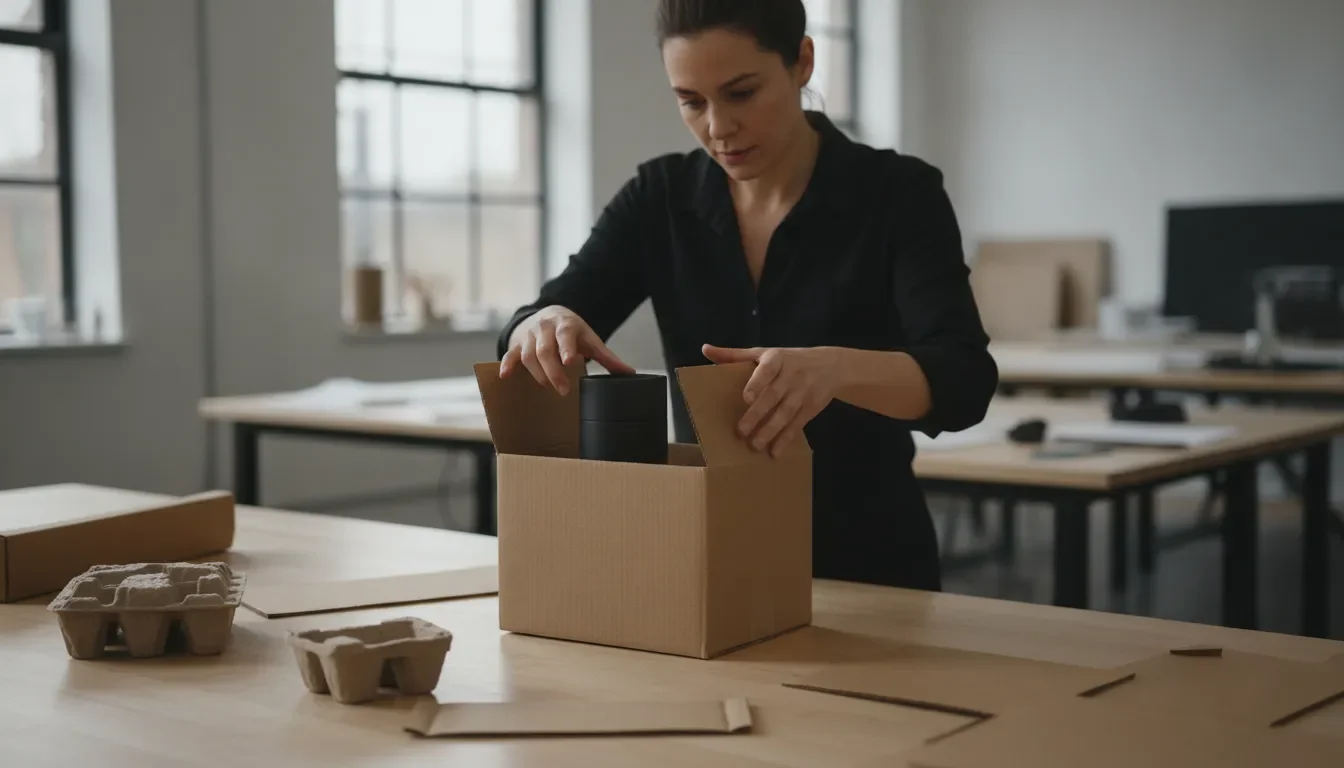
Map the real touchpoints: assembly, pallet or case handling, shelf placement, customer pickup, shipment, storage, and opening. A closure should stay secure during those steps without making the package unnecessarily difficult to access. Inserts can separate components, control movement, and guide correct placement. Compare protective insert design options against the product geometry and the intended packout rather than treating an insert as a universal solution.
Packaging options have different functions and limitations, so selection should reflect the application. This principle is especially important when a format that works well on a shelf must also withstand storage or direct fulfillment. Validate the complete system, not just the material sample. Review the proposed configuration against the product, route, storage conditions, and handling steps before approving the structure.
3. Validate the assembled package
Build a representative prototype with the intended product, closure, insert, labeling, and packout. Review fit, movement, opening, resealing, storage orientation, and handling with the people who will use or assemble it. Confirm any retailer, manufacturer, logistics, or labeling requirements with the relevant partner rather than assuming a general rule applies.
Finally, document the tradeoffs between structure, protection, production, and material use. This guide to packaging material and protection tradeoffs can help frame that discussion without assuming one material is best for every product.
How Do Packout and Retail-Ready Packaging Change the Workflow?
Retail-ready packaging is designed to move from transport container to shelf with minimal unpacking or individual stocking. Packout is the arrangement and quantity of products inside that outer format. Together, they connect the package structure to store labor, replenishment, shelf space, product velocity, and the way each SKU is expected to move through a retail environment.
A retail-ready format may allow a team to open a case. Position it and replenish products without removing a separate layer of packaging material or handling every unit individually. A study available through the MIT repository describes this potential labor benefit, while also identifying a manufacturer-retailer tradeoff: the format can reduce retailer costs while increasing costs for consumer-product manufacturers.
That tradeoff makes packout a channel decision rather than a last-minute carton decision. Product velocity, inventory carrying costs, SKU assortment relative to available retail space, and store replenishment procedures all affect whether a retail-ready approach creates value. Before finalizing the structure, teams should review the broader product design considerations with the retailer and manufacturing partner.
Packout decisions to confirm before production.
Outer format
Retail-ready priority: Opens and presents products efficiently on the shelf
E-commerce priority: Fits the fulfillment process without unnecessary handling
Question to confirm: Who opens, positions, and disposes of the outer package?
Unit count
Retail-ready priority: Matches expected shelf capacity and replenishment cadence
E-commerce priority: Supports the order quantity and storage location
Question to confirm: What assortment and replenishment pattern does each channel require?
SKU mix
Retail-ready priority: Uses limited shelf space without creating awkward gaps
E-commerce priority: Keeps each item easy to identify, pick, and pack
Question to confirm: Will every SKU use the same packout, or does the assortment need variants?
Opening and handling
Retail-ready priority: Preserves presentation through store-level opening and restocking
E-commerce priority: Supports the actual route, storage, and unboxing experience
Question to confirm: Which handling steps should be tested with the retailer or logistics provider?
Document these choices alongside dimensions, material assumptions, and production constraints. That gives the manufacturer and retailer a shared basis for evaluating the packout instead of shifting labor or space problems downstream.
What Should Retail Packaging Consider for E-commerce Fulfillment?
E-commerce changes the packaging question from shelf presentation to the actual order journey. Ask whether the product can move through storage, picking, packing, shipping, customer opening, and return or replacement handling with a clear, manageable packout. Review the complete path before finalizing the package. The package should present the product well, but it also needs to fit the workflow that surrounds it.
Design the order packout around the real route
Start by mapping what happens after an order is placed. How is the unit picked? Is it packed alone or with other items? Does the fulfillment team add a protective insert, seal, documentation, or secondary carton? What happens when the product is stored for weeks before shipment? These questions affect dimensions, closure decisions, access points, and the amount of material required around the product.
Do not assume that a visually substantial package is automatically the right protective solution. Packaging options have different functions and limitations, so selection should reflect the application, product fit, handling points, storage conditions, and intended route. Those principles apply beyond fresh produce: test the proposed configuration against the way your product will actually be picked, packed, moved, stored, opened, and returned.
Make unboxing and returns part of the brief
Unboxing is a customer interaction, not an afterthought. The opening sequence should be understandable, the product should be accessible without unnecessary struggle, and loose components should remain organized. If the package may be used for a return, decide whether it can be closed again and whether the customer can repack the product without special knowledge. These choices can influence inserts, seals, internal clearances, and the space needed for a return label or paperwork.
Finally, validate the design with the actual logistics partner and route. Confirm packout steps, storage assumptions, handling points, and return procedures with the people who will perform them. Avoid treating a generic carrier rule or a laboratory result as a complete substitute for route-specific review. A small prototype run or fulfillment simulation can expose awkward closures, wasted space, unstable components, and steps that are difficult to repeat consistently.
What Belongs in a Retail Packaging Production Handoff?
A production handoff should leave the supplier with a controlled, reviewable package of decisions, not a collection of attractive concepts. The goal is to make the approved structure, visual system, materials, packout, and manufacturing assumptions clear enough for the next partner to quote, review, prototype, and produce.
Start with the approved definition
Structure: Identify the approved package format, closure, insert approach, access features, and any open decisions. Include the intended product fit and the dimensions that control the design.
Artwork ownership: Name the owner for brand files, copy, graphics, color references, regulatory or retailer language, and final approval. Separate editable source files from released production artwork.
Materials and finish: List the selected substrate, thickness or gauge where known, coatings, adhesives, finishes, and material alternates. If a choice remains conditional, record what must be confirmed with the supplier rather than presenting an assumption as a requirement.
Documentation: Include current CAD files, dimensioned drawings, tolerances where needed, artwork layouts, assembly views, and a bill of materials. These may become manufacturing deliverables alongside factory coordination, so confirm the required file set and ownership with the responsible production partner. See the manufacturing coordination page for related context.
Make packout and supplier questions explicit
Document how the product, inserts, accessories, labels, and secondary packaging are placed, counted, closed, and prepared for shipment. Note whether the package is assembled at the supplier, filled by another partner, or packed in more than one configuration. Record questions about tooling, minimum order quantities, lead times, material availability, finishing, assembly labor, and inspection points. A clear contract manufacturing handoff workflow can help organize these decisions across partners.
Cost assumptions deserve their own section. Identify which figures are estimates, what quantities and currencies they use, whether tooling, freight, assembly, or waste are included, and which alternatives could change the estimate. A production partner may help with supplier vetting, material sourcing, cost analysis, production planning, and domestic or international coordination. Confirm the actual scope and owner for each responsibility instead of assuming it is included.
Define quality checks and change control
List the checks required before release: dimensional review, artwork proofing, closure and fit review, packout confirmation, sample approval, and ownership of the final signoff. Confirm any retailer, logistics, labeling, or legal requirements with the responsible party. The NIST packaging and labeling resource is a starting point for locating information related to the Fair Packaging and Labeling Act, not legal advice.
Finally, give every released file a revision, date, and approver. A change log should show what changed, why it changed, which files were replaced, and whether the supplier must re-quote or revalidate the package.
How Can Product Teams Evaluate a Retail Packaging Concept Before Scale?
A disciplined review helps a team decide whether a retail packaging concept is ready for broader investment. The goal is not to approve a visual direction in isolation. It is to connect brand presentation, product fit, handling, channel needs, prototype learning, and the realities of production.
Define the decision and the operating brief. Start with the product, intended retail and e-commerce channels, pack quantity, user interaction, opening and reclosure expectations, storage conditions, and the people who will handle the package. Identify what must be confirmed with the retailer, manufacturer, logistics provider, or counsel rather than assuming a universal requirement. A clear brief gives the team a basis for judging tradeoffs instead of selecting a structure because it looks compelling in a presentation.
Review the concept as a brand and packaging system. Check whether the structure supports the product story. Communicates the right information at the point of choice and creates a coherent experience across the pack, shelf, and delivery context. Jackson Hedden's brand-aligned packaging development combines packaging systems design, structural packaging design, and brand considerations so the package is evaluated as part of the product experience, not as a disconnected graphic surface.
Build and inspect a representative prototype. A screen review cannot answer every question about fit, closure, access, assembly, visibility, or packout. Create a physical prototype that reflects the proposed dimensions and construction closely enough to expose the important decisions. Use the prototype to observe how people open, handle, remove, replace, and prepare the product for its intended channel. Jackson Hedden's prototyping and production preparation capabilities can support this transition from concept to physical learning.
Review the concept with channel and production partners. Walk through shelf presentation, case or order packout, storage, handling points, replenishment, and likely manufacturing steps. Ask partners to identify constraints and assumptions early. Retail packaging decisions can shift work or cost between a brand, manufacturer, retailer, and fulfillment operation, so the review should include the parties affected by the format.
Make a documented production decision. Approve the concept, revise it for another prototype round, or pause it with specific conditions for reopening the decision. Record the selected structure, materials, dimensions, open questions, cost assumptions, and required deliverables. A production-ready path may include CAD files, drawings, bills of materials, supplier coordination, and production planning. Keeping those decisions together helps the team carry the reasoning behind the design into the handoff.
Need a packaging concept reviewed from brand direction through production preparation? Contact Jackson Hedden to discuss your product and next decision.
Frequently Asked Questions
What is packaging in retail?
Packaging in retail is the coordinated presentation and containment system that helps a product reach shoppers, stores, and fulfillment channels in an identifiable, usable form. It can support product protection, handling, storage, shelf presentation, and marketing. Common packaging materials include paperboard, glass, metal, plastics, and wood, depending on the product and application. The U.S. EPA provides an overview of packaging materials and functions.
How do I get packaging made for my product?
Start by documenting the product dimensions, weight, use environment, sales channels, packout goals, handling conditions, artwork needs, and production volume assumptions. A product team can then develop concepts, evaluate material and closure options, create prototypes, test fit and presentation, and prepare production documentation. Confirm final specifications with the selected packaging manufacturer before releasing the design.
What is order packaging?
Order packaging is the packaging used to organize and protect a product after it has been selected for an individual customer order. It may include the product package, an outer shipping container, protective inserts, and any necessary components for packing and handling. The right configuration depends on the product, fulfillment process, carrier conditions, and whether the package must also serve as a retail presentation.
How should product teams choose retail packaging?
Choose packaging by balancing product fit, shelf presentation, handling, packout, shipping needs, opening experience, material availability, and production constraints. Compare options against the actual sales and fulfillment environments rather than choosing a format in isolation. Retailer, manufacturer, logistics, and legal requirements should be confirmed for the specific launch.
Contact us about your retail packaging plan
A focused conversation can help your team connect shelf presentation, product protection, packout, fulfillment, and production handoff decisions before the concept moves forward. If you are refining an existing package or defining a new system, contact Jackson Hedden to discuss your retail packaging strategy, prototypes, and production-ready handoff.
