Wrangler’s Archive Denim Puts Fit and Material in Focus
Wrangler and Nashville-based imogene + willie launched the first installment of a three-part denim collaboration on September 26, 2026. The opening release revisits Wrangler’s short-lived 1964 10MW fit and pairs it with deadstock selvedge denim from Cone Mills White Oak. The product is a useful design case study: a heritage reference can create a strong point of view, but the pattern, fabric behavior, sizing guidance, and release plan all have to work together.
The brands say the collection draws on Wrangler’s archive and includes three capsules. The first centers on 10MW denim; later drops are scheduled for October 24 and November 7. Wrangler says the garments are patterned, cut, and sewn in the United States with domestic fabrics. Those are the companies’ stated facts, not an independent production audit. Sourcing Journal’s launch coverage, republished by Yahoo Shopping on September 26, also describes the first drop and domestic production claim. The launch announcement and Wrangler’s collection page describe the program, while the 10MW product listing explains the fit and fabric details.
An archive is a design input, not a finished brief
A legacy pattern can carry recognizable proportions and construction cues. But reproducing a garment from an archive is not simply a matter of tracing an old pattern. A present-day team still has to decide which details define the identity, what can be changed for fit or production, and how the product will be explained to someone who has never worn the original.
The first capsule brings back a men’s 10MW model that the product listing says was made for only one year, in 1964. Wrangler also presents a women’s 10WW version. That creates a meaningful design question: when a historic form is translated across bodies, which dimensions are preserved and which are reworked? The answer lives in rise, waist, seat, leg line, pocket placement, and the way each measurement relates to movement—not simply in a new label or a smaller grade.
For product teams, the lesson is to treat an archive as evidence for a design hypothesis. Preserve the elements that make the reference legible, then test the updated pattern with the intended users and use cases. A reference can guide proportion; it cannot validate fit on its own.
Material choice changes the fit conversation
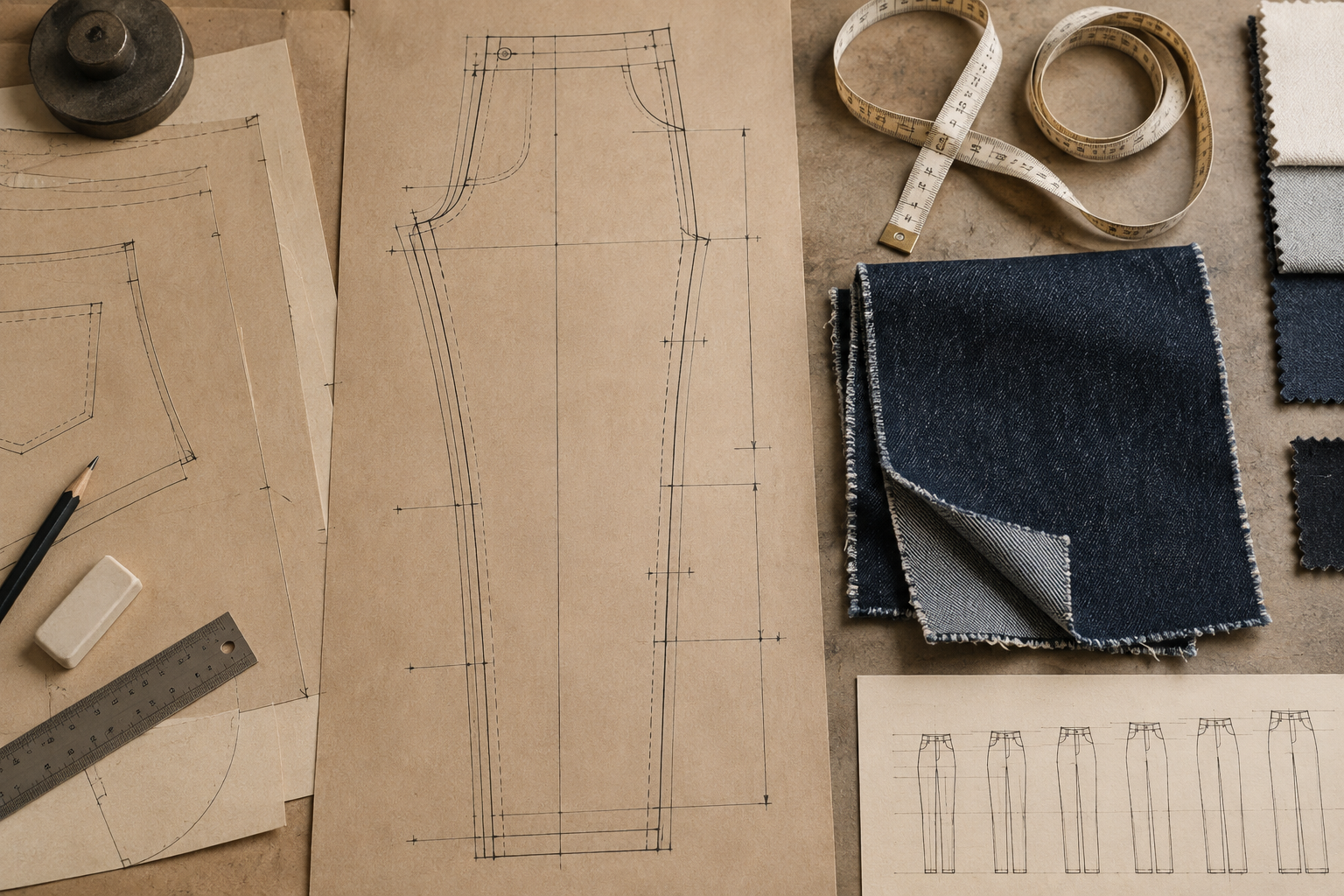
AI-generated conceptual illustration; pattern shapes are illustrative, not the collaboration’s original pattern.
The launch combines a specific archival shape with deadstock, unsanforized selvedge denim from Cone Mills White Oak. The product listing warns that the fabric can shrink after washing and recommends sizing up. That caveat is more than a care detail: it changes how a customer chooses a size, how the garment fits before and after washing, and what a brand needs to communicate at the point of sale.
Unsanforized cloth preserves a material behavior that some denim buyers actively seek. It also asks more of the user. A first fit may not predict the post-wash fit; shrinkage may vary with washing conditions; and the user has to understand the recommendation before buying. A product can honor material history while still reducing uncertainty through clear measurement guidance, visual fit references, and a plain explanation of what may change.
That tradeoff applies well beyond clothing. A material is never just a swatch on a presentation board. Its tolerances, aging, maintenance, sourcing limits, and user-facing instructions affect the entire experience. During development, teams should test the material under realistic conditions and align the specification, size or fit system, packaging, and support content around what those tests show.
Deadstock supports a limited run, not an unlimited platform
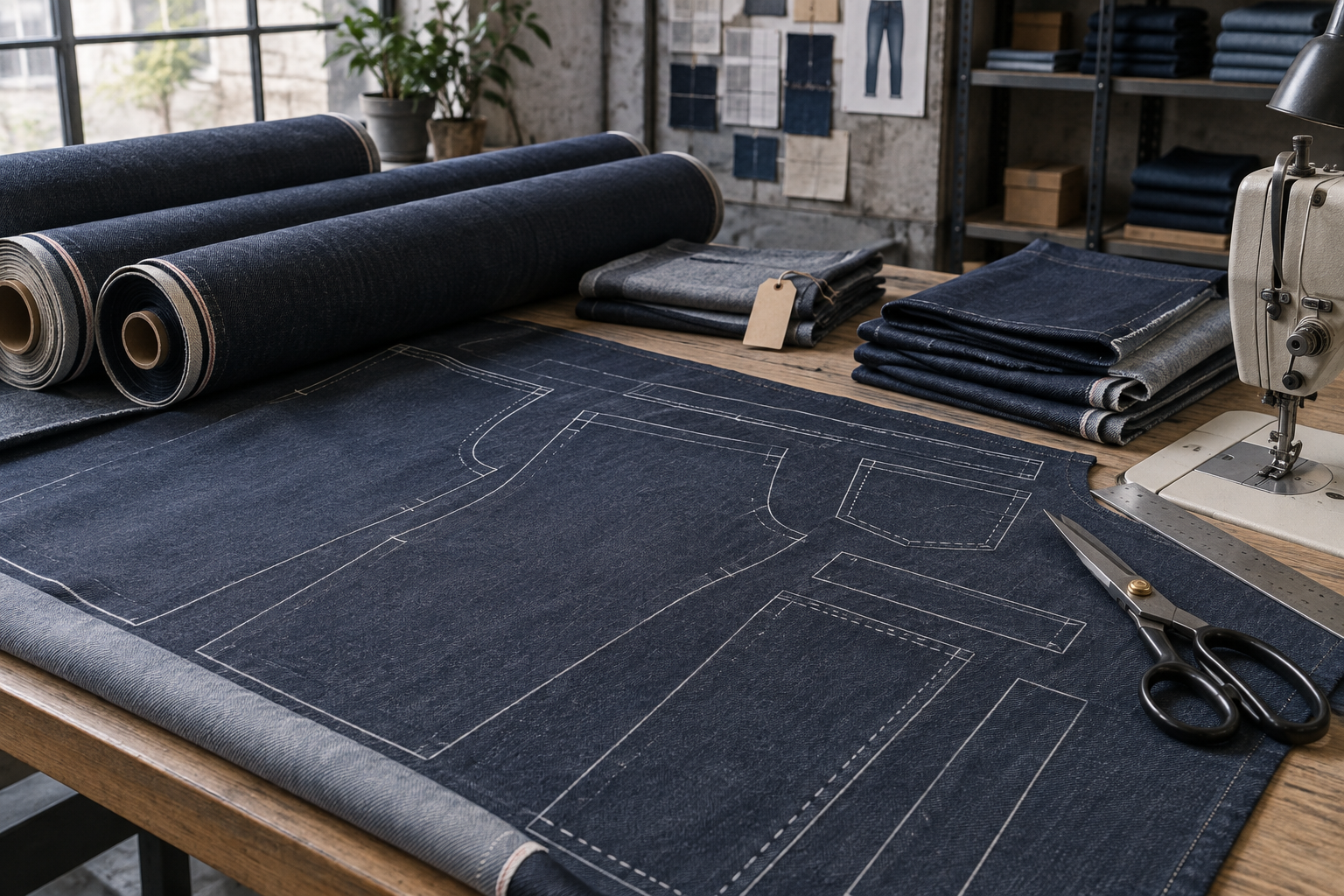
AI-generated conceptual illustration of material-yield planning; not a photograph of the production process.
Deadstock means existing material inventory is being used; it does not by itself establish the environmental impact of the finished product. It may make a distinctive cloth available without commissioning a new run, but quantities, traceability, and the material’s prior history can be constrained. The collaboration’s later drops also use different fabrics and product types, so the first capsule should not be treated as proof that every future piece shares the same material story.
From a product-planning perspective, scarce cloth pushes design and operations closer together. Pattern efficiency matters because every cut consumes finite inventory. Size curves and yield assumptions become commercial decisions, not just production math. If a run sells through, a near-identical restock may be impossible; if it does not, the brand needs a plan for the remaining fabric and product.
This is where designers can help a business turn a constraint into a coherent offer without overstating it. Make the finite quantity clear, document where the material came from, and decide early whether the product is a one-time release or the start of a broader design language. Keep the material claim precise: “made with deadstock fabric” is supportable when documented; “sustainable” needs a wider basis.
A phased launch makes the collection legible
The three-drop calendar separates the initial selvedge denim from a later group described as broken-twill jackets, shirts, jeans, tees, sweatshirts, and accessories, followed by additional deadstock western styles. That sequence gives each release a distinct product story and allows the collection to unfold over time. It also asks customers to track multiple dates and understand how the materials and assortment differ.
For a team designing a launch around several product families, each installment should answer three questions without requiring a press release: what is available now, what is different about it, and what remains unknown or limited? Consistent naming, fit guides, material descriptions, and clear timing can help a phased release feel like one considered system rather than a string of disconnected drops.
What product teams can take from the collaboration
Use historical products to define a design hypothesis, then validate the current fit and use experience with today’s customers.
Choose materials with their behavior and communication requirements in mind, not appearance alone.
Connect material availability to pattern yield, sizing, inventory, and the promise a customer hears.
Make a multi-stage launch understandable at the product page as well as in campaign storytelling.
The Wrangler–imogene + willie release shows how much design work can sit inside a familiar object. Its identity depends on the relationship among archival fit, material behavior, domestic production claims, and a phased assortment. Teams working through similar decisions can explore Jackson Hedden’s product design, prototyping, and manufacturing services. If you are balancing a strong product reference against present-day user and production needs, start a conversation with the studio.