The Essential Guide to 3D Printing Prototypes
The next time you walk into a high-stakes client pitch, what will you bring? A beautifully designed slide deck is standard, but what if you could also place a physical model of your proposed campaign asset directly into the client's hands? That’s the kind of impact that wins business. It makes your idea instantly real, tangible, and much harder to say no to. This is the strategic power of 3D printing prototypes. They transform your creative concepts from abstract ideas into compelling physical proof. In this guide, we’ll explore how your agency can use this technology not just for product development, but as a powerful tool for closing deals and showing clients you can deliver on even the most ambitious visions.
Key Takeaways
Go from concept to physical model, fast: 3D printing lets you create tangible prototypes for client pitches, user testing, and campaign assets in days, not weeks. This speed helps you get faster feedback and make better creative decisions.
Choose the right tool for the job: The best 3D printing technology depends on your goal. Use an affordable method like FDM for early-stage mockups, but select a high-resolution process like SLA when you need a flawless, presentation-ready finish.
Plan beyond the print: A successful prototype requires more than a good design file. Strategic decisions about material choice, design optimization, and post-processing are what transform a raw print into a polished, professional product.
What is a 3D Printed Prototype?
Let's start with the basics. A 3D printed prototype is a physical, three-dimensional model of your digital design. Think of it as taking a CAD file from your screen and turning it into something you can actually hold in your hands. This process is the engine behind what we call rapid prototyping, a method that lets you create and test physical parts incredibly fast.
Instead of waiting weeks for traditional manufacturing processes that require expensive molds or tooling, 3D printing builds your object layer by layer, directly from the digital file. This means you can go from a concept to a tangible prototype in a matter of hours or days. For creative agencies, this speed is a game-changer. It closes the gap between imagination and reality, allowing you to validate ideas, get stakeholder buy-in, and refine your vision with a real-world object. It’s the difference between showing a client a flat render on a screen and handing them a product they can feel and interact with. This tangible experience makes your creative vision more compelling and helps everyone involved make better, faster decisions before committing to a full production run.
Key Benefits for Creative Projects
The real magic of 3D printing is how it accelerates the creative process. You can test ideas and catch design flaws early, long before you’re locked into a final direction. Because there are no upfront tooling costs, you have the freedom to create incredibly complex designs that would be too expensive or difficult to produce otherwise. This is perfect for bringing ambitious campaign concepts to life. Need to test the feel of a custom product or see how a unique package opens? You can print a functional prototype, get feedback, tweak the design file, and print a new version the next day. This iterative loop of printing, testing, and refining helps you perfect every detail without blowing your budget or timeline.
How Agencies Use 3D Printed Prototypes
So, how does this apply to your agency’s work? Imagine walking into a client pitch and handing them a physical model of your proposed campaign asset instead of just showing a slide deck. You can create high-fidelity prototypes for custom influencer kits, branded merchandise, or unique packaging that makes an immediate impact. We’ve seen agencies use 3D printing to develop everything from interactive props for experiential activations to functional models for user testing. It allows you to prototype designs rapidly for clients in any sector, whether it's automotive, consumer goods, or tech. This capability lets you move beyond digital concepts and deliver tangible, memorable brand experiences that your clients can see and touch.
The 3D Printing Process: From File to Physical Product
Bringing a physical product to life with 3D printing is a straightforward, three-part process. It starts with a digital design, moves to material selection, and finishes with the actual printing and polishing. Think of it as taking a blueprint, choosing your building materials, and then constructing and finishing your project. Each step is critical for turning a great idea into a tangible prototype that looks and feels exactly how you envisioned it. Whether you’re creating a custom influencer package or a branded piece of merchandise, understanding this workflow helps ensure the final product meets your agency’s creative standards.
Prepare Your Design File
Everything starts with a digital blueprint. Before a 3D printer can build anything, it needs a detailed 3D model created with computer-aided design (CAD) software. This file is the master instruction manual for your product. Once the design is finalized, it’s run through a "slicer" program that breaks the model down into hundreds or thousands of thin, horizontal layers. This slicing process turns the 3D design into a precise, step-by-step guide the printer can follow. This is where our engineering team steps in, translating your creative concept into a technically sound, DFM-optimized CAD model that’s perfectly prepared for production.
Select the Right Material
The material you choose will define your prototype’s look, feel, and function. Do you need something rigid and durable, or soft and flexible? Should it be transparent, opaque, or full-color? The options are vast, ranging from common plastics like PLA and ABS to specialized resins and even metals. The technology also influences material choice; for example, SLA printers use unique resins while FDM printers use spools of thermoplastic filament. Selecting the right material is a key strategic decision that impacts everything from the prototype’s aesthetic appeal to its ability to withstand handling during a campaign activation. We help guide this choice to match your project’s specific goals and budget.
Print and Post-Process Your Model
Once the file is ready and the material is loaded, the printer gets to work, building your model layer by meticulous layer. But the job isn’t done when the printing stops. Most 3D printed parts require post-processing to achieve a professional finish. This crucial final stage involves removing any temporary support structures, sanding away layer lines, and applying any necessary finishing touches like painting, polishing, or assembly. This is what transforms a raw print into a client-ready prototype that looks like a finished product. It’s a hands-on, detail-oriented step where craftsmanship makes all the difference in delivering a high-quality result.
A Guide to 3D Printing Technologies
Choosing the right 3D printing technology can feel like ordering coffee from a menu with a dozen different brewing methods. Each one produces a different result, and the best choice depends entirely on what you’re trying to achieve. Do you need a quick, low-cost model to check the size and shape of a product for a client pitch? Or do you need a high-resolution, fully functional prototype for a user testing session or an immersive brand activation?
Understanding the core differences between these technologies will help you communicate your needs clearly and ensure the final prototype perfectly matches your creative vision. Think of this as your cheat sheet for the most common 3D printing methods. We’ll walk through how each one works, what it’s best for, and why you might choose it for your next agency project. This way, you can confidently select a process that balances speed, cost, and the high-quality finish your campaign deserves.
Fused Deposition Modeling (FDM)
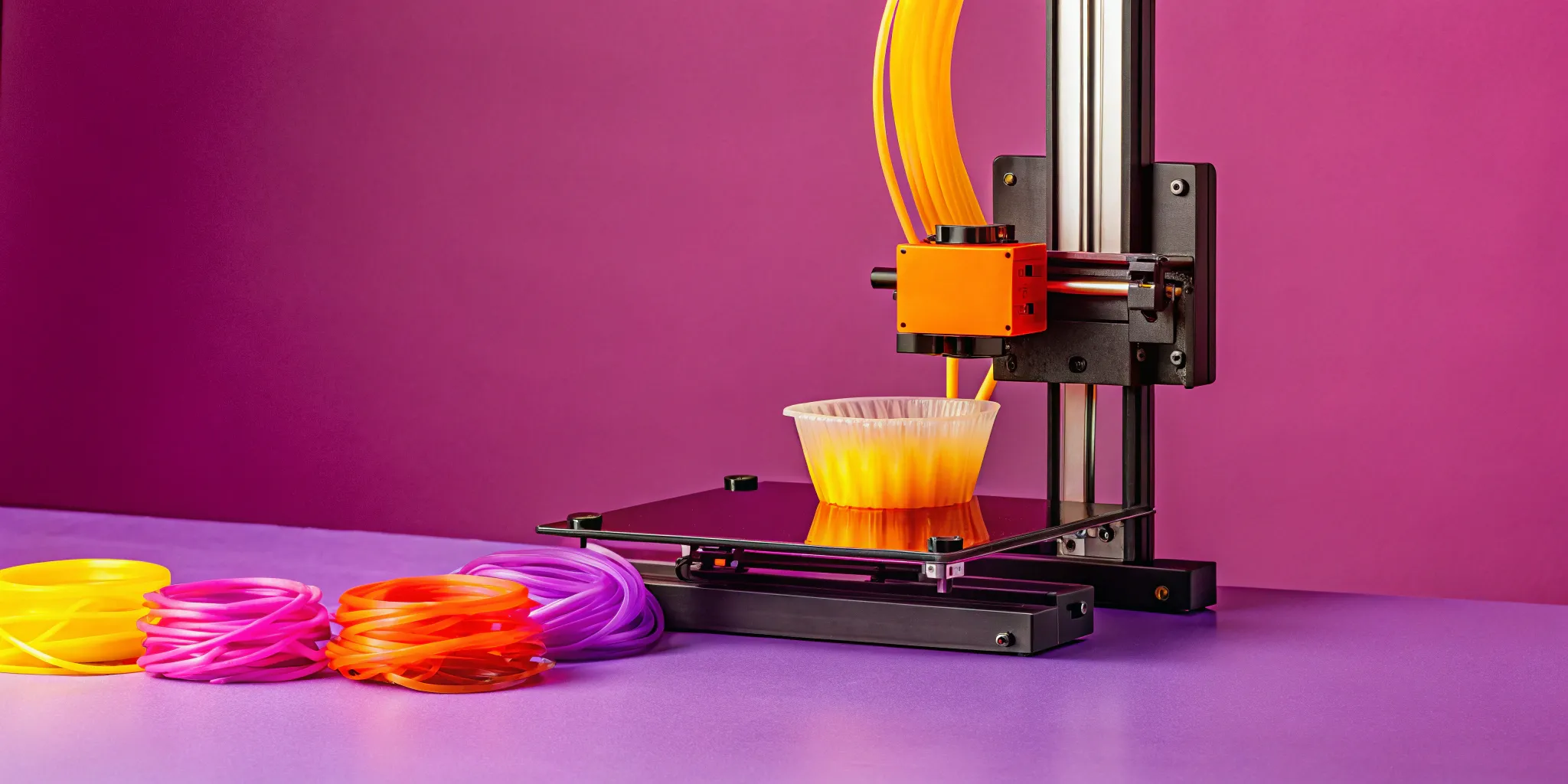
FDM is the most widely recognized and budget-friendly 3D printing method out there. Imagine a precision hot glue gun building an object from the ground up, one layer at a time. The printer feeds a thermoplastic filament through a heated nozzle, melting it and depositing it onto a build platform. It’s a straightforward process that’s perfect for producing early-stage concepts, simple form-and-fit mockups, and functional prototypes where fine detail isn't the top priority. Because it’s so cost-effective, FDM is an excellent choice for iterating quickly on a design without breaking the bank. It’s the go-to for getting a physical object in your hands fast.
Stereolithography (SLA)
When your prototype needs to look flawless, SLA is the answer. This technology uses a UV laser to draw on a vat of liquid photopolymer resin, hardening it layer by layer to form a solid object. The result is a part with an incredibly smooth surface finish and crisp, intricate details. SLA is ideal for creating high-fidelity visual prototypes that will be used in photoshoots, client presentations, or as master patterns for molding. If you’re developing a product where aesthetics are critical—like custom packaging for an influencer kit or a sleek electronic enclosure—SLA delivers a professional, production-quality look that FDM can’t match.
Selective Laser Sintering (SLS)
SLS is a powerhouse for creating durable, functional parts with complex internal geometries. This technique uses a high-powered laser to fuse together powdered material, typically a robust nylon. Because the object is supported by the surrounding unsintered powder during the build, there’s no need for support structures. This gives you incredible design freedom to create intricate, interlocking, or hollow parts that would be impossible with other methods. The resulting prototypes are strong enough for rigorous functional testing, making SLS a top choice for projects that require both complex design and real-world durability, like components for an interactive retail display.
Multi Jet Fusion (MJF)
If you need strong, functional parts produced quickly, Multi Jet Fusion is one of the best options available. Developed by HP, this technology works by depositing a fusing agent onto a bed of nylon powder, which is then fused by an infrared heating element. MJF is known for its exceptional speed and ability to produce parts with consistent mechanical properties and a slightly grainy but uniform surface finish. It’s a fantastic choice for creating functional prototypes, jigs, fixtures, or even small batches of end-use parts for a brand activation. When your project demands both speed and strength, MJF delivers reliable results every time.
Direct Metal Laser Sintering (DMLS)
For projects that require the strength and performance of metal, DMLS is the ultimate solution. This advanced process uses a high-powered fiber laser to melt and fuse fine metallic powders—like aluminum, stainless steel, or titanium—into a solid part. DMLS can create incredibly complex and lightweight metal components that are often impossible to produce with traditional manufacturing methods. It’s the perfect technology for high-stakes applications, such as creating custom hardware for a luxury product launch, functional metal parts for an experiential installation, or premium, branded merchandise that needs to feel substantial and permanent.
How Much Do 3D Printed Prototypes Cost?
Pinning down the exact cost of a 3D printed prototype is a bit like asking how much a creative campaign costs—the answer is always, "it depends." The price can range from just a few dollars for a tiny, simple part to thousands for a large, complex assembly. The final number on your invoice is shaped by a few key factors: the size and complexity of your design, the materials you choose, the technology used to print it, and the level of finish required.
For agencies, understanding these variables is key to budgeting accurately for client projects, whether you're creating a custom influencer mailer or a functional product for a brand activation. Think of it less as a fixed price and more as a spectrum of options. A quick, low-fidelity model to test an idea will live on one end of that spectrum, while a high-fidelity, presentation-ready prototype will live on the other. By breaking down the components of the cost, you can make strategic decisions that align your creative vision with your client's budget.
Breaking Down Costs by Project Size
The most straightforward factor influencing cost is the sheer size and complexity of your model. A larger object requires more material and takes longer to print, which directly increases the price. A small, simple branded token might only cost a few dollars to produce, whereas a large-scale architectural model or a detailed product enclosure could easily run over $1,000.
But it’s not just about physical dimensions. Complexity plays an equally important role. A solid, block-shaped object will generally be less expensive to print than a hollow, intricate object of the same size that requires complex support structures. When you’re developing a concept, consider how intricate the design needs to be. Every added detail and complex curve can add to the print time and, consequently, the final cost.
How Materials and Technology Affect Price
The material you choose is a major cost driver. Standard plastics like PLA and ABS are highly affordable and perfect for early-stage concepts or form-and-fit models. However, if your project demands higher performance—like the durability of nylon, the transparency of a clear resin, or the strength of metal—the price will increase accordingly. Some specialty engineering or biocompatible materials can cost significantly more than basic filaments.
The printing technology itself also plays a huge part. Fused Deposition Modeling (FDM) is one of the most common and cost-effective methods, ideal for rapid prototyping. But for projects requiring fine details and smooth surfaces, technologies like Stereolithography (SLA) or Multi Jet Fusion (MJF) are better suited, though they come at a higher price. The right choice always depends on balancing your project’s specific needs for appearance, function, and budget.
Tips for Budgeting Your Project
A little strategic thinking during the design phase can go a long way in managing costs. One of the easiest ways to save money is to optimize your model for printing. For example, hollowing out a solid model and designing it with an internal support lattice can drastically reduce material usage and print time without sacrificing structural integrity. Simplifying overly complex geometries that aren’t essential to the prototype’s purpose can also help keep the budget in check.
Don’t forget to account for post-processing. The raw part that comes off the printer is rarely the final product. Finishing steps like sanding, polishing, painting, and assembly are often necessary to create a campaign-ready piece. These services add to the total cost—in fact, post-processing can sometimes account for a significant portion of the final price. Always discuss finishing requirements with your product design partner upfront to get a complete and accurate quote.
Pros and Cons of 3D Printed Prototypes
Deciding on the right prototyping method comes down to your project's specific needs—your timeline, budget, and what you need the prototype to do. 3D printing is an incredible tool that has changed the game for product development, but it’s not always the perfect fit for every situation. Understanding its strengths and weaknesses helps you make a smart, strategic choice that aligns with your creative and business goals. It’s all about weighing the speed and flexibility of additive manufacturing against the unique demands of your physical product.
Why Choose 3D Printing Over Traditional Methods?
The biggest win for 3D printing is speed. You can go from a digital file to a physical object in your hands in a matter of hours or days, not weeks. For agencies working on tight deadlines, this is a massive advantage. This process of rapid prototyping lets you test a concept, get client feedback, and make revisions quickly. It’s perfect for catching design flaws early before you invest in expensive tooling. 3D printing also unlocks incredible design freedom, allowing for complex geometries and intricate details that would be difficult or impossible to create with traditional methods like injection molding. You can consolidate multiple components into a single printed part, simplifying the final assembly.
Potential Limitations to Keep in Mind
While 3D printing is versatile, it has its limits. The first is material selection. While the range of printable materials is growing, you might not be able to print a prototype in the exact same material as your final mass-produced product. This can affect how well the prototype represents the final item's strength, texture, and durability. Another thing to consider is post-processing. Many 3D prints require some cleanup—like sanding, polishing, or painting—to achieve a finished look. Finally, while 3D printing avoids high upfront tooling costs, the per-unit cost can be higher than traditional methods, making it less economical for large-scale production runs. These are some of the common 3D printing challenges to be aware of.
3D Printing vs. Traditional: Making the Right Choice
So, how do you choose? If your goal is to create a few high-fidelity models for a client presentation, an influencer kit, or a campaign photoshoot, 3D printing is almost always the right call. Its speed and ability to handle custom, complex designs are unmatched for low-volume projects. However, if you’re planning to produce thousands of units, a traditional method like injection molding will likely be more cost-effective in the long run, despite the initial investment in creating a mold. The best approach is to think about your end goal. Are you testing form and function, or are you gearing up for mass production? Your answer will point you to the right manufacturing path.
Top 3D Printing Services to Consider
Once your design is ready, you need a partner to bring it to life. The right 3D printing service depends entirely on your project’s needs. Are you looking for a hands-on engineering partner to guide the process, or do you just need a quick, high-quality print from a finished file? Some services specialize in speed and iteration, while others focus on industrial-grade materials for functional testing. Here are a few top contenders that cater to different agency needs, from full-service development to on-demand printing.
Jackson Hedden Inc.
Think of us as your dedicated product development team, not just a printing service. We’re the ideal partner for agencies that have a creative vision but need the technical expertise to execute it flawlessly. We don’t just print your file; we work with you from the initial concept to deliver a production-ready prototype. Our team of industrial designers and engineers will optimize your design for manufacturability, select the perfect materials, and manage the entire prototyping process. This is the best choice when you need a strategic partner to handle the complexities of engineering and ensure your final product is as functional as it is beautiful.
Protolabs
If your prototype needs to perform under pressure, Protolabs is a fantastic option. They specialize in creating high-quality, functional parts for rigorous testing. Their strength lies in industrial-grade technologies like Selective Laser Sintering (SLS), Multi Jet Fusion (MJF), and Direct Metal Laser Sintering (DMLS). As Protolabs notes, their "SLS and MJF nylon parts are strong enough for functional testing, while DMLS metal prototypes can match production-grade components in durability." This makes them a go-to for projects where you need to validate a mechanism, test structural integrity, or create a final asset that feels just like a mass-produced product.
Formlabs
When speed is your top priority, Formlabs delivers. They are known for helping businesses create prototypes incredibly quickly, which is perfect for tight agency deadlines and rapid iteration. Their technology is designed to get a physical model in your hands fast, often within the same day. According to Formlabs, this speed means "you can bring new products to market much faster." For agencies needing to quickly visualize a concept for a client pitch, test multiple design variations on a short timeline, or produce a last-minute prop for a photoshoot, Formlabs’ focus on rapid prototyping is a major advantage.
Stratasys
Stratasys is a leader in professional 3D printing and excels at turning complex digital ideas into precise, tangible objects. They are a great choice for projects that demand high fidelity and a polished finish straight from the printer. Stratasys emphasizes that their technology helps "designers and engineers create and improve new products much faster and more efficiently." For creative agencies, this means you can confidently translate an ambitious creative concept into a physical prototype that accurately reflects your vision. They are a strong partner for creating detailed marketing models, intricate packaging prototypes, and visually critical campaign assets.
Shapeways
Shapeways operates as a versatile digital manufacturing platform, making it an excellent choice for projects requiring a wide variety of material options or for one-off experimental prints. Their marketplace-style service gives you access to over 90 different materials and finishes, from flexible plastics to precious metals. This makes them ideal for exploring unique aesthetics or producing a small batch of custom merchandise. If your agency is dipping its toes into 3D printing or needs a specific, hard-to-find material for a unique project, Shapeways’ platform offers the flexibility and accessibility to get it done without a major commitment.
How to Choose the Right 3D Printing Partner
Finding the right 3D printing partner is about more than just getting a quote. It’s about finding a collaborator who understands your creative vision and the demands of agency life. The best partners act as an extension of your team, helping you turn a concept into a physical object that wows your client. They should be able to speak your language, work with your timelines, and offer expert guidance on how to get the best possible result for your project.
When you’re vetting potential partners, it comes down to three main things: their technical capabilities, their commitment to quality, and how their process aligns with your budget and deadline. A great partner will ask smart questions about your project goals before they even talk about printers. They’ll want to know if the prototype is for a quick internal review, a high-stakes client pitch, or a photoshoot. This initial conversation is a great sign that they’re invested in your success, not just fulfilling an order. They should also be transparent about their process, from file submission to post-processing, so you know exactly what to expect. Let’s break down exactly what to look for to ensure you find a team that can deliver.
Match Technology and Materials to Your Project
The first step is to align the partner’s technical offerings with your project’s needs. 3D printing isn’t a one-size-fits-all process; different technologies and materials are suited for different outcomes. A good partner will have a range of options and guide you to the right one. For example, if you need a quick, low-cost model to test the basic shape and size of a product, Fused Deposition Modeling (FDM) is a great choice. But if you need a smooth, detailed prototype for a client presentation, you’ll want a partner who offers technologies like Stereolithography (SLA) or Selective Laser Sintering (SLS).
Discuss the end-use of the prototype with them. Do you need it to be strong? Flexible? Transparent? The material choice is just as important as the printing technology. A partner with deep expertise can recommend materials that not only look great but also have the right functional properties for your specific application, ensuring your final prototype truly brings your idea to life.
Define Your Quality and Precision Needs
Before you hit “print,” it’s crucial to define what “quality” means for your project. Are you creating a simple geometric shape for a display, or a complex product with intricate details and tight tolerances? Be clear about your expectations for surface finish, accuracy, and resolution. A high-resolution print will capture fine details but may take longer and cost more. For projects where precision is paramount, you’ll want a partner whose equipment can deliver.
Ask potential partners for sample parts or a portfolio of their work. This gives you a tangible sense of their capabilities. For instance, if your project demands the highest quality parts, you’ll likely want a partner specializing in SLA or SLS. A good partner will help you understand the level of precision their machines support and what you can realistically expect from the final print. This conversation ensures everyone is on the same page and prevents surprises when the final prototype arrives.
Balance Speed, Quality, and Cost
In the agency world, deadlines are everything. But when it comes to 3D printing, speed, quality, and cost are interconnected. You can usually have two, but it’s tough to get all three. A fast, high-quality print will cost more, while a cheaper option might sacrifice either speed or fine detail. A transparent partner will help you find the right balance for your specific project. Be upfront about your priorities. If you have a tight deadline for a client pitch, you might need to invest more for an expedited, high-quality print.
If your budget is the main constraint, your partner can suggest more cost-effective technologies like FDM or recommend design adjustments to reduce print time and material usage. This is where a true partnership shines. Instead of just giving you a price, they’ll work with you to find a solution that meets your creative goals, stays within your budget, and hits your deadline.
Key Factors for a Successful Prototype
Bringing a concept to life with a 3D printed prototype is an exciting process, but it’s more than just hitting “print” on a cool design. A successful prototype—one that looks incredible, functions correctly, and accurately represents your vision—is the result of smart decisions made long before the printing begins. It requires a strategic approach that balances creative goals with the technical realities of manufacturing.
Think of it this way: your 3D file is the blueprint, but the final product depends on how well that blueprint is translated into a physical object. This involves optimizing the design specifically for the printing process, selecting the perfect material to match your project’s needs, and planning for the finishing work that turns a raw print into a polished, client-ready piece. Getting these three elements right is the key to moving from a digital concept to a tangible product that wows your team and your clients. It’s where creative vision meets engineering precision to create something truly memorable.
Optimize Your Design for Printing
Designing for 3D printing is a unique skill. Unlike traditional methods, 3D printing allows for complex designs that are hard to make with older methods and can even combine many small parts into one, saving effort and assembly time. However, to take full advantage of this freedom, your digital model needs to be optimized for the specific technology you’re using. This practice, known as Design for Additive Manufacturing (DFAM), involves considering factors like wall thickness, part orientation, and the need for support structures. A well-optimized design not only looks better but is also stronger, prints faster, and uses less material, which helps keep your project on budget.
Understand the Impact of Material Choice
The material you choose will define your prototype’s look, feel, and function. Do you need something rigid and durable for a functional test, or a smooth, high-resolution finish for a visual model? The options range from tough, engineering-grade thermoplastics to flexible resins and even metals. The technology also plays a major role. For example, SLA materials are uniquely formulated resins, which differ from the industry-standard thermoplastics used in FDM and SLS 3D printing. Choosing the right one from a comprehensive material guide is critical for ensuring your prototype meets the demands of your campaign, whether it’s for a photoshoot, a client presentation, or user testing.
Plan for Post-Processing Requirements
The journey from digital file to finished prototype doesn’t end when the printer stops. Most 3D printed parts need some form of cleanup, or post-processing, to achieve a professional finish. This can include removing support structures, sanding surfaces, painting, or assembling multiple components. This step is crucial for creating a polished, high-impact product, but it’s often overlooked in project timelines. In fact, one industry report found that 27% of the total cost of producing a prototype can be attributed to post-processing. By planning for these finishing steps from the start, you can ensure your final prototype is flawless and delivered on schedule.
Bring Your Prototype to Life
3D printing has completely changed how we move ideas from a sketch on a screen to a physical object you can hold in your hand. For creative agencies, this technology isn't just a tool; it's a bridge between imagination and reality, allowing you to show, not just tell, your client what's possible. The most immediate advantage is speed. Instead of waiting weeks for a model from a traditional fabrication shop, 3D printers can often produce a high-fidelity prototype in a single day. This rapid turnaround means you can accelerate your project timelines, get client feedback faster, and keep creative momentum going.
Beyond speed, 3D printing gives you incredible creative freedom. You can experiment with a huge versatility of materials, from durable, rigid plastics that mimic final production parts to flexible, rubber-like materials perfect for testing grips or enclosures. This allows you to create prototypes with complex designs and intricate geometries that would be difficult or prohibitively expensive to produce otherwise. Whether you're developing a sleek influencer package or a unique piece of branded merchandise, you can test not just the look but also the feel and function of your concept.
This ability to create tangible models quickly makes the entire design process more efficient. Getting a physical part in your hands is the best way to spot potential issues. You can test the ergonomics, check the fit of assembled parts, and get a real sense of the product's scale and presence. This process of catching design flaws early allows your team to iterate and refine the concept with confidence. By leveraging 3D printing, you can move from initial idea to a polished, client-ready prototype that truly brings your vision to life.
Related Articles
Get a Prototype Made Fast: The Ultimate Guide — Jackson Hedden
How to Get a Product Prototype: A Simple Guide — Jackson Hedden
What Is an Appearance Model Prototype? A Guide — Jackson Hedden
Frequently Asked Questions
Do I need to be an engineering expert to get a prototype made? Not at all. Your job is to have the creative vision; a good product development partner handles the technical translation. You don't need to know how to create a perfect CAD file or understand the physics of different plastics. The best partners work collaboratively, taking your sketches and concepts and turning them into technically sound, printable designs. Think of them as the engineering extension of your creative team.
How quickly can I actually get a prototype? Is it realistic for a last-minute client pitch? Yes, it’s absolutely realistic. The speed is one of the biggest advantages of 3D printing. Depending on the size, complexity, and technology used, you can often have a physical model in your hands within a few days. A simple form-and-fit model might even be ready overnight. For a tight deadline, the key is to communicate your timeline clearly with your partner so they can recommend the fastest process that still meets your quality needs.
Can a 3D printed prototype look and feel exactly like the final mass-produced product? It can get incredibly close, especially for visual purposes. Technologies like SLA produce stunningly smooth and detailed parts that are perfect for photoshoots and client presentations. However, the prototype material may not be the exact same plastic that will be used for a large production run. The goal is to create a model that accurately represents the design's intent, form, and feel, even if the underlying material is different.
What’s the real difference between a quick, low-cost prototype and a high-end one? Think of it in terms of project stages. A quick, low-cost prototype, often made with FDM, is perfect for early internal reviews. It helps you confirm the size, shape, and basic ergonomics of a design without a big investment. A high-end prototype, using SLA or MJF, is what you bring to the final client presentation. It has a flawless surface finish, crisp details, and a professional quality that looks and feels like a finished product.
Besides the printing itself, what other costs should I budget for? The most important additional cost to plan for is post-processing. A raw part straight off the printer rarely looks like a finished product. The real craftsmanship comes in during the finishing stage, which includes sanding away layer lines, painting the model to match brand colors, and assembling any separate components. This hands-on work is what creates a polished, campaign-ready piece and can be a significant part of the total project cost.